
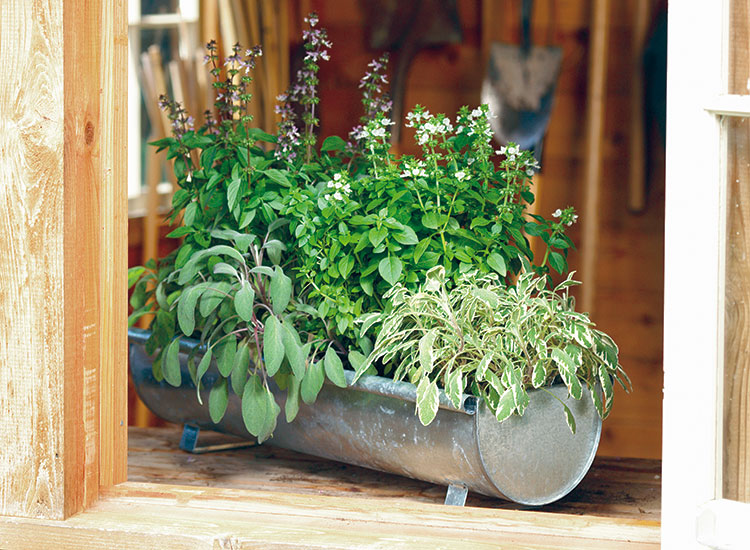
I killed three basil plants before I figured out that “full sun” actually means something. Not “sun-ish.” Not “near a window that gets bright sometimes.” Full sun. Six hours, minimum.
That was years ago, and it’s honestly the reason I got obsessed with container gardening in the first place — I needed something more forgiving to practice on. Turns out, a lot of medicinal herbs are exactly that kind of forgiving.
You don’t need a backyard for this. You don’t need raised beds, a tiller, or acres of space. A sunny balcony, a patio corner, or even a windowsill with good light is enough to start growing your own medicinal herbs in containers — things like chamomile, lavender, and calendula that have been grown in pots for centuries, long before anyone had a “yard” to speak of.
And apparently I’m not the only one who’s noticed this. Interest in container gardening jumped roughly 200% between 2021 and 2022 alone, according to industry research — a lot of that growth coming from people in apartments and smaller homes who just don’t have in-ground space anymore. Container gardening isn’t a consolation prize. It’s become the main event for a huge chunk of home gardeners.
In this post, I’ll walk through which medicinal herbs actually do well in pots, how to pick the right container, some care basics, and a few mistakes I’ve made so you (hopefully) don’t have to repeat them.
Why Grow Medicinal Herbs in Containers?

Let’s get the obvious one out of the way: containers are the only option for a lot of us. Renters, apartment dwellers, people with a shady yard and one sunny patio — pots solve a real space problem.
But here’s the thing I didn’t expect going in: container growing isn’t just a workaround. In some ways it’s actually easier than an in-ground bed.
You get total control over the soil, for one. No fighting compacted clay or trying to fix drainage in the ground — you just build the mix yourself.
Pests are easier to manage too. I’m not saying you’ll never see aphids on a potted calendula (you will, trust me), but it’s a lot easier to isolate one pot than to treat an entire bed.
There’s also the mobility factor, which honestly sold me on this more than anything else:
- Chase the sun by moving pots throughout the day or season
- Bring tender herbs indoors before an early frost
- Rearrange your whole “garden” in an afternoon if something isn’t working
- Contain herbs like yarrow that spread aggressively if planted directly in the ground
That last point matters more than people think. Some medicinal herbs are enthusiastic spreaders, and a container basically forces them to behave.
One myth I want to knock down early: potted herbs aren’t “lesser” than garden-grown ones. Mine have been just as fragrant, just as productive, and honestly easier to keep an eye on than anything I’ve tried growing in the ground.
How to Choose the Right Pot for Medicinal Herbs
Okay, this is where I made my first real mistake. I started chamomile in a pot that was way too small — like, a 6-inch pot for a plant that wanted to sprawl. It got root-bound in about three weeks and just… stalled.
Pot size really does depend on the herb. Shallow-rooted plants like chamomile and calendula are fine in something 8–10 inches deep. But deep-rooted herbs — chicory and marshmallow especially — want 12 inches or more, honestly a half-barrel isn’t overkill for chicory once it matures.
As for material, there’s a real tradeoff here:
- Terracotta — breathable and dries fast, which lavender loves but thirstier herbs might not
- Plastic — lightweight, holds moisture longer, good for herbs that don’t want to dry out between waterings
- Fabric grow bags — excellent aeration, roots seem to love these, though they dry out quickly in hot weather
- Glazed ceramic — looks nice on a patio, but it’s heavy and doesn’t breathe much
Drainage holes are non-negotiable. I don’t care how pretty the pot is — if it doesn’t drain, skip it or drill your own holes. Standing water at the bottom of a pot is basically a death sentence for most medicinal herbs, especially lavender.
On soil: don’t use garden soil in a container. It compacts fast and drains poorly once it’s confined. A good potting mix, ideally with some added perlite for drainage, is worth the few extra dollars.
And a small tip on spacing — don’t cram a fast grower like yarrow into a shared pot with something delicate. I did this once. Yarrow won.
The Best Medicinal Herbs to Grow in Pots and Containers

Alright, here’s the part you actually came for. These are the medicinal herbs I’ve had the best luck with in pots, plus a few I’m still learning.
- Chamomile — shallow roots, small footprint, does great in an 8-inch pot on a sunny sill. One of the easiest herbs I’ve grown, full stop. NCCIH notes it’s commonly used as tea, though people allergic to ragweed or daisies should be cautious.
- Lavender — needs excellent drainage above almost anything else. The Old Farmer’s Almanac is blunt about it: standing water basically guarantees root rot. Terracotta pot, gritty soil, full sun.
- Calendula — my go-to “confidence builder” herb for beginners. Blooms constantly, tolerates some neglect, forgives an inconsistent watering schedule.
- Echinacea — a little slower and fussier from seed, needs patience and a deeper pot. Worth it once it’s established.
- Feverfew — compact, container-friendly, similar care to chamomile.
- Yarrow — honestly better in a container than the ground, since it spreads fast when it’s got room to run.
- Marshmallow — needs a genuinely deep pot; the root system is bigger than people expect.
- Evening Primrose — check your pot depth and make sure it’s getting real sun, not partial shade.
- California Poppy — thrives with good drainage, doesn’t love being fussed over.
- Chicory — deep roots, big eventual size. Give it a large container or a half-barrel if you can.
If you’re staring at that list thinking “cool, now I have to go find ten different seed packets” — yeah, I felt that too. That’s actually what pushed me toward trying a pre-curated option instead of sourcing everything separately. I ended up going with the Medicinal Garden Kit, which bundles all ten of these varieties together with a growing guide, so I wasn’t hunting down individual packets from five different sellers.
Sunlight, Watering, and Soil Tips for Container Herb Gardens

Most of these herbs want six or more hours of direct sun. Not “bright shade.” Direct, unfiltered sun.
A south-facing balcony or patio is ideal. If you’re working with a windowsill indoors, a west or south window is your best bet — east-facing gets morning light only, which usually isn’t enough for lavender or California poppy.
Watering is where containers really differ from in-ground beds, and it caught me off guard at first. Pots dry out way faster than garden soil, sometimes in a single hot afternoon.
Stick your finger an inch into the soil before watering. Bone dry? Water it. Still damp? Leave it alone — overwatering kills more potted herbs than underwatering does, in my experience.
- Yellowing leaves usually mean too much water, not too little
- Crispy, dry leaf edges usually mean the opposite
- Feed lightly — most medicinal herbs don’t want rich, heavily fertilized soil, especially lavender
- Repot when roots start circling the bottom of the pot or growth suddenly stalls
Come fall, I bring the tender stuff — lavender especially — closer to the house or indoors before the first hard frost. Chamomile and calendula tend to handle a light frost better, but I still don’t push my luck.
How to Harvest and Store Herbs Grown in Pots
Morning is the move. Harvest herbs after the dew has dried but before the afternoon heat, when essential oils are at their most concentrated.
For leafy herbs, I do a “cut and come again” approach — take a third of the plant, let it regrow, repeat. For flowering herbs like chamomile and calendula, it’s more of a rolling harvest since the blooms don’t all open at once.
Drying is simple but easy to mess up:
- Bundle small stems and hang them upside down somewhere dark and airy
- Use a dehydrator on the lowest setting if you’re short on patience (I usually am)
- An oven on its lowest setting works in a pinch, door cracked, checked often so nothing scorches
- Store fully dried herbs in an airtight container, labeled with the herb and the date
Most dried herbs hold their potency for about a year if kept out of direct light. After that they’re not dangerous, just weaker.
Once dried, a lot of these herbs get used for teas, infused oils, or salves. I’ll be honest — I’m still a beginner with tinctures and salves myself, so I’m not going to pretend to be an expert there. What I will say is this: correctly identify every plant before you use it, and if you’re dealing with a medication or a health condition, talk to a healthcare professional first — herbs can interact with prescriptions in ways that aren’t always obvious.
Common Mistakes to Avoid When Growing Medicinal Herbs in Containers
I’ve made basically every mistake on this list, so consider this the “learn from my pain” section.
- Choosing a pot too small for the plant’s mature root system (my chamomile disaster, mentioned earlier)
- Skipping drainage holes because the pot “looked fine” — it wasn’t fine
- Cramming an aggressive spreader like yarrow in with something delicate
- Using straight garden soil instead of a proper potting mix
- Treating every herb the same instead of checking individual sun and water needs
- Starting with ten varieties at once instead of two or three to build confidence
That last one is honestly the biggest lesson. I tried to start six herbs my first season and ended up overwhelmed, forgetting to water half of them. Two or three is plenty for your first year.
Starting Your Own Container Herb Garden the Easy Way

If you’ve read this far and you’re thinking “okay, but I really don’t want to order ten separate seed packets from five different websites” — same. That’s basically the whole reason I looked into a curated option in the first place.
The kit I mentioned earlier bundles chamomile, calendula, lavender, feverfew, yarrow, echinacea, marshmallow, evening primrose, California poppy, and chicory into one collection, along with a guide that covers planting, harvesting, and basic traditional preparation methods. Several of those varieties — chamomile, calendula, lavender, and feverfew especially — are genuinely well-suited to pots and containers, which made it an easy starting point for a small-space garden like mine.
It’s not a magic fix. You still need sun, water, decent soil, and some patience. But it did save me a weekend of comparison-shopping seed packets, which honestly might be worth it on its own.
If you want the full rundown before deciding, I go into a lot more detail — pricing, what’s actually in the box, how germination went for me — in my full Medicinal Garden Kit review. Worth a look if you’re on the fence.
Otherwise, here’s where to grab it directly:
Final Thoughts
You don’t need a yard for this. You need a pot, some sun, and honestly, a little patience with yourself while you figure out what your specific space actually offers.
Start small. Two pots, maybe three. Chamomile and calendula are about as forgiving as medicinal herbs get, so they’re a solid first bet if you’re nervous.
See what thrives on your balcony or windowsill. Expand from there next season.
My first container herb garden was one lopsided pot of chamomile that somehow survived my mistakes anyway. Yours can start just as small — and honestly, that’s kind of the whole point.
Sources and Further Reading
- Preen — Hot Gardening Trends, container gardening growth data
- National Center for Complementary and Integrative Health (NIH) — Chamomile: Usefulness and Safety
- The Old Farmer’s Almanac — Lavender Planting and Care Guide
- LifeTranq — Full Medicinal Garden Kit Review
This article is for educational and gardening purposes only and is not medical advice. Always correctly identify any plant before use and consult a qualified healthcare professional regarding herb-drug interactions, pregnancy, breastfeeding, or any medical condition. This post contains affiliate links; if you purchase through them, we may earn a commission at no extra cost to you.