
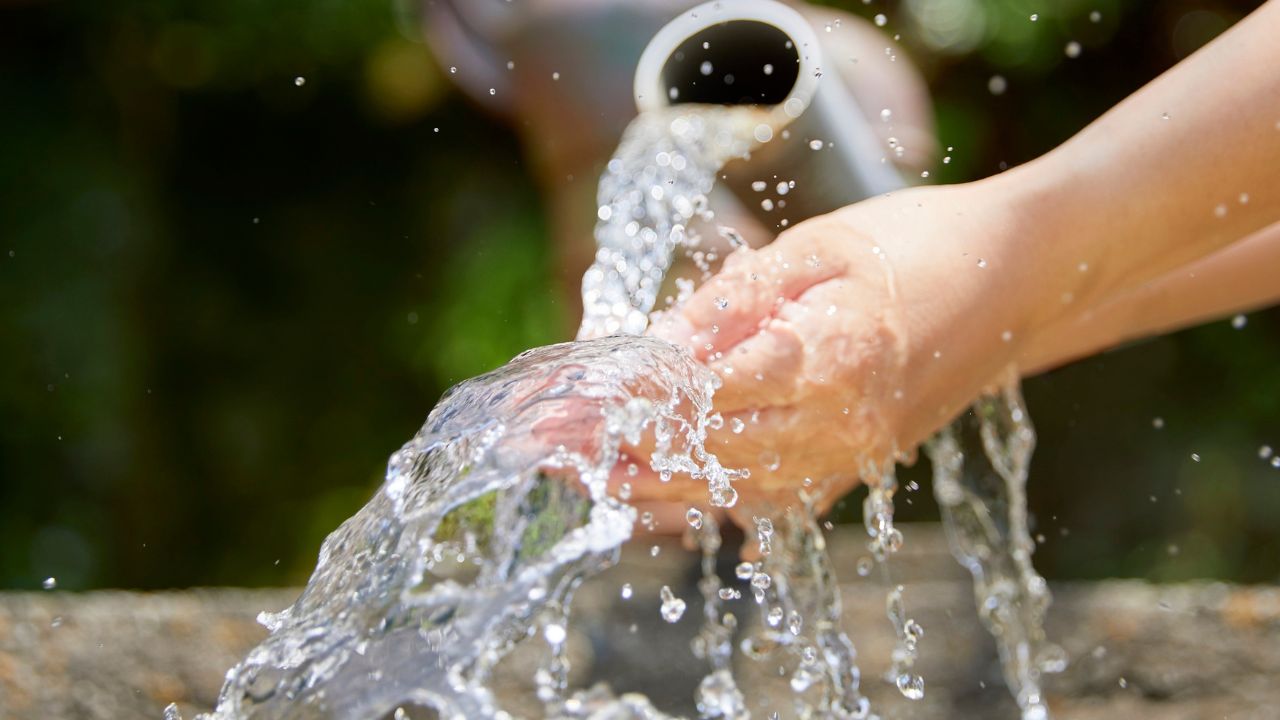
A practical comparison of every major water independence method — with real costs, realistic output, and honest trade-offs for families who can’t afford to get this wrong.
Why One System Is Never Enough
The biggest mistake preppers and homesteaders make is treating water security like a single purchase. One well. One filter. One stockpile.
Redundancy is the actual strategy. A drought dries up your well. A power outage kills your electric pump. A contamination event makes your stored supply unusable. The families who fare best in prolonged emergencies typically have at least two independent water sources — ideally one generative and one stored.
With that framework in mind, here are the seven main options ranked by their overall usefulness for survival scenarios.
1. Rainwater Harvesting System
Rainwater harvesting collects and stores precipitation from rooftop surfaces, channels it through gutters, and routes it into tanks or cisterns. It’s one of the oldest and most reliable off-grid water strategies in human history.
- ✔ Annual rainfall of 20 inches on a 1,000 sq ft roof generates roughly 12,000 gallons per year
- ✔ Works passively — no electricity, no moving parts in the basic version
- ✔ Scales with tank size — from 50-gallon barrels to 5,000-gallon cisterns
- ✔ Requires filtration and purification before drinking — sediment, bird droppings, and roof contaminants are real concerns
- ✔ Check local regulations — some states restrict or require permits for rainwater collection
Best for: Properties in moderate-to-high rainfall areas. Not reliable as a sole source in drought-prone regions.
2. Hand-Dug or Drilled Well
A traditional well taps groundwater — the most abundant freshwater source on Earth, accounting for over 90% of the world’s liquid freshwater supply according to the USGS.
- ✔ Drilled wells produce continuous, renewable water supply if the aquifer holds
- ✔ A manual hand pump (like Simple Pump) lets you access your well without electricity
- ✔ Professional drilling typically costs $3,500–$15,000+ depending on depth and geology
- ✔ Drought vulnerability is real — shallow wells in the American West are failing at increasing rates as aquifer levels drop
The U.S. Drought Monitor shows over 40% of the U.S. in drought conditions regularly. In states like California, Arizona, and Nevada, groundwater levels have been declining for decades.
Best for: Rural properties with access to a stable, deep aquifer. Needs backup if drought is a regional concern.
3. Gravity-Fed Filtration System (Berkey-Style)
A gravity water filter like the Big Berkey takes contaminated water from any source — well, river, pond, rain barrel — and filters it through ceramic or carbon elements using only gravity. No electricity. No plumbing.
- ✔ Removes bacteria, protozoa, heavy metals, and most chemical contaminants
- ✔ Big Berkey filters up to 3,000+ gallons per set of elements
- ✔ Works with any water source — river, pond, rainwater, well
- ✔ Does not remove viruses with standard Black Berkey elements — add PF-2 fluoride filters for expanded coverage
- ✔ Cost: $300–$500 for the unit; filters need periodic replacement
Best for: Households that already have a water source (well, rain, creek) and need reliable purification without electricity. Works well as a secondary filtration layer in any system.
4. Portable Survival Filters (Sawyer, LifeStraw, MSR Guardian)
Portable filters are compact, low-cost, and designed to purify water from any natural source on demand. According to The Prepared’s expert review, every emergency bag should contain at least two filtration methods.
- ✔ Sawyer MINI — filters up to 100,000 gallons, costs ~$25, removes bacteria and protozoa to 0.1 micron
- ✔ LifeStraw Peak Gravity — 3-gallon capacity bag filter, great for groups and families
- ✔ MSR Guardian Purifier — removes viruses, bacteria, protozoa, and particulates; the best portable option for true water purification
- ✔ None of these generate water — they require an existing source to filter
Best for: Bug-out bags, short-term emergency situations, camping, or as supplemental backup. Not a standalone solution for long-term water independence.
👉 See How to Generate Water from Air (Joseph’s Well Blueprint)
5. Spring Box or Surface Water Collection
If your property has a natural spring, creek, or river running through it, a spring box — a covered concrete or stone structure built around the spring’s emergence point — can give you a clean, gravity-fed water supply with minimal ongoing cost.
- ✔ Springs often run year-round and at consistent flow rates
- ✔ Build cost is low — basic concrete spring box can be under $500 in materials
- ✔ Requires testing for coliform bacteria, nitrates, and heavy metals before drinking
- ✔ Seasonal variability and drought can significantly reduce or stop flow
- ✔ Surface water from creeks or rivers needs robust filtration — sediment, bacteria, and agricultural runoff are common issues
Best for: Rural properties fortunate enough to have natural water features. Excellent primary source when combined with proper filtration.
6. Stored Water Stockpile
Stored water is the simplest, most accessible backup for any household — and the most commonly recommended starting point for emergency preparedness.
- ✔ FEMA recommends one gallon per person per day as a minimum; two weeks is a more practical target
- ✔ A family of four needs at least 56 gallons for two weeks — more with cooking, hygiene, and pets
- ✔ 55-gallon food-grade barrels are the most space-efficient bulk storage option (~$60–$80)
- ✔ Stored water has a shelf life — commercially sealed water lasts 2–5 years; home-stored tap water should be rotated every 6–12 months
- ✔ Critical limitation: Stockpiles are finite. Once it’s gone, it’s gone — unless you can refill.
Best for: Short-to-medium term emergencies. Should always be paired with at least one generative water source.
7. DIY Atmospheric Water Generator (AWG)
This is the one that surprises most people — and the one that addresses a gap none of the other systems above can fill: generating new water from the air when no other source is available.
An atmospheric water generator works by cooling air below its dew point, causing water vapor to condense into liquid. The same physics behind morning dew on grass — but captured and filtered for drinking.
- ✔ Generates water from ambient air — doesn’t require rain, a well, or a water source
- ✔ Can run on solar power for complete grid independence
- ✔ No permits required — you’re not tapping municipal infrastructure or drilling
- ✔ Commercial units cost $2,000–$10,000; a well-built DIY version costs under $150 in parts
- ✔ Output depends heavily on relative humidity — performs best above 50%
- ✔ The U.S. military uses AWG units in arid field operations — the technology is proven
If you want a detailed breakdown of how to build one and what it realistically produces, read my full review of Joseph’s Well — a structured DIY blueprint program for building a home AWG system.
Best for: Households in moderate-to-high humidity areas who want a generative backup that works even when wells fail, rain stops, or grid power goes down.
👉 Get the Joseph’s Well DIY AWG Blueprint
Head-to-Head: Which System Wins in Each Scenario?
| Scenario | Best System | Why |
|---|---|---|
| 72-hour power outage | Stored stockpile + gravity filter | Fast access, no setup required |
| Extended drought (weeks–months) | DIY AWG + rainwater + Berkey | Generative sources that don’t depend on precipitation or aquifer |
| Full grid-down (no power) | Solar AWG + gravity filter + hand pump well | All three operate without utility power |
| Rural homestead, long-term | Drilled well + spring box + rainwater | Multiple independent natural sources |
| Bug-out / evacuation | Sawyer MINI + LifeStraw + water tabs | Portable, lightweight, works from any natural source |
| Apartment / suburban home | Stored water + Berkey + portable DIY AWG | No land required; indoor-friendly options |
Pros and Cons: DIY AWG vs. Traditional Off-Grid Water Systems
| ✅ DIY AWG Advantages | ⚠️ Traditional System Advantages |
|---|---|
| 💧 Generates water from air — no external source required | 🏔️ Wells and springs work in low humidity — effective in dry climates |
| ☀️ Solar-compatible — can run completely off-grid | 📦 Gravity filters are zero-electricity — no energy needed at all |
| 💰 $39 guide + ~$150 materials vs. $2,000–$10,000 for commercial AWG | 🏗️ Rainwater systems are proven over centuries — well-understood by homesteaders |
| 🔑 No permits, no drilling — usable in urban and suburban settings | 📊 Higher output in ideal conditions — a drilled well or large cistern can supply thousands of gallons |
| 🌊 Keeps producing during droughts — as long as air has humidity | 🔧 Lower build complexity — storing water or setting up a Berkey requires minimal skill |
What Does a Practical Water Independence Setup Look Like?
Based on everything above, here’s what I’d consider a solid baseline for a family of four in a moderate climate:
- ✔ Layer 1 — Immediate: 2-week stored water supply (minimum 56 gallons for 4 people)
- ✔ Layer 2 — Filtration: A gravity filter (Berkey or equivalent) that works on any water source
- ✔ Layer 3 — Generative backup: A DIY AWG system for continuous water generation when stored supply runs low
- ✔ Layer 4 — Portable: A Sawyer MINI or LifeStraw per person in every emergency bag
That four-layer system addresses short-term outages, medium-term emergencies, and long-term survival scenarios — and costs a fraction of what most people spend on prepping gear they’ll never need.
A Note for Faith-Based Families
If you approach preparedness through a biblical lens, water security is one of the most concrete ways to live out the principle of stewardship. As Genesis 41 describes, Joseph stored resources for seven years to sustain Egypt through years of famine — not out of fear, but out of faithful preparation.
Building multiple water systems isn’t extreme. It’s responsible. And programs like Joseph’s Well — which I’ve reviewed in full at lifetranq.com/josephs-well-review — are specifically designed with that mindset in mind.
Final Thoughts
There’s no single best off-grid water system for survival — because no one method covers every scenario. What matters is building layers: something stored, something that filters, and something that generates.
Start with what you can do today. Even a two-week stockpile and a portable filter is dramatically more prepared than most households. Add a generative source — rainwater, a well, or a DIY AWG — and you’ve built meaningful long-term water security.
The families who navigate water crises best aren’t the ones with the most gear. They’re the ones who thought through the layers before the emergency arrived.
👉 See the Joseph’s Well DIY Water Blueprint — Check Current Price
Disclosure: This article contains affiliate links. If you purchase through our link, we may earn a small commission at no extra cost to you.