
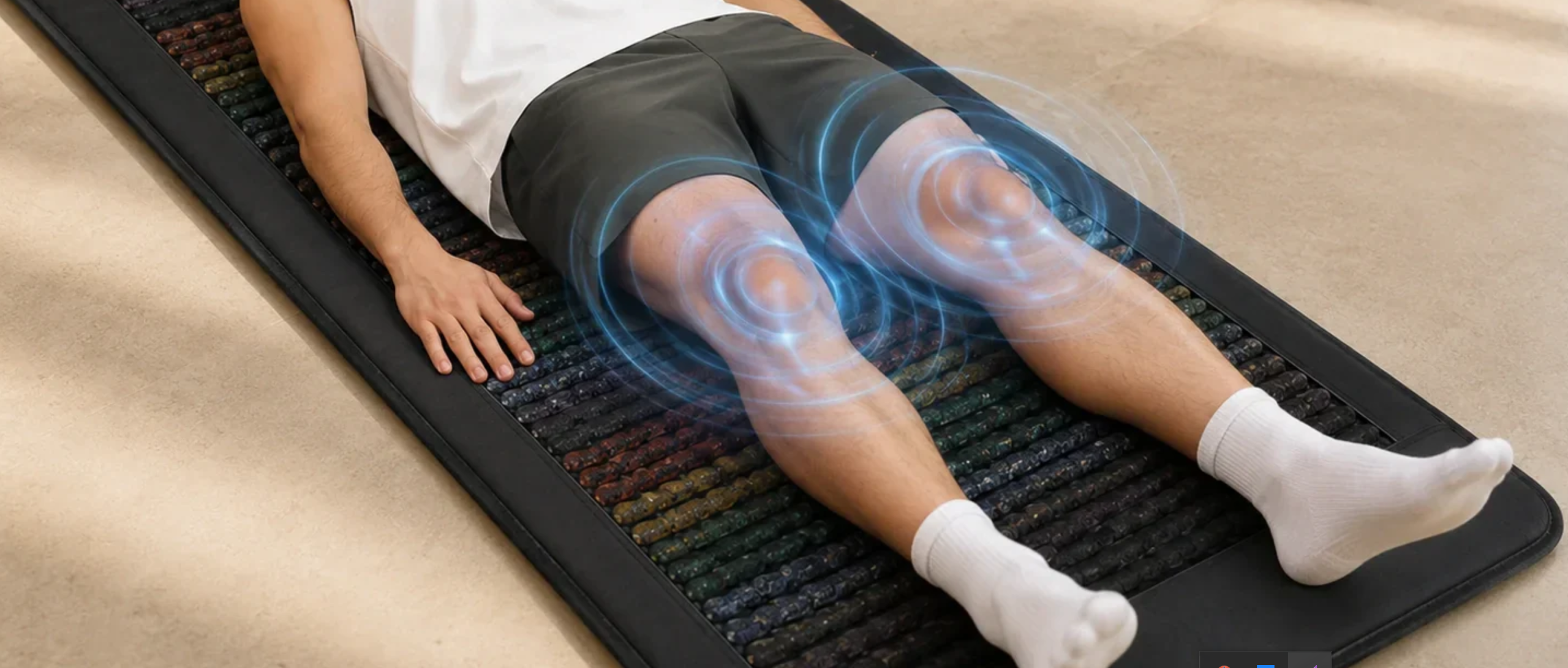
Ever woken up with that stiff, achy knee that makes you dread the stairs? Yeah, me too. That’s actually what got me digging into PEMF therapy for joint pain in the first place.
Here’s the thing: PEMF isn’t some miracle cure, but it’s also not just wellness hype. A 2026 meta-analysis in Medicina pooled data from 457 patients across 9 randomized trials and found real, measurable effects, just more nuanced than marketing pages let on.
In this guide, I’ll break down what the actual research says about PEMF therapy for joint pain, which joints it seems to help most, and what realistic expectations look like. No hype, just the science.
What Is PEMF Therapy for Joint Pain?

Okay so here’s the simple version. PEMF stands for pulsed electromagnetic field therapy, and it uses low-level electromagnetic pulses aimed directly at painful joints.
The FDA actually cleared a form of PEMF for bone healing back in 1979, specifically for fractures that weren’t healing properly on their own. That’s decades of regulatory history, not some brand-new fad.
Unlike NSAIDs or injections, PEMF is non-invasive and drug-free. You just place the device near the joint and let it run, usually for 15-30 minutes.
- PEMF uses electromagnetic pulses aimed at joint tissue
- FDA-cleared for bone healing since 1979
- Non-invasive alternative to NSAIDs and injections
- Typically used as an adjunct to physical therapy, not a replacement
I remember the first time I read about PEMF for joints, I honestly expected either “total miracle” or “total scam” takes online. The truth, as usual, is somewhere in the messy middle.
What Does the Research Say About Knee Osteoarthritis?
This is where most of the research has focused, so let’s dig in.
A meta-analysis in BMJ Open found PEMF improved function in knee osteoarthritis with a standardized mean difference of -0.34, and even stronger improvement in hand osteoarthritis at -1.49.
But a more recent 2026 systematic review in Medicina found something more nuanced: no significant pain improvement at one month overall, but WOMAC-pain scores did improve significantly at 18-21 days, and stiffness and daily activity improved at the one-month mark.
A separate wearable PEMF device study from Integrative Wellbeing Institute found that 66 adults using a wearable knee device for 12 hours daily over 4 weeks saw clinically meaningful pain reduction with a medium effect size compared to placebo.
- BMJ Open: functional improvement in knee OA (SMD -0.34)
- 2026 review: pain improved at 18-21 days, not always at 1 month
- Stiffness and daily activity improved significantly at 1 month
- Wearable device study: medium effect size for pain vs. placebo
I’ll be honest, when I first saw “no significant improvement at one month” in that 2026 review, I almost stopped reading. But then I saw the time-dependent effects, and it actually made more sense. Timing and device settings clearly matter a lot here.
What About Hand, Hip, and Other Joint Pain?
Knee osteoarthritis gets most of the research attention, but other joints have been studied too.
For thumb carpometacarpal (CMC) osteoarthritis, a 2025 clinical study in PMC/NIH found that PEMF therapy at 8 hours nightly for 4 weeks improved thumb pain with effects sustained to 6 weeks, though the degree of relief was described as mild.
For hip pain, there’s an ongoing randomized controlled trial looking at PEMF as an adjunct to physical therapy after total hip arthroplasty, published on PMC/NIH. Results aren’t fully in yet, but it shows researchers are taking this seriously for post-surgical recovery too.
- Thumb CMC osteoarthritis: mild but sustained pain relief over 6 weeks
- Hip pain: ongoing trials for post-surgical rehabilitation
- Knee osteoarthritis remains the most studied joint by far
- Evidence quality varies significantly by joint type
One thing that surprised me: the thumb study used PEMF for 8 hours overnight, which is way longer than the 15-30 minute sessions most home mats recommend. Session length clearly isn’t one-size-fits-all.
How Strong Is the Evidence, Really?
Alright, let’s talk honestly about the limitations, because that matters just as much as the benefits.
A 2026 review in EMJ Reviews concluded that current evidence supports PEMF as a safe adjunct for reducing pain and improving function, but disease-modifying effects like cartilage regeneration remain unproven.
The same review noted that most trials are underpowered relative to Phase III standards, with substantial variability in treatment protocols across studies. That’s researcher-speak for “we need bigger, more consistent studies.”
A separate narrative review in Medicina put it well: PEMF and vibration therapies show “promising but less consistent effects because protocols, devices, sham conditions, and populations vary.”
- PEMF supports pain and function, not cartilage regeneration
- Most trials are underpowered by clinical research standards
- Treatment protocols vary widely between studies
- Current guidelines treat PEMF as adjunct, not first-line care
My honest takeaway? PEMF is a legitimate adjunct tool with real research support, but if any product claims it’ll fully replace physical therapy or reverse joint damage, that’s overselling what the science actually shows.
How to Use PEMF Therapy for Joint Pain at Home
So you don’t need a clinic appointment to try PEMF for joint pain anymore, which is honestly one of the biggest shifts in wellness tech lately.
Home PEMF mats and wearables have become way more accessible, and a lot of people use them as part of an evening wind-down routine alongside their regular physical therapy or exercise plan.
When I first looked into these, I made the mistake of assuming any PEMF device would work the same. That’s not true, amplitude and frequency both affect outcomes, according to that 2026 Medicina review I mentioned earlier.
Here’s what I’d actually look for if you’re shopping around:
- Published frequency and intensity specs, not just vague marketing language
- Realistic claims that mention “adjunct” or “may help,” not “cures arthritis”
- A return policy so you can test it without pressure
- Consistency in daily use, since most studies used regular, repeated sessions
One option that combines PEMF with infrared heat and negative ion output in a single home mat is the Tesla MedBed X, which I actually broke down in detail in a full review here if you want to see the pros, cons, and honest verdict before buying.
Just remember, and I can’t stress this enough, none of these home devices are meant to replace medical treatment for joint pain. Think of them as a possible addition to your existing care plan, not a substitute for it.
Final Thoughts on PEMF Therapy for Joint Pain
So, what does the science say about PEMF therapy for joint pain? The evidence is real but nuanced, PEMF appears to help with pain, stiffness, and function in knee and hand osteoarthritis, though effects depend heavily on timing and device settings.
It’s not a cure, and it doesn’t seem to regenerate cartilage or reverse joint damage, whatever some marketing pages might imply. But as an adjunct to physical therapy and standard care, it has genuine research support.
If you’re curious to try it, just go in with realistic expectations and pick a device that’s transparent about its specs and limitations. That’s honestly the biggest lesson I’ve learned going down this rabbit hole.
Want to see how one specific home PEMF and infrared mat stacks up? Check out my in-depth Tesla MedBed X review for the full breakdown, or explore Tesla MedBed X directly to see current pricing.
Sources and Further Reading
- Pulsed Electromagnetic Field Therapy in People with Knee Osteoarthritis: A Systematic Review and Meta-Analysis — Medicina
- Efficacy and Safety of PEMF in Osteoarthritis: A Meta-Analysis — BMJ Open
- Clinical Efficacy of Pulsed Electromagnetic Field Therapy for Thumb CMC Osteoarthritis — PMC/NIH
- Osteoarthritis: Potential of Pulsed Electromagnetic Field Therapy — EMJ Reviews
- Pulsed Electromagnetic Field Therapy for Knee Osteoarthritis — Integrative Wellbeing Institute