
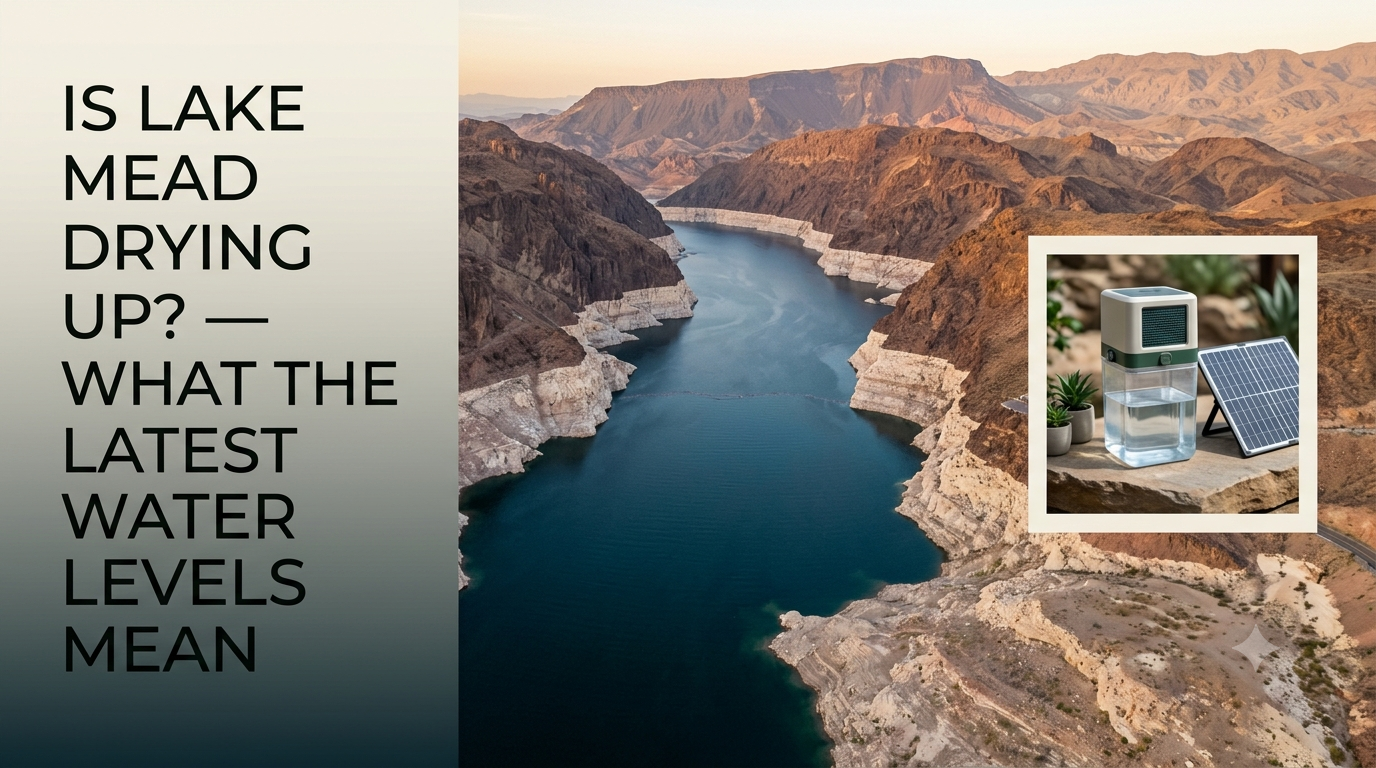
Is Lake Mead drying up? Not completely — but it is under serious stress, and the numbers are not something I’d shrug off. The reservoir sat around 1,038.5 feet above sea level on September 16, 2026, holding roughly 26% of active capacity, according to reporting based on Bureau of Reclamation data. That is a long way from a full lake.
For people in Arizona, Nevada, Southern California, and other Colorado River Basin communities, Lake Mead is not just a pretty vacation view. It is part of a massive water system that affects homes, farms, cities, power generation, and emergency planning.
This is not about panic. It’s about paying attention, understanding what low reservoir levels really mean, and making practical decisions before a water problem lands in your lap.
Is Lake Mead Drying Up? The Short, Honest Answer
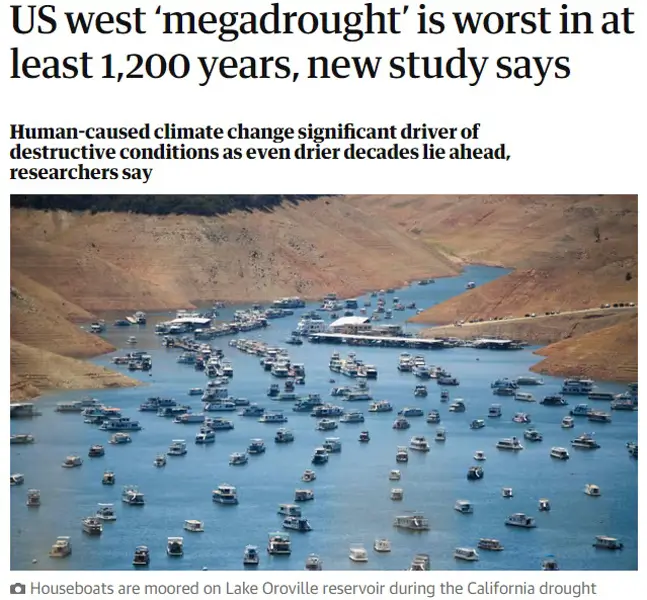
Lake Mead is not empty, but it remains historically low and has recently reached record-low elevations. In mid-September 2026, Lake Mead was reported at approximately 1,038.5 feet above sea level, with about 6.875 million acre-feet of water, or roughly 26% of active capacity.
That does not mean the taps will suddenly stop tomorrow. Water systems are complex, and cities use reservoirs, groundwater, conservation programs, water-rights agreements, treatment plants, and other sources.
Still, the lake’s level matters because it is one of the main indicators used to decide Colorado River shortage conditions and delivery reductions. The City of Scottsdale described Lake Mead as remaining at historically low levels in August 2026, at approximately 1,039 feet, while noting continued stress across the Colorado River system.
The big thing I learned when following reservoir headlines is this: “not empty” does not equal “everything is fine.” A reservoir can still be low enough to trigger policy changes, reduced allocations, conservation rules, and expensive long-term planning.
- Lake Mead is the largest reservoir in the Lower Colorado River Basin.
- Its elevation is used to help determine shortage conditions and water deliveries.
- Recent levels are historically low compared with full-pool conditions.
- Low water levels affect planning for Arizona, California, Nevada, and Mexico.
- Water shortages do not affect every household in the same way or on the same timeline.
For context, Lake Mead’s reported full-pool elevation is about 1,229 feet. Recent readings put it roughly 190 feet below that mark, based on water-level data tracked from Bureau of Reclamation information.
You can follow official conditions through the Bureau of Reclamation’s Colorado River reservoir reports, rather than relying only on scary social-media screenshots. The daily number moves around, but the broader trend is the important part.
Why Lake Mead’s Water Level Keeps Falling
Lake Mead’s situation has not been caused by one bad summer. It comes from a combination of long-term drought, a warming climate, lower snowpack and runoff, evaporation, population growth, and a Colorado River system that has historically been asked to provide more water than it regularly delivers.
The Colorado River Basin depends heavily on snowpack in the Rocky Mountains. Snow melts, runoff travels downstream, reservoirs fill, and water is allocated to millions of people and large agricultural areas.
When snowpack is low or melts earlier, less water may reach reservoirs. Higher temperatures also increase evaporation and dry out soils, meaning more water can be absorbed before it ever reaches streams and rivers.
Scientific reporting from Eos, published by the American Geophysical Union, notes that overallocation, reduced snowpack, and increased evaporation connected to warming temperatures all contribute to the Colorado River Basin’s water stress.
- Long-term drought has reduced available Colorado River water.
- Warmer temperatures can increase evaporation from soil, rivers, and reservoirs.
- Reduced snowpack can lower spring and summer runoff.
- Dry soils absorb water before it reaches streams and reservoirs.
- Water demand from cities and agriculture remains high across the basin.
- Historic water-allocation agreements were built around river-flow assumptions that do not always match modern conditions.
I used to think drought only meant “less rain.” That’s part of it, sure, but the bigger picture is how the entire watershed behaves. A hot, dry landscape acts like a sponge before runoff can replenish reservoirs.
Lake Mead’s “bathtub ring” is the visual that gets attention, but the deeper story is less dramatic and more stubborn: long-term water imbalance. That is why conservation and water-management decisions are becoming more aggressive.
What Colorado River Water Cuts Mean for Arizona, California, and Nevada
Low Lake Mead levels are not just a headline problem. They shape real water-policy decisions.
Federal officials announced a two-year Colorado River plan in August 2026 that requires Arizona, California, and Nevada to reduce use by a combined 1.25 million acre-feet annually. Reported allocations include approximately 760,000 acre-feet in reductions for Arizona, 440,000 for California, and 50,000 for Nevada.
An acre-foot is enough water to cover one acre of land one foot deep. It is also often described as roughly the amount used by one to two households in a year, although real household use varies widely.
According to Associated Press reporting on the federal plan, these cuts are intended to stabilize the Colorado River system as Lake Mead and Lake Powell face record-low storage conditions.
- Arizona is facing the largest announced reduction under the new plan.
- California and Nevada are also required to reduce Colorado River water use.
- Mexico is expected to reduce its intake under treaty arrangements.
- Some municipal customers may not see immediate service changes.
- Agriculture, groundwater-dependent communities, and junior water-right holders may face different levels of pressure.
Here is the nuance that matters: a state-level water cut does not mean every home gets the same cut. Some cities have stored supplies, groundwater programs, recycled water, senior water rights, or conservation programs that soften the immediate impact.
For example, Scottsdale stated that its municipal water supply was not reduced under the 2026 Tier 1 shortage conditions, even though Arizona’s overall Colorado River allocation was reduced. So, don’t assume your personal situation from a statewide headline; check with your own local water provider.
Still, widespread cuts can raise pressure on other water sources. That is where rural households, well owners, farmers, and areas with limited infrastructure may feel the squeeze first.
Could Lake Mead Go Completely Dry?

Could Lake Mead go completely dry? It is possible for water levels to become severely low, but “completely dry” is not the most useful question for everyday planning.
A better question is: What happens as the reservoir moves through lower operational thresholds? At lower elevations, water deliveries become harder to manage, hydropower reliability can be threatened, and major policy interventions become more likely.
Lake Mead is connected to Hoover Dam, which generates hydropower. Water levels affect how much pressure is available to move water through turbines, though power generation and water delivery do not simply end at one specific headline number.
The Bureau of Reclamation’s Hoover Dam information explains that the dam is part of a system built for flood control, water storage, irrigation, municipal use, and hydropower. That is why Lake Mead’s level has consequences far beyond boating access or shoreline views.
- Lake Mead can remain low without being literally empty.
- Lower levels can trigger water shortage declarations and allocation cuts.
- Hydropower output can be affected as elevation declines.
- Water-quality, intake, marina, and recreation issues can arise at low levels.
- Federal and state water agencies can change operations before a total collapse occurs.
There are also projections worth watching. Local reporting on a Bureau of Reclamation 24-month study in September 2026 said Lake Mead could drop roughly 40 feet below its then-current level by August 2028 under a “most probable” scenario.
Projections are not promises. Weather patterns, conservation, policy, snowpack, releases from Lake Powell, and water-use reductions can all change the outcome.
But I would not wait for a “zero water” headline to start improving household water preparedness. By then, the easy choices are usually gone.
What Low Lake Mead Levels Could Mean for Your Household
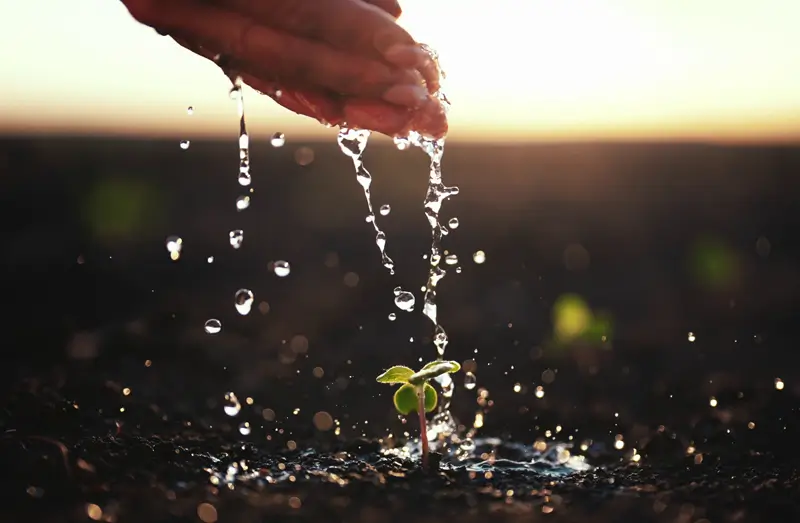
The effect of Lake Mead’s low water levels depends on where you live and how your water reaches your house. A family in Las Vegas, a farm in central Arizona, an off-grid cabin in New Mexico, and a home in coastal California may all feel the Colorado River crisis differently.
For many city residents, immediate changes may look boring: conservation rules, higher water rates, landscaping restrictions, rebates for efficient fixtures, or limits on outdoor watering. That can feel manageable, until it isn’t.
For rural and agricultural communities, the risk may involve less dependable deliveries, more expensive groundwater pumping, pressure on private wells, or conflict over limited water rights. It’s a bit messy, because local water law is complicated and varies a lot.
The U.S. Geological Survey explains groundwater decline as a result of pumping more groundwater than is replenished. When surface-water allocations tighten, demand for groundwater can increase in some areas.
- Watch for drought restrictions from your local water utility.
- Expect water costs and conservation programs to change over time.
- Private-well owners should monitor water level, pressure, pump cycling, and water quality.
- Rural households should know whether they depend on groundwater, hauled water, a shared well, or a local district.
- Keep emergency water storage even if your municipal supply currently seems stable.
My rule of thumb is boring but useful: don’t wait until a restriction is announced to learn where your shutoff valve is, how much water your household uses, or where you’d get water in a three-day outage.
Water preparedness isn’t about predicting disaster. It is about reducing the number of surprises you have to deal with when normal systems get stressed.
Practical Water Preparedness Steps You Can Take Today

The good news is you do not need a bunker, a huge budget, or a remote homestead to become more prepared. Start with small, practical steps that make sense for your household.
The Centers for Disease Control and Prevention recommends storing at least one gallon of water per person per day for at least three days during an emergency. More may be needed for hot climates, infants, older adults, pets, and people with certain health needs.
That first three-day supply is not glamorous. But it is the foundation.
- Store at least three days of emergency water for each person in your household.
- Use clean, food-grade containers with tight-fitting lids.
- Keep a basic water filter, treatment method, and instructions available.
- Learn your local utility’s drought stage, water restrictions, and emergency alerts.
- Fix leaking toilets, faucets, irrigation lines, and outdoor spigots.
- Use drought-tolerant landscaping and efficient irrigation where appropriate.
- Consider legal rainwater collection or a backup water-storage plan for your property.
For off-grid households or families who want an additional backup layer, an atmospheric water generator may be worth researching. It uses humidity and condensation to collect water from air, but its real-world output depends on climate, humidity, energy use, maintenance, and water-treatment practices.
Joseph’s Well is marketed as a DIY atmospheric water generator guide with build instructions, parts sourcing, solar/off-grid power guidance, and water-preparedness resources. You can read the Joseph’s Well review to understand the offer and its practical limitations before deciding if it suits your situation.
Can a DIY Atmospheric Water Generator Help During a Drought?

A DIY atmospheric water generator can be part of a drought preparedness plan, but it should not be presented as a guaranteed replacement for public water, a well, or a properly sized stored-water supply.
Atmospheric water generation works by cooling humid air until moisture condenses. That means it tends to work better in warm, humid conditions than in very dry desert air. Kind of obvious once you say it out loud, but lots of marketing leaves that detail too quiet.
The EPA technical brief on atmospheric water generation notes that water produced by AWG systems requires careful treatment and monitoring, including attention to microbiological water quality.
- Check local humidity and dew-point patterns before buying or building an AWG.
- Plan for electricity or a properly sized solar and battery system.
- Use food-safe parts, covered storage, filtration, and a sanitation routine.
- Test collected water before relying on it for drinking or cooking.
- Use an atmospheric water generator as a supplement to stored water and other legal sources.
I like the idea of a backup system that does not depend on a deep well or a city pipe. But a responsible setup includes reality checks: local humidity, energy use, sanitation, and actual water testing.
If a step-by-step build is more your style than researching every component from scratch, you can view the Joseph’s Well DIY guide. Read the sales page carefully, compare costs, and remember that advertised output can vary based on conditions.
Conclusion: Lake Mead Is a Warning, Not a Reason to Panic
So, is Lake Mead drying up? It is not empty, but it is at historically low levels, and the Colorado River system is under real pressure. The lake’s elevation, low storage, and ongoing water-allocation cuts show why long-term water planning is no longer something only policymakers need to think about.
For households, the right response is calm preparation: understand where your water comes from, follow local utility guidance, store emergency water, reduce waste, and build sensible backup options.
You do not need to solve the Colorado River crisis in your backyard. You just need to make your home a little more resilient than it was yesterday.
Sources and Further Reading
- U.S. Bureau of Reclamation: Lower Colorado River Reservoir Reports
- City of Scottsdale: Colorado River and Lake Mead Update
- Associated Press: Colorado River Water-Cut Plan
- Eos / American Geophysical Union: Colorado River Basin Water Stress
- U.S. Geological Survey: Groundwater Decline and Depletion
- Centers for Disease Control and Prevention: Emergency Water Supply
- U.S. Environmental Protection Agency: Atmospheric Water Generation Technical Brief
- Joseph’s Well Review