
Disclosure: This post contains affiliate links. If you buy through them, I may earn a commission at no extra cost to you.
You can’t protect everything from an EMP. And honestly, you don’t need to.
A fridge, a TV and a gaming console are useless without a working grid anyway. The smarter question is which small, battery-powered gadgets would really help you in a long outage.
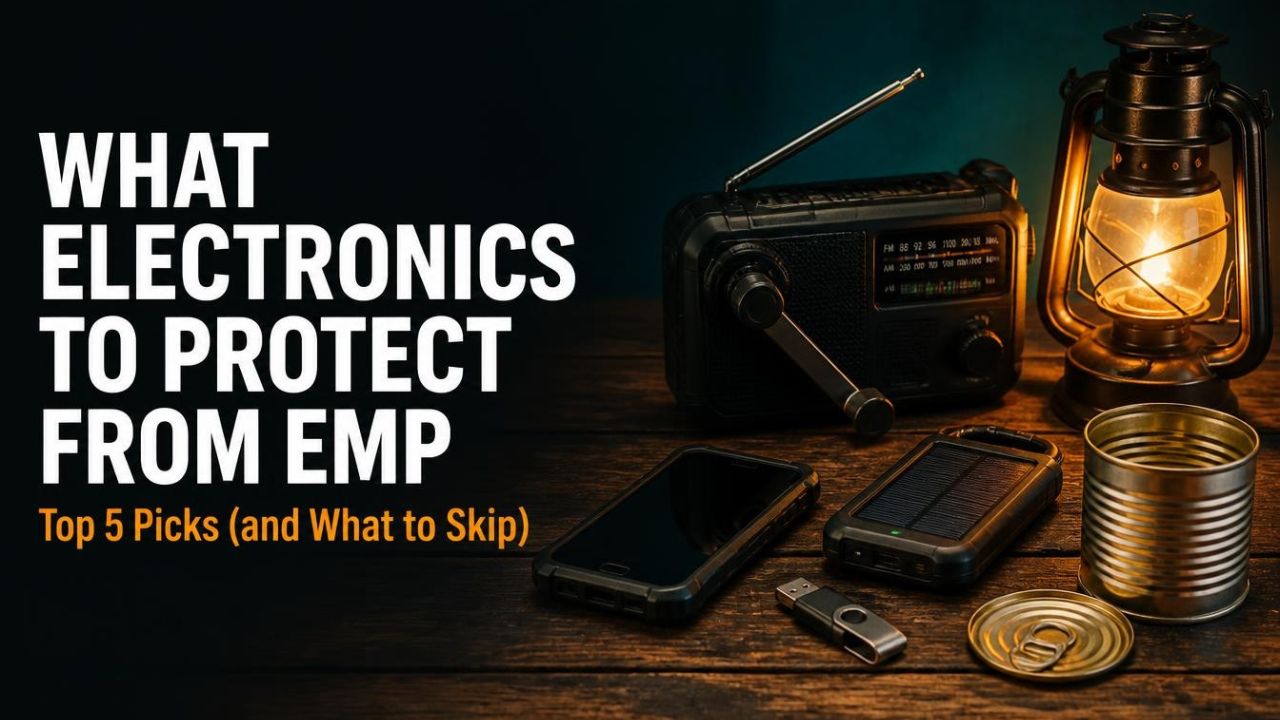
So here’s my simple answer to what electronics to protect from an EMP: five picks worth saving, plus the stuff you can skip.
A Quick Reality Check: How an EMP Affects Electronics

An electromagnetic pulse (EMP) is a burst of electromagnetic energy that can induce surges in conductors, especially long wires. The Department of Energy says EMPs can come from solar activity or man-made devices.
Here’s the honest part. Nobody knows exactly what would break, and a DOE report admits there are gaps in our knowledge.
- Long conductors matter: power lines, antennas and long cables can act like antennas, so connected devices are the most exposed
- Small, unplugged devices: one prepping guide says small battery-powered electronics may be less vulnerable, though experts disagree on how much
- Cars: in lab tests of 37 vehicles, most kept running and three stalled
So treat everything below as smart insurance, not a promise.
How to Decide What’s Worth Protecting
Ask three quick questions about any gadget. If it passes all three, it’s a keeper.
- Is it essential? Would it help with news, communication, light or health?
- Does it work without the grid? Battery, solar or hand-crank devices win
- Is it small and affordable? A backup you can spare is better than your only one
Most of the best picks are also on the Ready.gov emergency kit list. That’s no accident. They solve real problems in any long outage.
The 5 Electronics Worth Protecting

1. A Battery-Powered or Hand-Crank Radio
News is power when everything else is down. Ready.gov lists a battery-powered or hand-crank radio as a core item.
Keep a spare in your Faraday storage, along with a set of fresh batteries.
2. A Backup Phone and Power Bank
Ready.gov also suggests a phone with chargers and a backup battery. An old phone with a short charging cable can work as a spare.
Even if cell towers are down, a phone can still hold maps, contacts and photos of documents.
3. A Small Solar Charger and Rechargeable Batteries
This is your power plan for small devices. A compact solar charger and rechargeable AA or AAA batteries can keep radios and lights going.
Store a spare charger set away from the one you use daily.
4. A Flash Drive or Backup Drive With Key Documents
Ready.gov recommends keeping copies of important documents in your kit. Scan your IDs, insurance, medical records and photos onto a drive.
Keep paper copies too. Paper doesn’t need protecting!
5. A Basic Health Device (If You Use One)
If you rely on something like a digital thermometer or a glucose meter, keep a spare stored with fresh batteries. Ask your doctor or pharmacist what you’d need in a long outage.
For insulin storage, see the FDA’s emergency guidance.
What to Skip (Save Your Money and Space)

Here’s the good news. You can leave most of your stuff out of the plan.
- Big appliances: fridges, washers and ovens are too big and need the grid anyway
- TVs and gaming consoles: fun, but not essential in an emergency
- Desktop computers and routers: bulky, and they depend on power and internet
- Smart home gadgets: most need Wi-Fi and cloud services to work
- Your daily driver car: you can’t fit it in a cage, so plan around it instead
- Everything you already use daily: a cage you open all the time loses its purpose
If you’re wondering about your car, remember the lab tests show results can vary. Newer cars have more electronics than the older models tested.
How to Store Your Protected Electronics

Once you’ve picked your five, it’s time to store them. A Faraday cage is a conductive enclosure that blocks some electromagnetic fields.
A BCIT physics demo shows a metal can blocks a radio signal while a plastic bucket doesn’t.
- Pick a metal container: a metal trash can or ammo can with a tight lid
- Keep devices unplugged: no cords or antennas sticking out
- Line the inside: cardboard or cloth keeps devices off the metal, as many guides suggest
- Test it: seal a radio inside and see if the signal drops
- Use two layers if you can: a smaller can inside a larger one is a popular DIY idea
Be careful: a Faraday cage hasn’t been lab-certified when you make it yourself. Live Science notes that an EMP shield would need to be tight and thick, with no holes.
For a beginner walkthrough, the sales page for this survival guide says it includes a DIY Faraday method using household items.
Common Mistakes to Avoid
Most beginners slip up in the same few ways. Skip these and you’re ahead of the pack.
- Protecting too much: pick five, not fifty
- Storing the charger plugged in: unplug everything before it goes in
- Forgetting batteries: a radio without batteries is just a paperweight
- Never testing the cage: check it before you rely on it
- Skipping non-electric backups: keep a flashlight, paper maps and printed contacts too
- Trusting a single source: check big claims against government and science sources
Beyond Electronics: Why Low-Tech Skills Matter

Gadgets are great, but skills never run out of battery. That’s why some beginners also look at a low-tech skills program like BlastProof: David’s Shield.
According to the sales page, it costs $67 and has a 60-day money-back guarantee. It covers topics like food preservation, water, heat and light, and a DIY Faraday enclosure.
I haven’t read inside the guide, and it isn’t a guarantee of protection. Read my full David’s Shield review before you decide.
Frequently Asked Questions
What electronics should I protect from an EMP?
Start with a radio, a backup phone and power bank, a small solar charger with rechargeable batteries, a flash drive with documents, and any basic health device you rely on.
Should I unplug my electronics before an EMP?
You can’t know when an EMP will happen, but unplugging devices you aren’t using lowers their exposure. One guide suggests unplugging power cords and other cables when not in use.
Will my phone survive an EMP?
No one can promise either way. Experts disagree on small devices, so keep a spare stored.
Is a Faraday cage enough?
It’s one layer, not a guarantee. Pair it with water, food, light and a family plan.
What about my car?
In lab tests, most cars kept running, but newer models are less certain. Don’t build your whole plan around it.
Conclusion: Protect the Few, Prepare for the Many
When it comes to what electronics to protect from an EMP, keep it simple. Save a radio, a backup phone and power bank, a solar charger with batteries, a document drive and a basic health device.
Then skip the rest, build a plan for water, food and light, and learn a few low-tech skills. That’s a calmer, cheaper approach than trying to shield your whole house.
If you’d like a place to start learning, take a look at David’s Shield and use the guarantee to decide for yourself.
Sources and Further Reading
- Wikipedia: Electromagnetic Pulse
- U.S. Department of Energy: EMP Resilience Action Plan (2017)
- DOE / OSTI: Strategies, Protections and Mitigations for Electric Grid from EMP Effects
- Make: Volume 82, EMP Protection chapter (O’Reilly)
- Ready.gov: Build a Kit
- FDA: Information Regarding Insulin Storage and Switching Between Products in an Emergency
- Common Sense Home: EMP Protection
- Wikipedia: Faraday Cage
- BCIT Physics Commons: DEM81 Faraday Cage Demonstration
- Live Science: What Is a Faraday Cage?
- LifeTranq: David’s Shield Review