
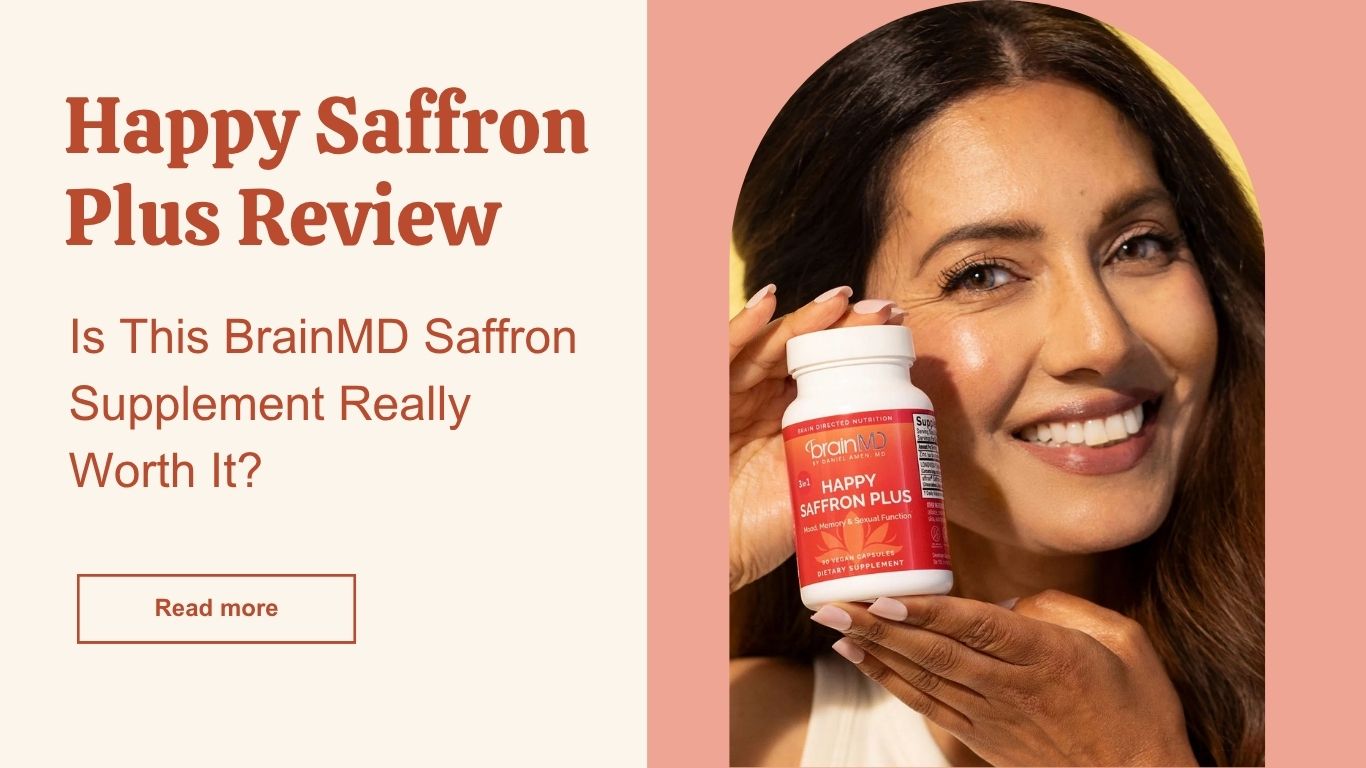
If you’re looking up a Happy Saffron Plus review, chances are you’re tired of feeling flat, stressed, or mentally foggy and want something that’s actually backed by research.
I’ve dug into the ingredients, the clinical studies behind them, and real customer feedback so you can decide whether this formula fits your goals instead of wasting money on another overhyped mood supplement.
Review the Product
What Is Happy Saffron Plus?
Happy Saffron Plus is a 3-in-1 supplement from BrainMD that combines affron saffron extract, Longvida curcumin, and zinc glycinate to support mood, memory, stress resilience, and sexual function.*
The idea is simple: use clinically studied doses of these ingredients in highly absorbable forms, instead of sprinkling tiny amounts just for label appeal.
Who Is Behind Happy Saffron Plus?
Happy Saffron Plus is made by BrainMD, a supplement company founded by psychiatrist Dr. Daniel Amen, known for his work on brain imaging and “brain-directed nutrition.”
The formula uses branded ingredients like affron saffron and Longvida curcumin, both of which have been used in human clinical trials for mood and cognitive support.
Happy Saffron Plus Pros and Cons
| ✅ Pros | ⚠️ Cons |
|---|---|
|
|
Key Features of Happy Saffron Plus
- Standardized saffron extract (affron) at the same daily dose used in several mood and anxiety trials (28 mg/day).
- 400 mg Longvida curcumin per serving, the exact dose used in studies showing better working memory, sustained attention, and reduced fatigue.
- 20 mg zinc glycinate, a well-absorbed form that supports neurotransmitter function and overall brain and immune health.
- Doctor-developed formula with clinical research behind each core ingredient rather than generic turmeric or saffron powders.
- Vegan, allergen-conscious, and designed for daily use rather than “as-needed” stimulant-style effects.
Verdict (Short Answer)
If you want a research-backed saffron supplement that also targets memory and stress through curcumin and zinc, Happy Saffron Plus is a strong candidate, but the price and 3-capsule dosing may not suit everyone.
Who Is Happy Saffron Plus For?
This product might be a good fit if you want targeted, non-pharmaceutical support for mood, focus, and stress, and you’re willing to be consistent for at least 1–3 months.
In particular, it may make sense if you:
- Have low mood, “blah” feelings, or stress that are mild to moderate, not a crisis situation.
- Want a supplement that combines saffron with clinically studied curcumin and zinc instead of taking multiple separate products.
- Prefer vegan, allergen-friendly capsules from a brain-focused brand versus generic, no-name saffron.
Who Should Probably Skip or Be Cautious?
- People with severe depression, suicidal thoughts, or panic-level anxiety who need urgent professional help, not just a supplement.
- Those who are pregnant, as high-dose saffron can stimulate uterine contractions and is considered likely unsafe above food amounts in pregnancy.
- People with bipolar disorder, because saffron can affect mood and might potentially worsen excitability or trigger hypomanic symptoms.
- Anyone with known saffron, turmeric, or similar plant allergies, or with complex medication regimens where interactions are a concern.
Key Features and How They Might Help You
1. Affron Saffron for Mood and Stress
Affron is a standardized saffron extract that has been studied in multiple randomized, placebo-controlled trials for mood, stress, and sleep in both adults and adolescents.
In healthy adults with low mood, 28 mg/day affron for 4 weeks significantly improved overall mood and reduced symptoms related to stress and anxiety compared with placebo.
- How this could help you: If you feel “down” but not in full-blown major depression, saffron might take the edge off negative mood and stress reactivity over several weeks instead of overnight.
- In teenagers with mild to moderate anxiety or depressive symptoms, 28 mg/day affron led to greater improvements in internalizing symptoms and depression scores compared with placebo, at least from the teens’ own reports.
- As an add-on to antidepressants in adults with persistent depression, saffron (14 mg twice daily) produced a larger drop in clinician-rated depression severity than placebo over 8 weeks.
Meta-analyses of saffron trials overall suggest that saffron is more effective than placebo and roughly comparable to standard antidepressants for mild to moderate depression, while generally being well tolerated.
2. Longvida Curcumin for Memory and Cognitive Support
Curcumin (from turmeric) has anti-inflammatory and antioxidant effects that may protect brain cells and support mood and cognition, but standard curcumin is poorly absorbed.
Longvida is a patented solid-lipid curcumin formulation designed for better absorption and has been tested in several controlled trials at 400 mg/day—the same amount in Happy Saffron Plus.
- In older adults (60–85 years), a trial using 400 mg Longvida found acute improvements in sustained attention and working memory just one hour after a dose, plus better working memory and mood (less fatigue and better calmness/contentedness) after 4 weeks versus placebo.
- A longer-term study of a similar bioavailable curcumin (Theracurmin) over 18 months also showed improved memory and attention, along with reduced brain amyloid and tau binding on PET scans, suggesting potential long-term brain benefits.
- These findings point to curcumin as a helpful add-on if your issues include brain fog, focus problems, or age-related memory concerns, not just mood.
3. Zinc Glycinate for Mood, Immunity, and Hormones
Zinc is an essential trace mineral that participates in hundreds of enzymatic reactions, including those involved in neurotransmitter function, immune defense, and DNA synthesis.
Research suggests that low serum zinc is associated with both depression and anxiety, and some small studies show symptom improvements when zinc status is corrected.
- One study in people with anxiety found lower zinc and higher copper-to-zinc ratios compared with controls, and zinc supplementation over at least 8 weeks normalized zinc levels and was associated with improved self-rated symptoms.
- Animal research also suggests that zinc deficiency can induce depression-like behaviors that are less responsive to standard antidepressants, hinting at a link between zinc status and mood regulation.
- The 20 mg dose in Happy Saffron Plus is within the commonly used supplemental range for adults and below typical upper limits, though long-term high intakes can, in some cases, interfere with copper and cause other issues.
4. Allergen-Friendly, Vegan Capsules
Happy Saffron Plus is marketed as vegan and free from dairy, gluten, sugar, corn, nuts, eggs, yeast, and artificial colors or flavors, with only trace non-GMO soy.
If you’re sensitive to common additives or follow a vegan diet, this can make it easier to include in your routine without needing a separate “allergen check” supplement.
5. Clinically Aligned Dosing and Timeline
The recommended dose is 3 capsules per day between meals, providing 28–30 mg saffron, 400 mg Longvida curcumin, and 20 mg zinc.
This mirrors the dosages used in key saffron and Longvida trials, and the brand suggests at least 3 months of consistent use to see full mood and stress benefits, which aligns with the timeframes of many mood-related studies.
Customer Reviews (What Real Users Say)
Customer experiences are always mixed, but they can give you a sense of how Happy Saffron Plus performs in the real world.
Here’s a summary of themes from buyers on major retailers (paraphrased and combined for privacy and clarity).
Positive Experiences
- Many users on sites like iHerb and Walmart say they feel more emotionally balanced and less reactive to daily stress after a few weeks, which fits with saffron’s gradual effect profile.
- Some report a noticeable lift in mood and motivation, describing themselves as “more positive,” “calmer,” or “less stuck in negative thoughts” without feeling sedated.
- Several mention better focus and mental clarity at work or while studying, which matches the Longvida curcumin data on working memory and attention.
- Users who are sensitive to stimulants appreciate that the effect feels “smooth” and not jittery, and they like that the capsules are vegan and easy on digestion.
- A few reviewers describe using Happy Saffron Plus while tapering or after long-term use of mood medications, feeling that it helped them maintain more stable mood—though this is highly individual and should never replace medical supervision.
Negative or Neutral Experiences
- Not everyone feels a strong benefit; some users say they noticed little or no change even after finishing a bottle, which is expected with any mood supplement.
- A recurring complaint is headache after taking the product, which lines up with known saffron side effects like headache and digestive upset in some people.
- A few people feel more anxious or wired on saffron in general; outside of this product, some users report increased anxiety and racing thoughts when supplementing saffron, possibly related to individual brain chemistry or histamine issues.
- Some consider the price too high compared with single-ingredient saffron supplements, especially if they need more than one bottle to decide if it works for them.
Overall, the pattern is “works very well for many, modestly or not at all for others, with occasional headaches or odd mood reactions,” which is consistent with both the science and what we see with most mood-support supplements.
Alternatives and Comparisons
If you’re weighing Happy Saffron Plus against other options, it helps to compare types of products rather than just brand names.
Happy Saffron Plus vs. Basic Saffron Capsules
| Feature | Happy Saffron Plus | Generic Saffron-Only Supplement |
|---|---|---|
| Core ingredients | Saffron (affron) + Longvida curcumin + zinc glycinate | Usually saffron extract only, sometimes at 30 mg/day |
| Evidence base | Aligned with trials on affron, Longvida, and zinc for mood, cognition, and anxiety-related symptoms. | Many use saffron doses similar to those in mood trials, but not all disclose extract standardization or brand. |
| Target benefits | Mood, stress, memory, attention, libido, and general brain support.* | Mostly mood and stress; less direct cognitive support unless combined with other ingredients. |
| Price | Higher per month, around $51 for 90 capsules on the official site. | Often cheaper, but may use non-branded saffron or lower-quality formulas. |
| Best for | People who want an evidence-based, all-in-one brain/mood combo. | People on a tighter budget who mainly want saffron’s mood support. |
Happy Saffron Plus vs. Curcumin-Only Brain Formulas
- Curcumin-only products with Longvida or similar forms may focus more on cognitive aging, inflammation, and joint health.
- Happy Saffron Plus might be a better fit if mood and emotional balance are your primary goals and you like the idea of combining saffron with curcumin and zinc in one formula.
FAQ & Additional Tips
How Do You Take Happy Saffron Plus?
The label direction is 3 capsules daily between meals, or as directed by your healthcare provider.
Children 4–18 are sometimes advised to use 1 capsule per 40 pounds of body weight (up to 3 capsules), but this should really be discussed with a pediatric or adolescent health professional first.
How Long Until You Might Notice Effects?
- In curcumin studies with Longvida, some improvements in attention and working memory were seen within 1 hour of a 400 mg dose, with more stable benefits after around 4 weeks.
- In saffron trials using affron at similar doses, mood and stress improvements typically appeared over 4–8 weeks.
- BrainMD itself suggests at least 3 months of consistent use for best results, which is a realistic expectation for mood-related nutrients.
What Does It Cost and Where Can You Buy It?
- On BrainMD’s official site, Happy Saffron Plus is listed around $51.45 for 90 capsules (about a 30-day supply at full dose), with occasional bundles or subscription savings.
- It’s also sold through other retailers like iHerb, Walmart, Target, and some international marketplaces, sometimes at slightly different prices.
- Be cautious of deals that look “too cheap to be real,” especially from unofficial resellers, as counterfeit supplements are an increasing issue in the online market.
Is Happy Saffron Plus Safe?
Clinical trials generally show saffron to be well tolerated at doses up to about 100 mg/day for up to 26 weeks, with common side effects including drowsiness, stomach discomfort, nausea, and headache in some people.
Curcumin and zinc are also widely used, but high-dose zinc over long periods can suppress copper and cause issues like anemia or changes in immune function, so megadosing on top of this product is not a great idea.
- Do not use high-dose saffron if pregnant, as it may promote uterine contractions and potential miscarriage at doses above typical food amounts.
- People with bipolar disorder, bleeding disorders, or those on blood thinners, sedatives, or medications for blood pressure or blood sugar should talk with their doctor before using saffron supplements.
- If you develop headaches, unusual anxiety, or any odd reactions when taking this or any saffron supplement, it’s reasonable to stop and discuss it with a clinician.
Can It Replace Antidepressants or Therapy?
Even though saffron has shown antidepressant-like effects and, in some trials, performed similarly to standard medications for mild to moderate depression, experts still view it as an adjunct or alternative for those with milder symptoms, not a universal replacement.
If you’re already on antidepressants, studies of affron as an add-on suggest possible additional benefit, but any change in medication or supplement use should be done with your prescribing doctor’s knowledge and guidance.
Any Tips to Get the Most Out of Happy Saffron Plus?
- Take it consistently at roughly the same time each day so you can clearly judge the effects over a full 8–12 weeks.
- Pair it with basics that also have good evidence for mental health, such as enough sleep, regular physical activity, and a nutrient-dense diet rich in omega-3s and colorful plant foods.
- Track your mood, focus, and stress levels weekly in a simple journal or app so you notice subtle trends rather than relying on memory.
Final Verdict
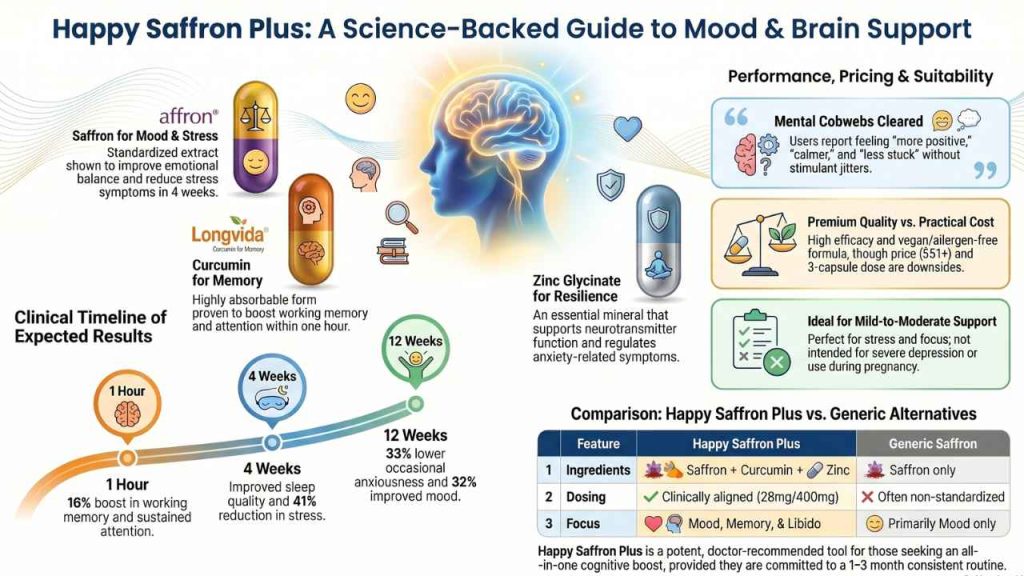
Overall, this Happy Saffron Plus review suggests that the formula makes scientific sense: it combines a clinically supported saffron extract with a proven curcumin form and meaningful zinc dose, all of which have human data for mood, cognition, or anxiety-related symptoms.
If you’re dealing with mild low mood, stress, or brain fog and want a research-aligned, non-pharmaceutical option—and you’re okay with the price and 3-capsule dosing—Happy Saffron Plus could be worth testing for at least 1–3 months to see how your body responds.
The research source:
https://pubmed.ncbi.nlm.nih.gov/28735826/
https://pubmed.ncbi.nlm.nih.gov/31475623/
https://pubmed.ncbi.nlm.nih.gov/29510352/
https://pubmed.ncbi.nlm.nih.gov/25277322/
https://pubmed.ncbi.nlm.nih.gov/29246725/