
Affiliate Disclosure: This article may contain affiliate links. If you make a purchase through a link, I may earn a commission at no additional cost to you. This article is for general education and preparedness planning only, not a substitute for local emergency guidance, medical advice, or professional water-treatment recommendations.
Figuring out off grid water storage per person is one of those jobs that seems easy until you actually start counting. You think, “We have a few cases of bottled water. That should be fine.” Then you remember cooking, brushing teeth, pets, heat, illness, and the fact that the well pump may not work if the power is out.
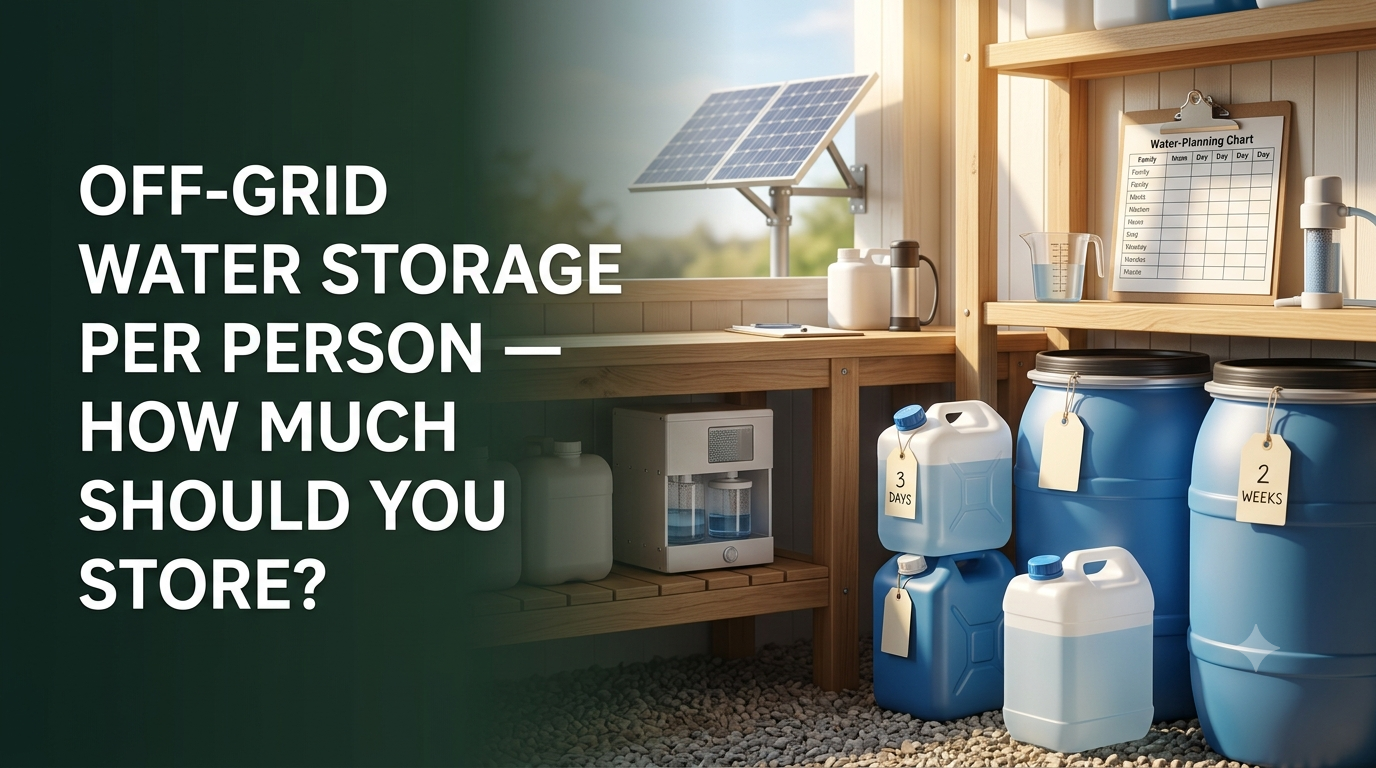
The basic U.S. emergency-planning benchmark is at least **one gallon per person per day**, with a minimum three-day supply. The CDC also says households should try to build toward a two-week supply if possible.
That one-gallon rule is a starting point, not a complete lifestyle plan. Off-grid households may need more because water must cover drinking, cooking, basic hygiene, pets, and sometimes limited sanitation.
This guide explains how much to store, how to calculate your household total, which containers are safest, where to keep them, and how an atmospheric water generator might fit into a broader backup plan.
How Much Off-Grid Water Should You Store Per Person?
The simplest formula for off grid water storage per person is:
Number of people × number of days × 1 gallon = baseline water storage
For one adult, the CDC baseline is 1 gallon per day. That means 3 gallons for three days, 7 gallons for one week, and 14 gallons for two weeks.
For a family of four, the baseline becomes 12 gallons for three days, 28 gallons for one week, or 56 gallons for two weeks.
The Centers for Disease Control and Prevention recommends storing at least one gallon per person per day for drinking and sanitation, and trying to store a two-week supply when possible.
- 1 person: 3 gallons for 3 days, 14 gallons for 2 weeks.
- 2 people: 6 gallons for 3 days, 28 gallons for 2 weeks.
- 4 people: 12 gallons for 3 days, 56 gallons for 2 weeks.
- 6 people: 18 gallons for 3 days, 84 gallons for 2 weeks.
- 8 people: 24 gallons for 3 days, 112 gallons for 2 weeks.
This baseline is not designed to reproduce normal household water use. It is meant to cover essential needs during an emergency.
That distinction matters. A person may use dozens of gallons per day under normal conditions, but emergency storage is focused on drinking, cooking, brushing teeth, and basic sanitation.
When I first calculated storage, the number looked bigger than expected. But once you divide it into several smaller containers, it becomes much more manageable than one giant tank.
Why One Gallon Per Person Per Day Is Only a Starting Point
The one-gallon guideline is useful, but households are not identical. A pregnant person, infant, older adult, sick family member, pet, or household living in extreme heat may need more water.
Physical activity also changes water needs. An off-grid family working outdoors in hot weather can lose fluid quickly through sweat, especially if shade and cooling are limited.
The CDC specifically advises considering extra water for pregnant women, people who are sick, pets, and people living in hot climates. A two-week supply may also be harder to stretch when the temperature is high.
Water storage must account for more than drinking. Some water may be needed for cooking, brushing teeth, medication, handwashing, and limited cleaning.
- Add extra water for hot climates and high physical activity.
- Plan separately for pets and livestock.
- Consider infants, pregnancy, illness, older adults, and medical needs.
- Store additional water for cooking and basic hygiene.
- Keep a separate supply for cleaning or toilet flushing when possible.
One useful habit is separating “drinking water” from “utility water.” Keep your best-treated, sealed water for drinking and cooking. Use rainwater, graywater, or another approved source for tasks that do not require potable water.
Do not assume outdoor water is safe because it looks clean. Ponds, barrels, streams, and untested tanks can contain microorganisms or chemicals.
In other words, calculate the minimum, then add a margin. Water planning with zero margin is like driving with the fuel light already on.
How to Calculate Water Storage for a Family
Start with the number of people who live in the home. Then add pets, special needs, climate, and the number of days you want to cover.
Use the baseline formula first, then adjust upward. This keeps the calculation clear and prevents you from forgetting someone who is not included in the household headcount.
Here is an example: a household with two adults, two children, and one medium-sized dog wants a seven-day water reserve.
The human baseline is 4 people × 7 days × 1 gallon, which equals 28 gallons. Then add water for the dog, hot weather, and extra cooking or hygiene needs.
- Count every person who may shelter at your home.
- Multiply people by days and by 1 gallon.
- Add separate amounts for pets and livestock.
- Add a heat or activity margin for hot climates.
- Decide whether sanitation water is stored separately.
- Write the final target on a household preparedness checklist.
A simple table makes this much easier:
| Household | 3 Days | 7 Days | 14 Days |
|---|---|---|---|
| 1 person | 3 gallons | 7 gallons | 14 gallons |
| 2 people | 6 gallons | 14 gallons | 28 gallons |
| 4 people | 12 gallons | 28 gallons | 56 gallons |
| 6 people | 18 gallons | 42 gallons | 84 gallons |
These are baseline amounts, not guarantees that every household will be comfortable. If you live in a hot area or have animals, increase the target.
What Containers Are Best for Off-Grid Water Storage?
Choosing the right container is just as important as choosing the quantity. Water stored in a dirty, weak, or chemically contaminated container is not a reliable emergency supply.
The CDC recommends food-grade water-storage containers. These containers are designed to reduce the risk of toxic substances transferring into stored water.
Purpose-built water containers come in several sizes. Smaller jugs are easier to move, while larger barrels use space efficiently but may be difficult to transport once filled.
Remember that water weighs about 8.3 pounds per gallon, before adding the weight of the container. A 55-gallon drum can weigh more than 450 pounds when full, so location and floor strength matter.
- Use FDA-approved or clearly food-grade water containers.
- Choose durable, unbreakable containers with tight-fitting lids.
- Use smaller containers if several household members need to move water.
- Use larger tanks only where the floor and access can support them.
- Prefer narrow openings that reduce contamination during pouring.
- Never reuse containers that held pesticides, fuel, solvents, or other toxic chemicals.
Clear plastic jugs are convenient, but they should be kept away from direct sunlight. Light and heat can encourage algae growth and degrade some plastics over time.
Do not put a full barrel in an attic, on a weak shelf, or beside electrical equipment. A leak can cause more damage than the water is worth.
It is better to have several safely stored small containers than one giant container you cannot inspect, clean, rotate, or move.
How to Clean and Fill Emergency Water Containers

If you fill containers yourself, clean and sanitize them before adding water. Do not assume a container is safe just because it looks clean.
The CDC recommends washing a storage container with soap, rinsing it completely, then sanitizing it with a solution made from unscented household chlorine bleach containing 5% to 9% sodium hypochlorite.
The CDC’s instructions use 1 teaspoon of bleach in 1 quart of water for sanitizing the inside of the container. The solution should contact all interior surfaces, remain for at least 30 seconds, then be poured out before the container air-dries.
- Wash the container with soap and rinse it completely.
- Sanitize the inside using the CDC-recommended bleach solution.
- Allow the empty container to air-dry.
- Fill with clean water from a safe source.
- Close the lid tightly and label the date filled.
- Store the container in a cool, dark, accessible location.
Never use scented bleach, splashless bleach, or a product with added cleaners for water-container sanitation unless official guidance says it is appropriate.
If you are filling containers with tap water, follow local guidance about treatment and replacement. The CDC notes that home-filled water should generally be replaced every six months.
Commercially bottled water is often the simplest emergency option because it is sealed and produced for drinking. It can cost more, but convenience has value when you are building a plan from scratch.
Where Should You Store Off-Grid Water?

Water should be stored somewhere cool, dark, dry, and protected from chemicals. The best location is also easy to reach during a power outage, storm, wildfire, or other emergency.
Do not store drinking water beside gasoline, pesticides, paint, bleach, fertilizers, or strong cleaning products. Containers can leak, fumes can spread, and mistakes happen when people are tired.
Basements may work if they do not flood. Garages can work if temperatures are controlled and containers are protected from sunlight. Closets, under-bed storage, and interior utility rooms may be better for smaller containers.
- Choose a cool, dark location away from direct sunlight.
- Keep containers away from toxic chemicals and fuels.
- Protect water from freezing and extreme heat.
- Place heavy containers on strong, level surfaces.
- Keep at least some water inside the main living area.
- Store a small portable supply for evacuation or quick movement.
One storage mistake I see often is putting every container in one place. That creates a single point of failure. If the garage floods or becomes inaccessible, the entire water supply is lost.
Split the supply between two or three safe locations. It takes a little more organization, but it gives you options.
How Long Does Stored Water Last?
Commercially bottled water should be stored according to the manufacturer’s instructions and kept sealed until needed. Home-filled containers need more active management.
The CDC recommends replacing water in home-filled containers every six months. That does not mean the water instantly becomes unsafe on day 181, but scheduled replacement reduces uncertainty and supports good hygiene.
Label every container with the date it was filled. Without a date, you are forced to guess later, and guessing is not a good inventory system.
- Write the fill date on every home-filled container.
- Set a calendar reminder for replacement or inspection.
- Check for leaks, damaged lids, swelling, algae, or unusual odors.
- Rotate older water into cleaning or garden use when appropriate.
- Refill containers only after cleaning and sanitizing them again.
Keep an inventory list too. It sounds overly organized until you need to know whether you have 18 gallons or 40 gallons available.
Do not mix old and newly filled water in one container unless the container has been emptied, cleaned, and sanitized. Fresh water does not magically sanitize old water or a dirty tank.
How Much Water Do Pets and Livestock Need?
Pets need their own water plan. Their requirements vary by size, species, diet, activity level, temperature, and health.
Dogs and cats may need more water during heat, illness, pregnancy, or high activity. Livestock needs can be much larger, especially in hot weather. A few extra gallons in the corner will not cover a herd.
Ask your veterinarian or livestock specialist for appropriate daily amounts. Use the one-gallon-per-person guideline for people, not as a universal animal formula.
- Count each dog, cat, bird, rabbit, and other household animal.
- Plan extra water for hot weather, illness, and active animals.
- Store pet water separately from chemicals and human drinking water.
- Keep collapsible bowls and portable containers available.
- Plan a larger supply for livestock or arrange a reliable refill source.
Do not let pets drink from questionable puddles, tanks, or untreated collection barrels during an emergency. Animals can also be harmed by contaminated water.
For larger animals, calculate daily needs with someone who understands your species and local climate. The volume can become enormous, so early planning is essential.
Can Rainwater or Atmospheric Water Add to Your Storage?
Rainwater collection, fog catchers, wells, and atmospheric water generators can supplement stored water. They should not replace a basic emergency reserve.
Rainwater collection laws vary by state and local jurisdiction. Before installing a large tank, check local rules, building requirements, mosquito-control guidance, and water-treatment expectations.
Atmospheric water generators collect moisture from air through condensation. They may be useful in humid conditions, but they need energy, maintenance, filtration, safe storage, and water testing.
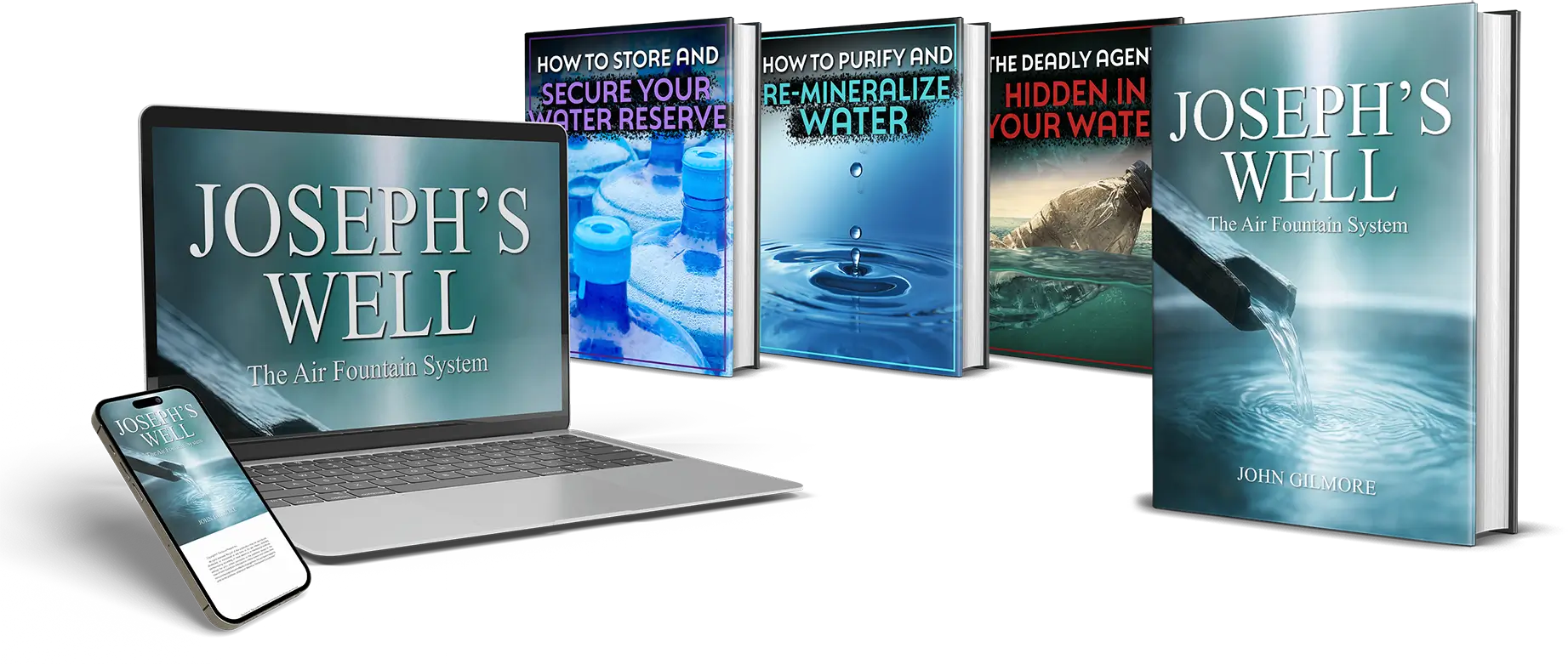
Joseph’s Well is marketed as a DIY atmospheric-water-generator guide with instructions, materials sourcing, power options, and water-preparedness bonuses. Its advertised output and cost figures are vendor claims and may vary by climate, humidity, equipment, and build quality.
- Store emergency water before depending on collection or generation.
- Check local laws for rainwater and storage systems.
- Match an atmospheric-water system to local humidity and available power.
- Use food-safe collection and storage components.
- Filter, disinfect, and test water from unfamiliar sources.
- Treat generated or collected water as supplemental until proven reliable.
If you want to explore a guided DIY water-from-air approach, you can read the Joseph’s Well review first.
Then, if the product fits your goals and conditions, you can view the Joseph’s Well guide details. Keep the stored-water reserve regardless of whether you build an additional system.
Build a Practical Off-Grid Water Storage Plan
Once you know your target quantity, break the plan into stages. Trying to buy every gallon at once can be expensive, heavy, and discouraging.
Start with three days of drinking and cooking water. Then build toward seven days. After that, work toward the CDC’s suggested two-week goal if your space and budget allow.
Use several container sizes. Small jugs are useful for carrying and evacuation, while larger containers are efficient for stationary storage.
- Stage 1: Store at least three days of water for every person.
- Stage 2: Add separate water for pets and special needs.
- Stage 3: Build toward a seven-day supply.
- Stage 4: Aim for two weeks if space and budget permit.
- Stage 5: Add filtration, treatment, and legal collection options.
- Stage 6: Test the plan with a short water-outage drill.
That last step is valuable. Turn off the normal water supply for a few hours and see what happens. How do you access the containers? How do you pour them? Where do you wash dishes? How much water does the pet actually use?
Small problems are much easier to fix during a drill than during a real emergency.
Storage is not just a number. It is containers, location, rotation, sanitation, access, and a plan for producing or collecting more water if the interruption lasts longer than expected.
Conclusion: Start With One Gallon, Then Build Your Margin
The baseline for off grid water storage per person is at least one gallon per person per day for three days. Where possible, work toward a two-week supply and add extra water for heat, pets, illness, pregnancy, children, and livestock.
Use food-grade containers, store water away from sunlight and chemicals, label home-filled containers, and replace them according to CDC guidance. Then add filtration, treatment, and lawful backup sources.
You do not need to build the perfect system overnight. Start with the first three days, calculate your real household needs, and add a little more each time you shop.
Preparedness becomes much less overwhelming when it is built one safe container at a time.
Sources and Further Reading
- Centers for Disease Control and Prevention: Creating and Storing an Emergency Water Supply
- Centers for Disease Control and Prevention: Cistern Safety and Emergency Water
- Centers for Disease Control and Prevention: Safe Water Storage
- U.S. Environmental Protection Agency: Private Wells and Water Safety
- U.S. Environmental Protection Agency: Atmospheric Water Generation Technical Brief
- Joseph’s Well Review