
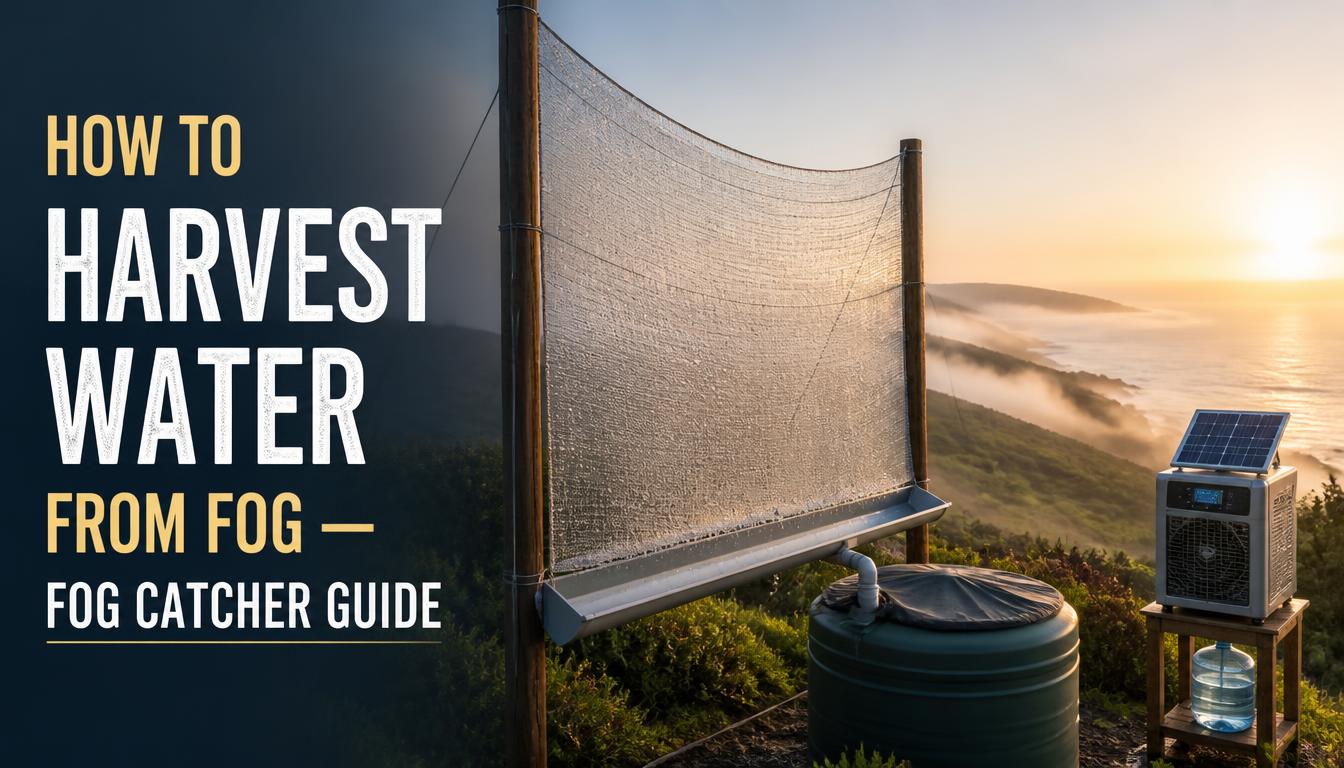
Learning how to harvest water from fog feels almost magical the first time you see it. A wet gray cloud moves through a hillside, tiny droplets strike a mesh screen, and clear water slowly runs down into a gutter.
There is no generator roaring in the background. No pump needed at the net. Just fog, wind, gravity, and a well-placed piece of mesh.
But fog harvesting is not a magic trick that works everywhere. It depends heavily on location, wind, fog frequency, terrain, mesh design, and maintenance. A fog catcher built on the wrong hill can collect almost nothing.
This guide explains how fog catchers work, where they are most effective, how to build a small DIY fog collector, how much water you might collect, and why water treatment still matters before drinking it.
What Is a Fog Catcher and How Does It Collect Water?
A fog catcher, also called a fog collector or fog net, is a vertical mesh screen placed where wind carries dense fog through it. Tiny droplets in the fog hit the fibers, stick together, become larger drops, and then run downward by gravity.
The water is collected in a gutter at the bottom of the mesh. From there, it can flow through a pipe into a storage tank, barrel, cistern, or distribution system.
It is a pretty simple idea, but the placement is everything. A fog net needs moving fog. If there is no regular fog crossing the mesh, there is nothing to collect.
The Food and Agriculture Organization fog-collection case study explains that fog droplets are pushed through mesh by wind, deposit on the material, combine into larger droplets, and drain into gutters and storage tanks.
- Fog is made of tiny suspended water droplets.
- Wind carries fog through a vertical collection mesh.
- Droplets collide with and cling to the mesh fibers.
- Small droplets merge into larger drops.
- Gravity pulls water down into a gutter and storage tank.
A fog catcher does not pull water out of dry air the way a refrigeration-based atmospheric water generator does. It captures water that is already present as visible fog droplets.
That distinction is important. Fog harvesting uses little or no electricity at the collection stage, but it only works when nature provides the right conditions.
Where Can You Harvest Water From Fog Successfully?
The best fog-harvesting locations are usually coastal hills, mountain ridges, islands, high desert areas near the ocean, and other places where dense fog passes through regularly.
Fog nets are often installed on ridgelines because they can intercept moving fog before it disperses. Wind direction matters too. A collector should face the prevailing fog-bearing wind, not just whichever direction looks nicest from the house.
FogQuest, a nonprofit that has built fog-water systems in remote regions, says it assesses fog frequency, terrain, and wind patterns before choosing a site. That is exactly the right mindset.
I have seen people get excited about a DIY fog net because they wake up to morning mist a few times each year. But light mist in the backyard is not always enough. You need frequent, dense, wind-driven fog for meaningful collection.
- Coastal hills and ridges with regular marine fog are strong candidates.
- Mountain passes can work when fog is pushed through by predictable winds.
- Elevated terrain often performs better than low sheltered valleys.
- Open sites need enough wind to move fog through the mesh.
- Sites near roads, factories, or heavy pollution may create water-quality concerns.
Before buying materials, run a simple test. Spend a few weeks recording fog days, wind direction, wind speed, and how long the fog lasts.
You can also install a tiny test collector, maybe one square meter of mesh, before building a full-size system. It is much cheaper to discover that your site is wrong with a small experiment than with a big frame and several hundred dollars in materials.
How Much Water Can a Fog Catcher Collect?

The honest answer is: it depends. Fog collection output can vary wildly from one location to another, and even from one day to the next.
A small backyard fog collector may gather very little water. A large community-scale fog net, installed in a proven fog corridor, can collect much more.
FogQuest has used large fog collectors with around 40 square meters of mesh in projects designed to supply remote communities. The organization notes that site conditions, mesh quality, and wind patterns determine whether a collector provides a reliable daily yield.
The mesh is only one part of the equation. You also need dense fog, steady wind, the right orientation, durable support posts, gutters that drain correctly, and clean storage.
- Small DIY fog nets may collect only small amounts in marginal conditions.
- Large fog collectors can produce meaningful volumes at proven fog sites.
- Dense, frequent fog generally improves output.
- Wind direction and mesh orientation affect collection efficiency.
- Dirty or damaged mesh can reduce water flow.
- Output can fall sharply during dry or low-fog periods.
A case study from Dar Si Hmad and FogQuest describes large mesh systems in Morocco that use 40- to 48-square-meter fog collectors. These systems collect water from mountain fog and route it through gutters and storage before treatment and distribution.
That is a helpful reality check. Community projects that collect serious amounts of water generally use much larger collector areas than the little DIY setup people imagine in their backyard.
For a home project, start with realistic expectations. A fog catcher is often best as a supplemental source for gardening, livestock, cleaning, or emergency water collection — not as the only water source for a whole family.
What Materials Do You Need to Build a DIY Fog Catcher?

A DIY fog catcher can be built with basic materials, but do not underestimate the wind load. A big mesh panel acts a little like a sail, and the first strong gust can turn a flimsy frame into a pile of expensive spaghetti.
The main goal is to create a vertical mesh panel that stays tight, directs water down into a clean gutter, and is strong enough for local wind conditions.
Many successful fog projects use UV-resistant polypropylene or polyethylene mesh. FogQuest recommends a Raschel-type mesh with approximately 35% shade coefficient for large fog collectors, although material choice should fit your local conditions and project scale.
- UV-resistant fog-collection mesh or shade cloth suitable for outdoor use.
- Strong posts, such as treated wood, metal, or properly anchored pipe.
- Cross-bracing, guy wires, or anchors for wind resistance.
- A clean gutter installed at the bottom edge of the mesh.
- Food-safe tubing or pipe to carry water to storage.
- A covered, food-grade barrel, tank, or cistern for storage.
- Screening or a first-flush approach to reduce debris entering the tank.
My first sketch for a fog net would probably have used two light garden stakes and whatever mesh was in the garage. That would work for a one-day experiment, maybe. It would not last through coastal wind.
Build the frame first. Make sure it is stable. Then add the mesh under tension so droplets can drain instead of pooling in saggy pockets.
Keep the gutter slightly sloped toward the outlet. A gutter that sits level will hold stagnant water, collect debris, and give you a maintenance problem you did not need.
How to Build a Simple Fog Water Collector Step by Step
If your property has regular fog, you can build a simple test collector before committing to a larger installation. The goal is not perfection on the first attempt. The goal is learning whether your site has enough fog to justify scaling up.
Start with a manageable mesh size. A one- to two-square-meter test net can show you whether droplets form, drain, and collect consistently.
Do not expect a small test net to fill a large storage tank overnight. You are measuring potential, not trying to supply a household on day one.
- Step 1: Choose an elevated, open spot with regular wind-driven fog.
- Step 2: Set two sturdy posts several feet apart and brace them securely.
- Step 3: Stretch mesh vertically between the posts without large wrinkles or sagging.
- Step 4: Install a clean gutter directly below the lower edge of the mesh.
- Step 5: Slope the gutter toward a drain outlet and attach food-safe tubing.
- Step 6: Run tubing into a covered collection container.
- Step 7: Record daily output, fog duration, wind direction, and weather conditions.
The most common beginner mistake is putting the mesh in a protected backyard corner where it looks tidy. Fog needs to move through the net. If trees, fences, or buildings block the wind, your collector may barely work.
Another mistake is using a dirty old container without a lid. Collected water can pick up leaves, insects, dust, and animal contamination after it leaves the mesh, so storage is part of the system.
After a month of notes, you will know whether you have a hobby project or a real water-harvesting opportunity.
Is Fog Water Safe to Drink?
Fog water should not be assumed safe to drink without treatment and testing. The quality depends on air pollution, dust, bird activity, mesh cleanliness, storage conditions, local industry, and how the system is maintained.
Fog can carry low levels of dissolved minerals, and studies have found that harvested fog water can meet drinking-water standards in some remote, well-managed systems. But that does not make every home fog catcher automatically safe.
A review published in the International Journal of Environmental Research and Public Health found that fog-water quality has met national and World Health Organization standards in some projects, while also emphasizing that water quality depends on collection conditions and treatment practices.
Dust accumulation during dry periods is a major concern. When fog returns, that dust can wash into your collection gutter and tank.
- Use fog water for non-potable uses until it has been tested.
- Flush or discard the first runoff after a long dry, dusty period.
- Keep mesh, gutters, tubing, and tanks clean.
- Use covered food-grade storage containers.
- Filter and disinfect water before drinking when appropriate.
- Use a certified laboratory to test water before relying on it for drinking or cooking.
The Centers for Disease Control and Prevention advises that emergency water should be bottled, boiled, or properly treated before use. Boiling can kill many germs, but it does not remove all chemical contaminants.
So, if your fog net is near a highway, industrial area, crop-spraying zone, or heavily polluted city, be extra cautious. The water may be fine for irrigation or cleaning but not worth gambling on as drinking water.
Fog Catcher Maintenance: Keep the System Working and Clean

A fog collector is simple, but it is not maintenance-free. Mesh gets dusty. Gutters clog. Tension loosens. Wind can damage posts and lines.
If you want reliable output, treat the system like a piece of outdoor equipment, not a one-time weekend craft project.
FogQuest notes that large mesh collectors are installed in remote areas with attention to wind, terrain, and maintenance. That tells you something important: even proven community systems need regular care.
- Inspect mesh for tears, sagging, UV damage, and loose fasteners.
- Remove dust, leaves, insects, and debris from gutters.
- Check that water drains freely into the storage container.
- Clean and sanitize storage tanks on a regular schedule.
- Inspect posts, anchors, and guy wires after storms or high winds.
- Flush the system after long dry periods before collecting drinking water.
I like to think of the first collection after a dusty dry spell as “roof runoff.” You would not want the first dirty rinse from a roof in your drinking container, and the same logic applies here.
A simple screen at the tank inlet can keep out leaves and insects. A covered tank prevents sunlight from encouraging algae growth and stops animals from getting into the water.
Fog Harvesting vs. Atmospheric Water Generators
Fog catchers and atmospheric water generators both collect water from the atmosphere, but they work in completely different ways.
A fog catcher uses mesh to capture visible fog droplets moving in the wind. It can operate with little or no electricity, but it only works in locations with frequent, dense fog.
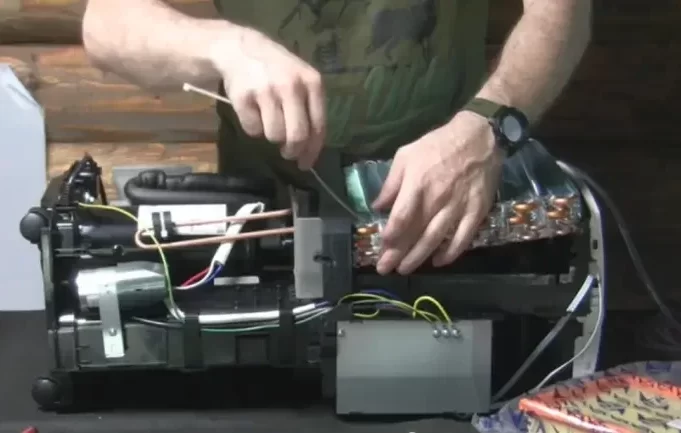
An atmospheric water generator uses cooling and condensation to pull moisture from humid air. It may work in a wider range of humid locations, but it requires electricity or a properly sized solar-and-battery setup.
- Fog catcher: Uses wind-driven fog, mesh, gravity, and storage.
- Atmospheric water generator: Uses cooling coils, condensation, filtration, and power.
- Fog catcher: Best in coastal, mountain, and fog-prone locations.
- Atmospheric water generator: Generally performs better in warm, humid air.
- Both systems: Require proper storage, maintenance, treatment, and water testing.
Joseph’s Well is marketed as a DIY atmospheric-water-generator guide with build instructions, materials sourcing, and on-grid or off-grid power guidance. The advertised results are vendor claims and can vary depending on humidity, temperature, power use, build quality, and maintenance.
If you do not live in a reliable fog zone, a condensation-based system may be more practical to research than a fog net. You can read the Joseph’s Well review to see what the DIY guide includes and whether it fits your local conditions.
Build a Layered Water Preparedness Plan
A fog catcher can be a great low-energy water-harvesting project if your site has the right weather. But it should be one part of a layered water plan, not your only source of drinking water.
Start with stored drinking water. The CDC recommends keeping at least one gallon of water per person per day for at least three days during an emergency, with more needed for heat, children, older adults, pets, or medical needs.
Then add options that fit your property: filtration, water treatment, rainwater collection where legal, a private well, storage tanks, fog collection, or atmospheric water collection.
- Store emergency drinking water in sanitized food-grade containers.
- Keep a quality water filter and a tested water-treatment method.
- Learn local rules for rainwater harvesting and water storage.
- Use fog collection as a seasonal or supplemental source.
- Test any new water source before relying on it for drinking.
- Choose a backup system that matches your climate rather than a trend online.
For people who want a structured DIY option beyond fog collection, you can view the Joseph’s Well water-system details here. Read the claims carefully and compare the system’s expected performance with your real humidity, electricity, and water needs.
Conclusion: Fog Water Harvesting Works Best in the Right Place
Learning how to harvest water from fog is a practical reminder that water can be collected from the atmosphere without a major machine or huge energy bill. A fog catcher uses mesh, wind, gravity, and storage to turn dense fog into usable water.
But the location decides almost everything. Regular fog, steady wind, elevated terrain, clean air, and durable construction are what separate a useful fog-water collector from a wet piece of netting.
Start with a small test net. Measure real output. Keep the collection system clean. Treat and test fog water before drinking it. Then build up only if your site proves it can deliver.
Water preparedness is not one device. It is a handful of sensible options working together.
Sources and Further Reading
- Food and Agriculture Organization: Fog Collection Case Study
- FogQuest: Fog Collection Systems and Community Projects
- FogQuest: Fog Water Collection Frequently Asked Questions
- U.S. Geological Survey: Fog Water Collection Mesh Research
- International Journal of Environmental Research and Public Health: Fog-to-Water Review
- Centers for Disease Control and Prevention: Making Water Safe in an Emergency
- Joseph’s Well Review