
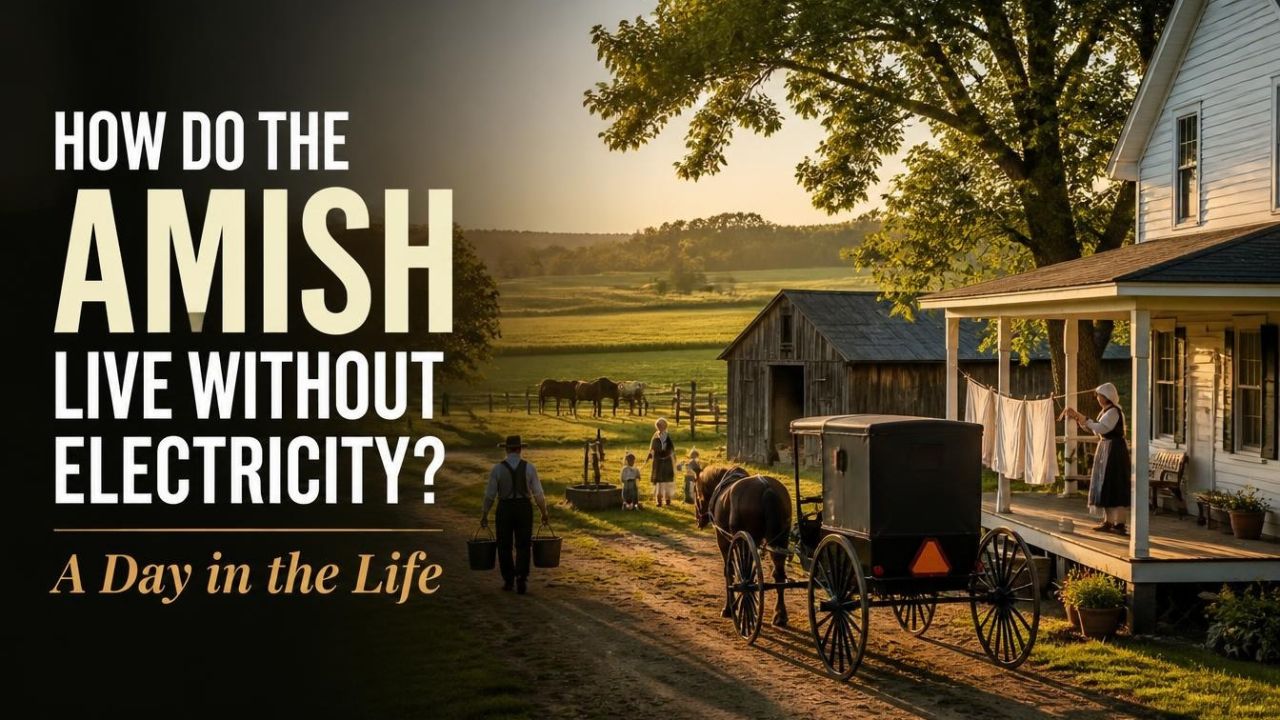
Imagine waking up without an alarm on your smartphone, making breakfast without a microwave, and spending the day without checking email or scrolling through social media. For many of us, that sounds difficult. But for many Amish families, a life with limited public electricity and carefully chosen technology is simply part of the daily routine.
So, how do the Amish live without electricity? The answer involves more than candles and horse-drawn buggies. Let’s take a closer look at a typical day, explore how Amish households manage everyday tasks, and discover what modern families can learn from their approach to simple living.
Why Do the Amish Choose to Live Without Public Electricity?
One of the biggest misconceptions about the Amish is that they reject all modern technology. That’s not quite right. Many Amish communities restrict their connection to the public electrical grid, but they may still use selected technologies that fit their religious beliefs and community rules.
The reasons are connected to faith, family, humility, and community life.
Amish traditions grew from the Anabaptist Christian movement, which emphasized adult baptism, nonresistance, and separation from aspects of mainstream society. Over time, different Amish communities developed local rules about how members should live and which technologies they should accept.
These rules are commonly known as the Ordnung. The Ordnung is a collection of community-specific expectations that can cover clothing, transportation, education, technology, and other parts of everyday life.

According to the Young Center for Anabaptist and Pietist Studies at Elizabethtown College, Old Order Amish regulations commonly prohibit connecting to public utility electricity and owning automobiles, televisions, radios, or personal computers.
Why limit something as useful as electricity?
For many Amish communities, the concern isn’t that electricity is inherently bad. Rather, certain technologies can encourage habits and outside influences that may weaken family relationships and community connections.
The Young Center explains that Amish people often try to control how technology enters their lives instead of allowing it to shape their daily routines.
It’s also important to understand that not every Amish community follows exactly the same rules. There are many different Amish affiliations and local church districts, and their decisions about technology can vary.
In other words, the Amish lifestyle isn’t one universal rulebook. It’s a collection of community traditions shaped by shared religious values.
How an Amish Morning Begins Without Electricity
Picture a quiet farmhouse in the early morning. Sunlight slowly enters through the windows, animals are waiting to be fed, and the day’s work is already taking shape.
Without conventional electric household appliances, daily routines often depend more on daylight, manual tools, and family cooperation.
Waking up and preparing breakfast
Instead of relying on smartphones and electronic alarms, households may use mechanical clocks or simply follow established routines. Morning activities are often organized around the needs of the family and farm.
Breakfast may be prepared using a wood-burning or gas stove, depending on the household’s permitted equipment. Bread, eggs, milk, oatmeal, and other familiar foods can be part of a traditional family breakfast.
Not every household prepares the same meals or follows the same schedule, of course. The important difference is that many everyday tasks are completed without relying on a conventional electric kitchen.
Morning chores around the farm
For Amish families involved in agriculture, the morning can be especially busy. Animals need attention whether or not the sun is shining.
- Feeding horses, cows, chickens, and other livestock.
- Milking dairy cows where the household operates a dairy farm.
- Cleaning animal stalls and checking water supplies.
- Collecting eggs and preparing animal feed.
- Checking fences, tools, and farm equipment.
Horses remain important in many traditional Amish farming communities. They can provide transportation and help with agricultural work.
Children may also take part in age-appropriate household and farm responsibilities. Learning practical skills and contributing to family life are important parts of growing up in many Amish communities.
The Library of Congress Amish resources describe the close relationship between family life, farming, practical education, and community traditions.
How Do Amish Families Cook, Clean, and Manage Their Homes?
Here’s where the subject gets interesting. Living without public-grid electricity doesn’t mean an Amish home has no modern conveniences.
Many households use a combination of gas, mechanical equipment, batteries, and manual tools. The exact arrangement depends on the local Ordnung and the family’s circumstances.
Cooking without a conventional electric kitchen
Some Amish homes use wood-burning stoves, while others use propane or natural gas appliances. These options allow families to prepare everyday meals without depending on a standard electric range.
Cooking from basic ingredients is also common in many traditional households. Baking bread, preparing meals from stored food, canning produce, and making preserves can all be part of household routines.
These skills are practical, but they also reflect a broader approach to family and home life.
Refrigeration and food storage
One question people often ask is: How do the Amish keep food cold without public electricity?
Some Amish households use propane-powered refrigerators and freezers. Others use different permitted systems depending on their community’s rules and available resources.
Food preservation can also play an important role. Canning, drying, pickling, and storing suitable foods in cool locations help families manage seasonal produce and maintain household supplies.
Laundry and cleaning
Washing clothes without a conventional electric washing machine sounds like a major challenge. However, some Amish households use washing machines powered by gasoline engines, compressed air, or other permitted systems.
Manual equipment may also be used for certain tasks. Clotheslines are a familiar feature of many Amish properties, allowing laundry to dry naturally outdoors.

Household cleaning often relies on ordinary tools such as brooms, brushes, buckets, and manual equipment. Some tasks take more physical effort, but they don’t necessarily require sophisticated technology.
The Young Center’s overview of Amish technology explains that Amish communities selectively use and sometimes modify modern equipment to fit their cultural guidelines.
That is an important distinction: the goal is not always to eliminate convenience. It’s to decide which conveniences fit the community’s values.
How Do the Amish Work and Travel Without Electricity?
Work is a major part of daily Amish life, although it’s a mistake to assume that every Amish person is a farmer.
Many traditional households are connected to agriculture, but Amish communities also include carpenters, furniture makers, builders, craftsmen, shop owners, and people operating small businesses.
Farming and traditional occupations
In many communities, horses are used for farm work and transportation. Some equipment is designed to be pulled by horses rather than operated by a conventional tractor.
Other permitted equipment may use gasoline engines, hydraulic systems, compressed air, or limited electrical power. The details depend on local rules.
Amish businesses can also use selected modern tools. For example, a workshop may have equipment that operates differently from the technology used in a typical modern home.
Horse-and-buggy transportation
Horse-drawn buggies are among the most recognizable parts of traditional Amish life. They provide local transportation for work, shopping, visiting neighbors, and attending community activities.
Some communities permit battery-powered lights and turn signals on buggies for road safety. Others have more restrictive practices.
For longer journeys, some Amish people use buses, trains, or hire non-Amish drivers, depending on their community’s rules.
The Library of Congress describes horse-and-buggy travel and walking as common forms of transportation in many Amish communities, with other transportation options used for longer distances.
This approach also helps explain why local community connections are so important. When people travel less independently by car, nearby family members, neighbors, and businesses can play a larger role in everyday life.
How Do Amish Homes Stay Lit and Warm?
Lighting and heating are two of the most practical challenges when a household isn’t connected to the public electrical grid.
Fortunately, electricity is only one way to provide light or heat.
Lighting without conventional grid power
Depending on local rules, Amish households may use oil lamps, gas lighting, battery-powered lights, or other permitted options.
Natural daylight is also important. Household tasks may be arranged to take advantage of daylight, especially in communities where electric lighting is limited.
Some households use batteries charged through permitted systems, including solar panels or generators. This means that an Amish home may contain electrical devices even though it isn’t connected to the public utility grid.
Heating during winter
Wood stoves are a familiar heating option in many traditional homes. Other households may use coal, propane, or different permitted heating systems.

A wood-burning stove can provide warmth and may also be used for cooking. Families must still pay attention to chimney maintenance, ventilation, fuel storage, and fire safety.
Heating needs can also be managed through practical household habits, such as closing unused rooms, wearing warm clothing, and gathering in commonly used living spaces.
It’s worth remembering that Amish households are not all built or heated in the same way. Climate, location, household resources, and community expectations all make a difference.
How Do Amish Children Learn and Spend Their Day?
Family and community are central to Amish life, and children learn practical responsibilities from an early age.
That doesn’t mean childhood is only about working. Education, friendships, recreation, and family activities are also important parts of growing up.
Amish schools
Most Old Order Amish children attend local Amish schools, and formal education commonly ends after the eighth grade.
The curriculum generally emphasizes basic academic skills such as reading, writing, and mathematics, along with preparation for adult responsibilities in the community.
The Library of Congress explains that Amish schools emphasize cooperation, basic learning, and practical preparation for family and working life.
Learning practical skills at home
Children may learn by helping parents and older relatives with everyday responsibilities.
Depending on their age and household, these activities might include:
- Helping feed animals and collect eggs.
- Learning how to prepare simple meals.
- Helping with gardening and food preservation.
- Learning sewing, woodworking, or basic repairs.
- Helping maintain the home and surrounding property.
These activities connect education with everyday life. Rather than treating practical work as something separate from learning, families may use ordinary responsibilities to teach patience, cooperation, and useful skills.
Family and community activities
Social life often centers on relatives, neighbors, church activities, and community gatherings.
Some families spend time visiting one another, sharing meals, working together, or participating in seasonal activities. These relationships can provide a strong support network.
Of course, the exact schedule varies. Amish children are individuals, and their daily experiences differ according to their family, community, age, and interests.
What Happens After Sunset in an Amish Household?
As daylight fades, the rhythm of a traditional household changes. Outdoor work may wind down, animals are checked, and family members turn their attention to evening activities.
Without television, online entertainment, or constant smartphone notifications in many traditional households, evenings may look quite different from those in a typical modern home.
Evening meals and family time
Families may gather for a home-cooked meal, discuss the day’s work, and plan what needs to be done tomorrow.
Conversation and shared activities can take the place of some forms of electronic entertainment.
Reading, sewing, and household tasks
Depending on the household, evening activities might include reading, sewing, mending clothing, preparing food, or completing unfinished chores.
Some families also visit relatives or neighbors. Community relationships don’t stop when the workday ends.
Lighting may come from lamps, permitted battery-powered equipment, or other local options. The amount of available light can influence which tasks are practical after dark.
Preparing for the next day
Many household routines are organized around recurring responsibilities. Animals need care, meals need preparation, and work must be planned around weather and daylight.
That rhythm can make the day feel more structured. It also shows how much a household can accomplish without relying on constant electronic notifications and digital scheduling tools.
Do the Amish Really Use No Electricity or Modern Technology?
No. The idea that all Amish people use absolutely no electricity is a myth. A more accurate description is that many Old Order Amish communities restrict connection to public utility electricity and carefully control which technologies members may use.
The distinction between public-grid electricity and other power sources is important.
Public electricity versus batteries
Many Amish groups prohibit connecting homes to public utility lines. However, batteries may be accepted because they provide a more limited and controllable source of power.
According to the Young Center, batteries are used in some communities for items such as flashlights, buggy lights, calculators, fans, and business equipment.
Solar panels and generators
Some Amish communities permit solar panels to charge batteries or operate selected equipment. Generators may also be used in certain settings, depending on local rules.
These arrangements demonstrate that the Amish approach is not simply about rejecting every form of modern energy. It’s about controlling how technology is used and what role it plays in community life.
Technology rules differ between communities
One community may allow a particular device while another may prohibit it. Some businesses may use equipment that would not be permitted inside a traditional home.
The PBS American Experience overview, Who Is Amish?, describes the diversity among Old Order Amish groups and explains how local congregations apply religious principles differently.
So, when someone asks whether the Amish use electricity, the best answer is: many avoid public-grid connections, but some use limited electricity from batteries, solar energy, or generators.
What Can Modern Families Learn From the Amish Way of Life?
You don’t need to give up your smartphone, sell your car, or move to a farm to learn something useful from Amish household practices.
There are practical ideas that modern families can adapt while continuing to use the conveniences they value.
1. Learn basic household skills
Cooking from basic ingredients, preserving food, sewing, and repairing everyday items can make a household more capable.
These skills are useful during ordinary life, not just emergencies.
2. Reduce dependence on electronic devices
Try completing a few everyday tasks without a screen. Read a physical book, use a paper calendar, learn basic manual tools, or establish device-free family time.
The goal isn’t to reject technology. It’s to become more intentional about when and why you use it.
3. Build stronger community relationships
One of the most interesting aspects of Amish life is the importance of family and community support.
Modern households can benefit from knowing their neighbors, sharing practical skills, and checking on one another during difficult situations.
4. Create a low-tech emergency plan
Some basic preparations don’t require expensive equipment or complicated systems.

- Keep flashlights and spare batteries in accessible locations.
- Learn how to prepare several meals without relying on electric kitchen appliances.
- Store drinking water and shelf-stable food.
- Keep a manual can opener and basic hand tools.
- Maintain a paper list of important phone numbers.
- Learn basic sewing, food preservation, and household repair skills.
- Make a family communication plan for power outages.
These are realistic steps that can improve household readiness without requiring a complete lifestyle change.
For official emergency planning advice, the Ready.gov emergency supply kit guide provides a useful starting point.
Is David’s Shield Worth Exploring for Low-Tech Preparedness?
If learning about Amish life has made you curious about self-reliance, traditional household skills, or preparing for extended power disruptions, you may also be researching educational preparedness resources.
One option you may encounter is David’s Shield, an advertised educational resource aimed at people interested in emergency planning, self-reliance, and related preparedness topics.
It is important to understand what this kind of program can and cannot provide. David’s Shield is an educational resource, not emergency equipment, and it cannot guarantee protection from a power outage or other disaster.
Before purchasing, consider whether the material is suitable for your needs.
- Content: Does it cover the preparedness topics you want to understand?
- Evidence: Are its recommendations supported by credible information?
- Practical value: Can you realistically apply the instructions to your household?
- Additional costs: Will you need supplies, tools, equipment, or other resources to put the recommendations into practice?
- Expectations: Does the program clearly distinguish educational information from claims that are uncertain or difficult to verify?
If you want to learn more before making a decision, you can read this David’s Shield review for a closer look at the program and what prospective buyers should consider.
Frequently Asked Questions About Amish Life Without Electricity
Do all Amish people live without electricity?
No. Many Old Order Amish communities prohibit connecting homes to public utility electricity, but rules vary between communities. Some permit limited electricity from batteries, solar panels, or generators.
How do Amish people keep food cold?
Some Amish households use propane-powered refrigerators and freezers. Other arrangements depend on local community rules and available resources.
Do Amish homes have refrigerators?
Yes, some do. Refrigerators powered by propane gas are used in certain Amish households, even where conventional public-grid electricity is not permitted.
How do Amish people wash clothes?
Some households use washing machines powered by gasoline engines or compressed air, while others rely on different permitted equipment and manual methods. Clotheslines are also commonly associated with Amish households.
Do Amish people use phones or computers?
Many traditional Amish communities restrict personal ownership and use of phones and computers, particularly in the home. Some communities permit limited business use or access to shared communication facilities.
How do Amish homes stay warm in winter?
Wood-burning stoves are used in many traditional homes. Other households may use coal, propane, or different heating systems depending on local practices and resources.
Conclusion: Simple Living Is About More Than Electricity
So, how do the Amish live without electricity? Through a combination of traditional household routines, carefully selected technology, practical skills, and strong community relationships.
Many Amish families don’t reject every modern convenience. Instead, they make deliberate decisions about which technologies fit their religious beliefs and way of life.
Modern families can learn something from that approach. Build practical skills, reduce unnecessary dependence on devices, strengthen relationships with neighbors, and prepare for everyday disruptions.
You don’t have to live exactly like the Amish to become more self-reliant. Start with a few useful habits and build from there.
Sources and Further Reading
- Young Center for Anabaptist and Pietist Studies — Technology
- Young Center for Anabaptist and Pietist Studies — Regulations and the Ordnung
- PBS American Experience — Who Is Amish?
- PBS American Experience — Questions About the Amish
- Library of Congress — Amish Resources
- Ready.gov — Build an Emergency Supply Kit