
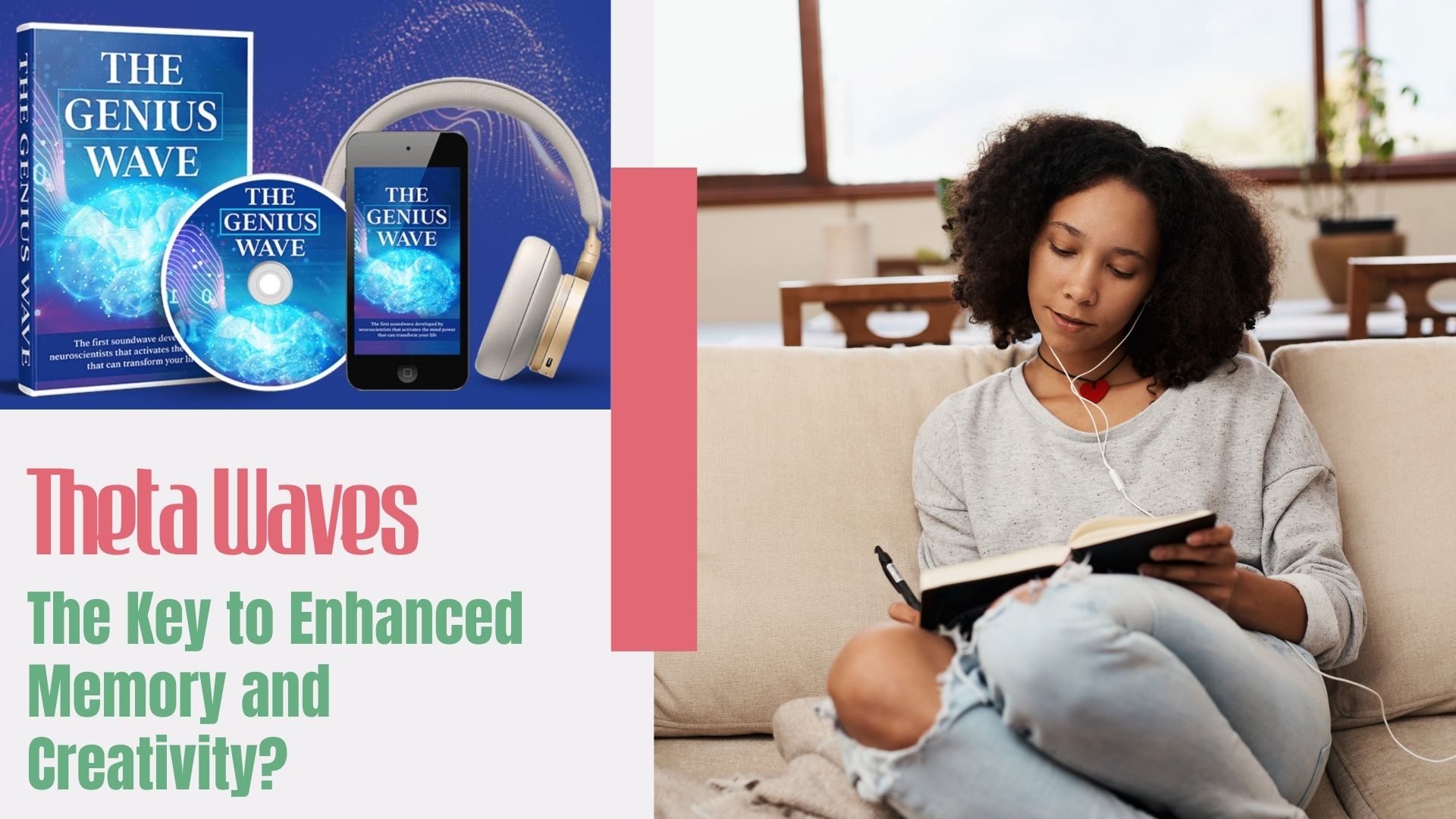
Ever wondered exactly how a 7-minute audio track could influence your brain? If you’ve already read the full Genius Wave review, you know the basics. But here I’m going deeper — explaining the actual neuroscience behind how The Genius Wave works, who Dr. James Rivers is, and whether the theta audio technology it uses holds up to scrutiny.
This isn’t a sales pitch. It’s a science-first walkthrough of the mechanisms behind this program, written for busy professionals, students, creators, and anyone curious about brain entrainment as a non-pharmaceutical cognitive tool.
First, What Are Brainwaves (And Why Do They Matter)?
Your brain is constantly producing electrical activity. Millions of neurons firing in patterns create rhythmic pulses called brainwaves. Think of them as your brain’s operating mode at any given moment.
There are five main types, each linked to a different mental state:
| Brainwave | Frequency | Associated State |
|---|---|---|
| Delta | 0.5–4 Hz | Deep sleep, recovery |
| Theta | 4–8 Hz | Creativity, memory, insight, meditation |
| Alpha | 8–13 Hz | Calm focus, relaxed awareness |
| Beta | 13–30 Hz | Active thinking, decision-making |
| Gamma | 30–100 Hz | High-level cognition, peak focus |
The Genius Wave specifically targets the theta range (4–8 Hz). This is the same frequency range your brain naturally enters during deep meditation, light sleep, and moments of creative flow.
So what makes theta so special? Quite a bit, according to the research.
What Does Science Say About Theta Brainwaves?
Theta brainwave research is one of the more active areas of cognitive neuroscience — and the findings are genuinely interesting.
Theta Waves & Memory
A 2024 review published in PMC (National Institutes of Health) found that theta power increases during memory tasks, and higher theta power was consistently correlated with better memory performance.
Psychology Today also reported that theta waves play a crucial role in binding incoming sensory information into long-term memory — making them directly relevant to studying, learning new skills, and retaining complex information.
Theta Waves & Creativity
Research covered by Predicting My Future notes that theta waves create a mental environment conducive to accessing deeper levels of creativity and insight.
This is why so many people report their best ideas while in the shower, just waking up, or during light meditation — all states where theta activity is elevated.
Theta Waves & Stress Reduction
Because theta sits at the border between wakefulness and sleep, it’s naturally associated with reduced anxiety, emotional regulation, and mental calm. If you’re dealing with brain fog or mental fatigue, theta-dominant states are generally associated with feeling calmer and less reactive.
That said, most of this research involves theta waves observed in the brain — not necessarily theta waves induced by audio. That distinction matters, and I’ll address it honestly below.
If the science interests you and you want to try it yourself: Try The Genius Wave — 90-Day Guarantee
What Is Brain Entrainment & How Does It Actually Work?
Brainwave entrainment is the process of using external stimuli — typically sound or light — to encourage your brain to synchronize its own electrical activity with a target frequency.
The underlying mechanism is called the frequency following response: when the brain is exposed to a consistent rhythmic stimulus, it naturally tends to align its dominant brainwave frequency to match it.
It’s similar to how you unconsciously sync your walking pace to the beat of a song playing nearby.
The Genius Wave uses two specific audio technologies to create this effect:
- Binaural beats — two slightly different tones played separately into each ear via headphones. Your brain perceives the mathematical difference between them as a “phantom beat.” For example, 200 Hz in one ear + 194 Hz in the other = a 6 Hz perceived beat — right in the theta range.
- Isochronic tones — a single tone that pulses on and off at a set rhythm. Unlike binaural beats, these work even without headphones, though headphones improve the effect. The brain follows the pulse rate and adjusts its own frequency accordingly.
BrainTap explains that both methods work on the same principle: the brain synchronizes its electrical activity with the rhythm of the auditory stimulus, which corresponds to different mental states.
The Genius Wave layers both technologies together in a single 7-minute track, targeting the 6 Hz theta frequency.
Binaural Beats vs. Isochronic Tones: What’s the Difference?
People ask me this a lot. Here’s the simple breakdown:
🎧 Binaural Beats
- Require stereo headphones — the effect only works when each ear receives a different frequency
- The “beat” is a brain illusion — no actual beat exists in the audio file
- More subtle and immersive, easier to relax into
- Well-studied in clinical research
🔊 Isochronic Tones
- Work without headphones, though headphones still help
- The beat is real and audible — a rhythmic pulsing sound
- Considered by some researchers to be more consistent in inducing entrainment
- Slightly more stimulating — some users find them harder to relax into
According to MindAmend’s comparison, isochronic tones may produce a stronger entrainment signal because the brain doesn’t have to generate the beat itself — it simply follows the pulse it hears.
By combining both in one track, The Genius Wave attempts to leverage the strengths of each method simultaneously.
Want to experience both working together? Download The Genius Wave here.
Who Is Dr. James Rivers? What We Know
The Genius Wave was created by a neuroscientist going by the name Dr. James Rivers, described as MIT-trained and with a background in brainwave research.
Here’s the honest picture:
- The name “Dr. James Rivers” is widely understood to be a pen name — the creator’s real identity is not publicly confirmed
- The program is published under Binaural Technologies, a company specializing in neuroscience-based audio products
- The audio technologies used (binaural beats + isochronic tones) are real, well-documented, and not proprietary to this program
- Marketing materials vary slightly — some describe him as an MIT researcher, others reference NASA connections
The pseudonym is common in the digital wellness space. It’s frustrating if you want to verify credentials, but it doesn’t automatically invalidate the product — the technology behind it exists independently of who made it.
What matters more than the creator’s name is whether the underlying science supports what the product claims — and the theta/entrainment research is genuinely documented, as outlined above.
How The Genius Wave Works: Step-by-Step
Here’s exactly what happens when you press play:
- You put on stereo headphones — required for the binaural beat component to function correctly
- Two slightly different frequencies enter each ear — your brain processes the difference and generates a perceived theta-frequency beat at ~6 Hz
- Simultaneously, isochronic pulses layer on top — reinforcing the theta signal with a direct, audible rhythm your brain can follow
- Over 7 minutes, your dominant brainwave frequency gradually shifts — from your current active state (typically beta, 13–30 Hz) toward the theta range (4–8 Hz)
- You enter a state of calm, relaxed awareness — similar to the feeling just before sleep or during deep meditation, but without losing wakefulness
No focus required. No prior experience needed. You can sit, lie down, or simply relax — the audio does the work.
You can read the full breakdown of everything the program includes here: The Genius Wave Full Review. Or, if you’re ready to try it: Get The Genius Wave (80% Off Today)
Who Might Benefit From This — And Who Might Not
Based on the science and user reports, the theta audio approach in The Genius Wave may be most useful for:
- Busy professionals who want a quick mental reset mid-day without caffeine or a full meditation practice
- Students preparing for exams who want to prime their brain for better retention before a study session
- Creators who struggle with “blank screen” syndrome and want a low-effort way to access a more relaxed, idea-generative state
- Anyone dealing with brain fog or stress who wants a non-pharmaceutical tool to feel calmer and clearer
- Wellness and biohacking enthusiasts already exploring neuroscience-based tools like meditation apps, nootropics, or HRV training
It may not be the right fit if:
- You have epilepsy or a neurological condition — rhythmic audio stimuli can potentially trigger seizures in susceptible individuals. Consult your doctor first.
- You’re expecting measurable IQ gains or dramatic cognitive changes — the evidence for those specific claims is thin
- You’re unwilling to use it consistently for at least 2–4 weeks — occasional use is unlikely to produce lasting results
What the Research Doesn’t Fully Confirm (Yet)
I want to be straight with you here, because a lot of reviews gloss over this part.
The neuroscience of theta waves is solid. Theta activity is genuinely linked to memory, creativity, and learning in peer-reviewed research. That part isn’t controversial.
What’s less clear is whether listening to a commercial audio product like The Genius Wave reliably produces the same theta states as those observed in lab EEG studies.
A 2019 study published on PMC found mixed results when measuring the cognitive impact of binaural beat stimulation, noting that individual responses varied considerably.
A 2025 paper in Frontiers in Behavioral Neuroscience confirmed that synchronous theta-frequency audio/visual stimulation did enhance memory recall — but again, lab conditions differ from a personal audio file.
The honest summary: the technology is real and the underlying science is promising. Whether any specific commercial product delivers results consistently is harder to verify without independent testing. The 90-day money-back guarantee is, practically speaking, your best safety net here.
Try The Genius Wave risk-free for 90 days here.
How to Get the Most Out of The Genius Wave Audio
If you do decide to try it, here’s what the consistent user reports and the underlying science suggest for best results:
- Use quality stereo headphones — earbuds work, but over-ear headphones tend to produce a more immersive effect for binaural beats
- Listen in the morning before your first task — this primes your brain for a focused, creative day
- Or listen before a study/work session — using it as a “warm-up” for cognitively demanding tasks may yield better results than using it randomly
- Stay consistent for at least 2–3 weeks — brain entrainment is more effective over repeated sessions as the neural pathways become more responsive
- Don’t use it while driving or operating machinery — the relaxation effect can be pronounced, especially in the first few sessions
Final Thoughts: Is the Science Behind The Genius Wave Credible?
Here’s my honest take: How The Genius Wave works is grounded in legitimate neuroscience. Theta brainwaves are real, well-researched, and genuinely linked to the cognitive states the program targets — memory, creativity, relaxed focus, and emotional calm.
The audio technologies used — binaural beats and isochronic tones — have published research behind them, even if results vary between individuals. Dr. James Rivers’ real identity remains unverified, but the technology doesn’t depend on who made it to be valid.
If you’re a professional, student, creator, or someone looking for a non-pharmaceutical mental reset tool, the underlying mechanism is sound enough to be worth testing — especially with a 90-day refund policy backing it up.
For a full breakdown of user experiences, pricing, and bonuses, check out the complete Genius Wave review here.
Ready to put the science to the test yourself? Get The Genius Wave — Official Site