
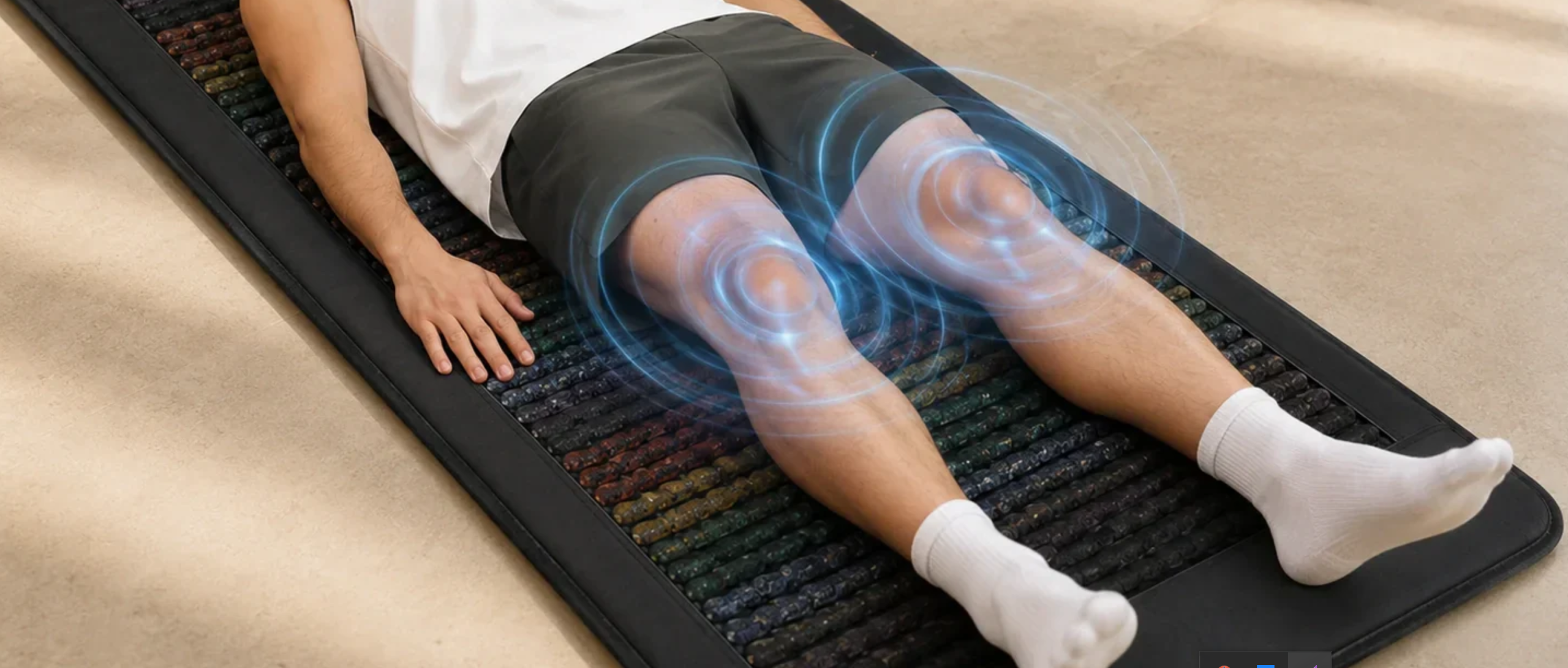
Ever stared at a PEMF mat thinking, “this looks amazing but… is it actually safe?” Yeah, me too. That was literally my first thought before buying one.
Here’s the thing: PEMF therapy is generally considered safe for most healthy adults, with mild side effects in less than 5% of users, according to a 2026 safety review from Central Idaho Wellness. But there are some important contraindications you need to know about.
In this guide, I’ll break down what the research says about PEMF safety, common side effects, and who should avoid it entirely. No hype, just the facts you need to decide if it’s right for you.
What Does the Research Say About PEMF Safety?

Okay so here’s the simple version. A 2025 review in PMC/NIH concluded that PEMF has no cytotoxicity or genotoxicity in in vitro studies, meaning it doesn’t damage cells or DNA in lab tests.
The FDA actually cleared a form of PEMF for bone healing back in 1979, specifically for fractures that weren’t healing properly on their own. That’s decades of regulatory history, not some brand-new fad.
According to WebMD, PEMF therapy is possibly safe when used appropriately, and it’s been used under medical supervision without any major safety concerns. It’s generally well-tolerated by most users.
- No cytotoxicity or genotoxicity in lab studies
- FDA-cleared for bone healing since 1979
- Generally well-tolerated with no major safety concerns
- Mild side effects in less than 5% of users
I remember the first time I read through these safety reviews, I honestly felt relieved. I was worried about some kind of hidden long-term risk. Turns out, the research is pretty reassuring for healthy adults.
Common PEMF Side Effects (and How to Minimize Them)
This is where things get real, because side effects do happen — just usually mild ones.
A 2026 guide from PEMF Insider lists the most common mild side effects: fatigue or feeling a bit “wiped,” mild headache, and lightheadedness or feeling slightly “off.” These are reported in less than 5% of users, according to that Central Idaho Wellness review I mentioned earlier.
Some people report feeling a bit “detoxed” or run-down after their first few sessions. A 2025 Onyx Health Studio guide from Onyx Health Studio notes that these symptoms are usually temporary and resolve on their own within a few sessions.
- Mild fatigue or feeling “wiped” (temporary)
- Mild headache (usually resolves quickly)
- Lightheadedness or feeling “off” (rare)
- Start low and slow to minimize side effects
I’ll admit, I felt a bit tired after my first couple sessions. I was ready to write PEMF off as “not for me,” but then I read that starting with shorter, lower-intensity sessions helps your body adapt. Dropped back to 10 minutes and worked up slowly — no issues since.
Here’s a comparison that helped it click for me: think of PEMF side effects like starting a new exercise routine. Your muscles might feel sore the first week, but that doesn’t mean exercise is “bad” — it just means your body is adapting. Same principle here.
A 2026 Hummingbird’s Homme guide from Hummingbird’s Homme put it well: the real safety question isn’t side effects (which are mild and uncommon) but contraindications. It’s not used over pacemakers or active implants, in pregnancy, or over infection or tumor sites.
Who Should NOT Use PEMF Therapy? (Absolute Contraindications)
Alright, this is the part that actually matters for your safety, so pay attention.
A 2025 safety guide from PEMF Training states that individuals with implanted electronic devices, such as pacemakers, and pregnant women should not use PEMF therapy. There is 100% expert agreement on this.
According to Holistix Intl, you should avoid PEMF or speak with a qualified healthcare professional before use if you have: a pacemaker, an implantable cardioverter defibrillator (ICD), a neurostimulator, a spinal cord stimulator, an implanted insulin pump, a cochlear implant, or any implanted electronic medical device.
Pregnancy is also an absolute contraindication, according to that same Holistix guide. There are no known studies confirming safety for fetal development, and no confirmed evidence of harm — but the absence of research is itself a reason for caution.
- Pacemakers, ICDs, implanted electronic devices — DO NOT USE
- Pregnancy or possible pregnancy — avoid unless medically cleared
- Epilepsy or seizure disorder — consult doctor first
- Active bleeding disorders or on blood thinners — use caution
Honestly, this was the part that made me double-check my own health history before buying. If you have any implanted device or are pregnant, just don’t mess around with this — talk to your doctor first.
Who Should Use PEMF With Caution? (Relative Contraindications)
This is where things get nuanced, because not every contraindication is a hard “no.”
According to that 2025 PMC/NIH review, potential risks include localized heating of metal implants. So if you have joint replacements, dental implants, or other metal hardware, you should use PEMF with caution and avoid direct application over the implant site.
A 2026 Flowlife guide from Flowlife notes that caution is also advised after an organ transplant, with active bleeding, or with epilepsy. Anyone in these situations should check with a clinician first.
That 2025 Onyx Health Studio guide also lists active infection or fever as a reason for caution. The theoretical concern is that PEMF’s circulation-boosting effects could potentially spread infection, though this hasn’t been definitively proven.
- Metal implants (joint replacements, dental) — use caution, avoid direct application
- Recent surgery or organ transplant — consult doctor first
- Active bleeding or on blood thinners — use lower intensity
- Active infection or fever — wait until resolved
Another thing worth mentioning: a 2026 Frequency Technology guide from Frequency Technology notes that for PEMF and microcurrent near the abdomen, pregnancy is a contraindication — not because harm has been documented, but because safety has not been established.
PEMF Mat Safety at Home: Practical Precautions
So you’ve read all this and you’re probably wondering, “okay but how do I actually use a PEMF mat safely at home?”
Here’s the practical stuff I wish I’d known before my first session. A 2026 PEMF Insider guide from PEMF Insider recommends starting with the lowest intensity (or one you can barely feel) for 10-15 minutes, then gradually increasing as your body adapts.
That 2025 Holistix guide I mentioned earlier notes that you should not use a PEMF mat directly over, near, or around a pacemaker or ICD unless your healthcare professional and device manufacturer have specifically cleared it. And if you are pregnant, trying to become pregnant, or think you may be pregnant, avoid PEMF unless your healthcare professional specifically clears it.
One option that combines PEMF with infrared heat and negative ion output in a single home mat is the Tesla MedBed X, which I actually broke down in detail in a full review here if you want to see the pros, cons, and honest verdict before buying.
- Start with lowest intensity, 10-15 min sessions
- Don’t use directly over electronic implants
- Avoid if pregnant unless medically cleared
- Consult your doctor if you have any medical condition
Something else worth mentioning: a 2025 California Brain & Spine guide from California Brain & Spine noted that most programs defer non-urgent electromagnetic therapies in pregnancy because data are limited. When in doubt, wait or seek a specialist opinion.
I’ve also noticed that people who pair PEMF sessions with something else relaxing, like reading or just lying still with dim lights, tend to stick with it longer and report fewer “overstimulation” issues. It becomes a whole little ritual, not just a five-minute chore squeezed between emails.
Just remember, and I can’t stress this enough, none of these home devices are meant to replace medical treatment. Think of them as a possible addition to your existing care plan, not a substitute for it.
Final Thoughts on PEMF Therapy Safety
So, is PEMF therapy safe? For most healthy adults, yes — it’s generally well-tolerated with mild, temporary side effects in less than 5% of users. But there are important contraindications you need to know about.
If you have a pacemaker, implanted electronic device, or are pregnant, PEMF is not safe and should be avoided. If you have metal implants, recent surgery, or any serious medical condition, talk to your doctor first.
If you’re curious to try it, just start low and slow, listen to your body, and don’t push through uncomfortable symptoms. That’s honestly the biggest lesson I’ve learned going down this rabbit hole.
Want to see how one specific home PEMF and infrared mat stacks up? Check out my in-depth Tesla MedBed X review for the full breakdown, or explore Tesla MedBed X directly to see current pricing.
Sources and Further Reading
- The Therapeutic Potential of Pulsed Electromagnetic Fields (PEMF) — PMC/NIH
- Pulsed Electromagnetic Field (PEMF) Therapy – Uses, Side Effects — WebMD
- PEMF Contraindications: Pacemakers, Implants, Pregnancy, and More — Holistix Intl
- PEMF Therapy Side Effects: What to Know — PEMF Insider
- PEMF Safety and Side Effects — Central Idaho Wellness