

Walking down the seed aisle (or scrolling through an online shop) can feel like decoding a secret language—organic, non-GMO, heirloom, hybrid… what does it all mean?
If you’re growing medicinal herbs for home remedies, the type of seed you choose can affect everything from germination to harvest quality.
Many home gardeners want to grow clean, high-quality herbs but aren’t sure how seed labels translate to real-world differences.
In this guide, you’ll learn the differences between organic vs non-GMO vs heirloom seeds specifically for medicinal herbs, including definitions, certification realities, pros/cons, and how to choose.
This article focuses on seed types and growing practices, not medical advice or treatment recommendations.
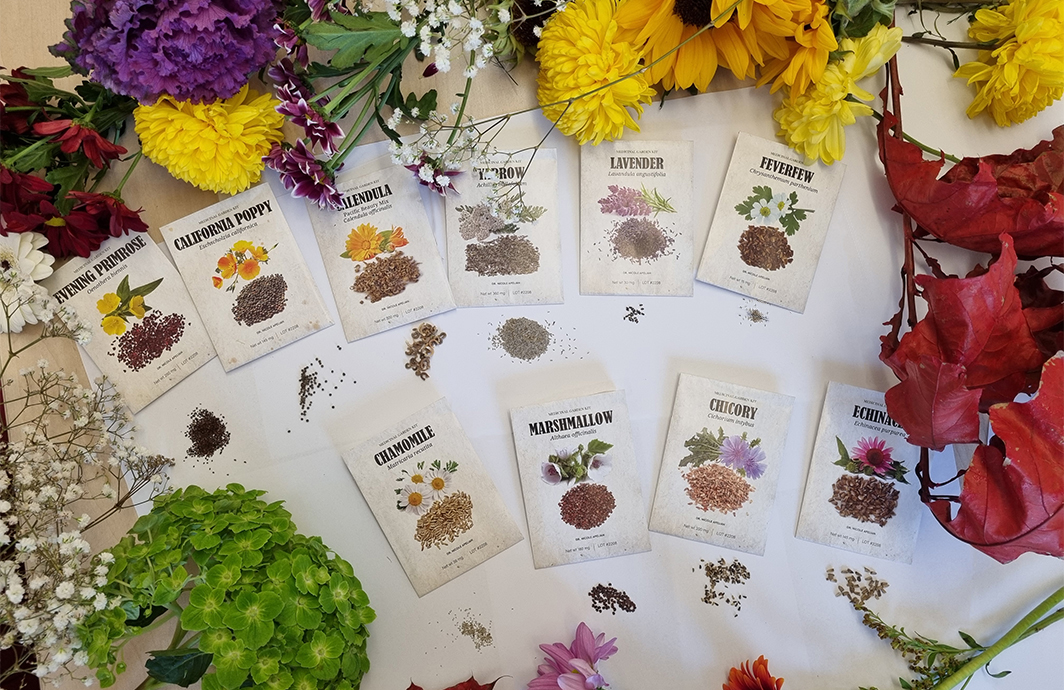
Gardeners who want a curated starting point may explore the Medicinal Garden Kit, which describes its seeds as non-GMO and includes a guide for growing and using herbs.
What Do “Organic,” “Non-GMO,” and “Heirloom” Actually Mean?
Organic seeds are produced under certified organic farming standards. No synthetic pesticides/fertilizers, specific soil and handling rules.
Non-GMO seeds are not genetically modified via modern genetic engineering techniques. They may still be grown with conventional inputs.
Heirloom seeds are open-pollinated varieties with a history of being passed down, often 50+ years, and maintained for stable traits.
These labels describe different things. Organic = farming and handling practices. Non-GMO = breeding method (no genetic engineering).
Heirloom = variety history and pollination type. A seed can be organic and non-GMO, non-GMO but not organic, or heirloom and organic.
Hybrid is another common label. Hybrids are crosses between two parent lines for specific traits. They can be non-GMO but are not the same as GMOs.
The same herb (e.g., calendula, chamomile, echinacea) may be available as organic, non-GMO, hybrid, or heirloom. The Medicinal Garden Kit describes its seeds as non-GMO and includes cultivation guidance for its 10 herbs.
- Organic = certified farming practices without synthetic inputs.
- Non-GMO = not created via genetic engineering.
- Heirloom = open-pollinated varieties with long history.
- Hybrids are traditional crosses, not GMOs.
- Seeds can combine multiple labels (e.g., organic + heirloom).
Organic Seeds for Medicinal Herbs: Standards, Benefits, and Limitations

In the U.S., “organic” seed production follows USDA National Organic Program (NOP) rules. No synthetic pesticides or fertilizers; specific soil, rotation, and handling requirements.
Potential benefits for medicinal herb growers include alignment with organic gardening values. Reduced exposure to synthetic inputs during seed production is another plus.
Organic seeds are often favored by organic-certified farms and markets. But there are limitations and realities to consider.
Organic seeds can be more expensive or harder to find for some species. Organic certification varies by country; standards are not identical worldwide.
Organic does not automatically mean higher potency or better germination. Organic ≠ pesticide-free (some approved natural pesticides may be used).
Organic ≠ always heirloom; organic hybrids exist. If you plan to grow organically, starting with organic seed can support that system.
For personal home use, the practical difference may be less critical than growing practices. Gardeners seeking an organic-style start may still consider kits like the Medicinal Garden Kit, which emphasizes non-GMO seeds and provides growing instructions.
-
- Organic seeds follow USDA NOP standards in the U.S.
- Benefits include alignment with organic values and reduced synthetic inputs.
- Organic seeds can be more expensive or limited for some herbs.
Organic ≠ pesticide-free or always higher potency.
- Good choice for certified or strongly organic-aligned gardens.
Non-GMO Seeds: What “Not Genetically Modified” Really Means

Non-GMO means the seed was not created using modern genetic engineering (e.g., gene insertion via lab techniques). Traditional breeding, selection, and hybridization are still used.
Some seeds carry third-party non-GMO verification (e.g., Non-GMO Project), but many seed companies self-declare. Regulations and definitions can vary by region.
Why non-GMO matters to some growers: personal preference for traditional breeding methods. Desire to avoid GMO crops in their garden ecosystem.
Market or certification requirements for certain farms also play a role. Non-GMO ≠ organic; non-GMO seeds can be grown with synthetic inputs.
Non-GMO ≠ heirloom; many non-GMO seeds are modern hybrids. Many common medicinal herbs (calendula, chamomile, lavender, lemon balm) are not typically available as GMOs anyway.
Non-GMO labeling can still signal breeding philosophy and supply-chain transparency. The Medicinal Garden Kit describes its seeds as non-GMO, which may appeal to gardeners who prefer traditionally bred varieties.
- Non-GMO seeds avoid modern genetic engineering techniques.
- Third-party verification exists but many companies self-declare.
- Non-GMO ≠ organic or heirloom.
- Many medicinal herbs are not typically available as GMOs.
- Signals breeding philosophy and supply-chain transparency.
Heirloom Seeds for Medicinal Herbs: History, Stability, and Seed Saving

Heirloom seeds are generally open-pollinated varieties with a long history (often 50+ years) of stable traits. Maintained through seed saving and selection over generations.
Why heirlooms appeal to medicinal herb growers: genetic stability. Plants tend to grow true to type year after year.
Seed-saving friendly: you can save seed and expect similar plants next season. Often associated with traditional varieties used in folk herbalism.
Limitations exist. Not all medicinal herbs have well-documented “heirloom” varieties. Heirloom does not guarantee higher potency or better quality.
Some heirlooms may be less uniform or disease-resistant than modern hybrids. Seed-saving basics include isolation distances to avoid cross-pollination.
Proper harvesting, drying, and storage techniques matter. Record-keeping for variety and harvest year helps track your lines.
Heirlooms can support a self-sustaining medicinal garden over time. Good choice if you want to save seed and maintain your own lines. Some herbs in starter collections may include open-pollinated or heirloom-type varieties, depending on the brand.
- Heirlooms are open-pollinated with long history and stable traits.
- Plants grow true to type, ideal for seed saving.
- Not all herbs have well-documented heirloom varieties.
- Heirloom ≠ guaranteed higher potency or quality.
- Practice isolation, proper harvest, and record-keeping for seed saving.
Hybrids, GMOs, and Other Seed Labels: Clearing Up the Confusion

Hybrids (F1 hybrids) are created by crossing two specific parent lines to combine desirable traits. Hybrids are not the same as GMOs; they use traditional breeding.
Why hybrids are used: uniform growth, vigor, disease resistance, or specific flower/leaf traits. Can be helpful for consistent harvests in medicinal herb gardens.
GMO seeds are created using genetic engineering techniques in a lab. Most common in large-scale commodity crops (corn, soy, cotton), not typical home herb seeds.
Other labels you might see: “open-pollinated” vs. “hybrid.” “Treated” vs. “untreated” seed (seed treatments for disease/pests).
Regional certifications (e.g., EU organic, various non-GMO labels) also exist. You may find hybrids in herbs like calendula or echinacea for specific flower colors or growth habits.
GMO versions of most common home medicinal herbs are rare to non-existent. Understanding these labels helps you choose seeds that match your goals (seed saving, uniformity, organic practices, etc.).
- Hybrids are traditional crosses, not GMOs.
- Used for uniformity, vigor, and specific traits.
- GMOs are rare in home medicinal herb seeds.
- Look for open-pollinated vs. hybrid, treated vs. untreated.
- Labels help match seeds to your gardening goals.
How to Choose the Right Seeds for Your Medicinal Herb Garden

Clarify your priorities first. Do you want to grow organically? Is seed saving important to you?
Do you care about supporting traditional varieties (heirlooms)? Match seed type to goals.
Organic seeds for certified or strongly organic-aligned gardens. Non-GMO seeds for gardeners who prefer traditional breeding methods.
Heirloom/open-pollinated seeds for seed saving and genetic stability. Hybrids for uniformity, vigor, or specific traits.
Consider practical factors: availability of organic/heirloom options for specific herbs. Budget and quantity needed.
Local climate and growing conditions matter too. Suggest a mixed approach: use organic/non-GMO for herbs you harvest heavily.
Use reliable hybrids where uniformity matters. Experiment with heirlooms for seed-saving projects.
For gardeners who want a simple starting point, the Medicinal Garden Kit offers a curated set of non-GMO seeds across 10 medicinal herbs, plus a guide for growing and using them.
Good growing practices (soil, water, harvest timing, drying, storage) often matter more for final herb quality than seed label alone.
- Clarify priorities: organic, seed saving, or traditional varieties.
- Match seed type to your gardening goals.
- Consider availability, budget, and local climate.
- Use a mixed approach for different herbs.
- Good growing practices often matter more than seed label.
Common Myths and Mistakes When Buying Medicinal Herb Seeds

Frequent misconceptions include “organic always means better potency.” Not necessarily; growing conditions and handling matter a lot.
“Non-GMO means organic.” No; non-GMO seeds can be grown conventionally. “Heirloom means superior medicine.” Heirloom refers to history and stability, not guaranteed potency.
“Hybrid means GMO.” Hybrids are not GMOs; they use traditional crosses. Common mistakes include choosing seeds based only on labels without considering climate or growing conditions.
Assuming all “medicinal” herbs are safe for internal use without research is risky. Ignoring seed viability dates and storage conditions causes problems too.
Read seed descriptions carefully (days to maturity, height, preferred conditions). Check whether varieties are open-pollinated or hybrid if seed saving matters.
Look for reputable seed companies with clear growing information. Clear, honest labeling (like non-GMO declarations and growing guides) can help beginners avoid confusion.
- Organic ≠ always better potency; growing conditions matter.
- Non-GMO ≠ organic; can be grown conventionally.
- Heirloom ≠ superior medicine; refers to history/stability.
- Hybrids are not GMOs; use traditional crosses.
- Read descriptions, check viability, and choose reputable companies.
Conclusion
Organic vs non-GMO vs heirloom seeds describe different aspects: farming practices, breeding methods, and variety history.
Organic seeds follow certified organic production standards. Non-GMO seeds are not genetically engineered but may be grown conventionally.
Heirloom seeds are open-pollinated varieties with a long history, ideal for seed saving. Hybrids are not GMOs; they are traditional crosses for specific traits.
You don’t need to be a seed expert to start. Pick a few trusted varieties, match them to your goals, and focus on good growing, harvesting, and storage practices.
Readers who want a simple, curated starting point can explore the Medicinal Garden Kit and read the detailed Medicinal Garden Kit review to see if it fits their garden and herbal goals.
Sources and Further Reading
- Medicinal Garden Kit – Product page with seed varieties and guide details. [medicinalseedkit](https://medicinalseedkit.com/kit/)
- Medicinal Garden Kit Review – In-depth review of the kit’s contents and features.
- Organic farming – Wikipedia – Overview of organic agriculture standards and practices.
- USDA Organic – Official information on U.S. organic certification and standards.
- Non-GMO Project – Information on non-GMO verification and labeling.