

Ever stood in front of a seed rack (or scrolled through an online shop) feeling totally overwhelmed by tiny print and confusing abbreviations?
Those little packets hold a ton of info—and knowing how to read them can save you time, money, and a lot of “why didn’t this germinate?” frustration.
Many home gardeners want to grow medicinal herbs but aren’t sure what all the numbers and terms on seed packets actually mean for planting success.
In this guide, you’ll get a practical medicinal herb seed packet guide that explains key labels (viability, days to maturity, sowing depth, light requirements, etc.) and how to use that info when planning starts and direct sowing.
This article focuses on growing practices and seed information, not medical advice or treatment recommendations.
Gardeners who want a curated starting point may explore the Medicinal Garden Kit, which includes seed packets with growing instructions for 10 medicinal herbs.
Why Learning to Read Seed Packets Matters for Medicinal Herbs
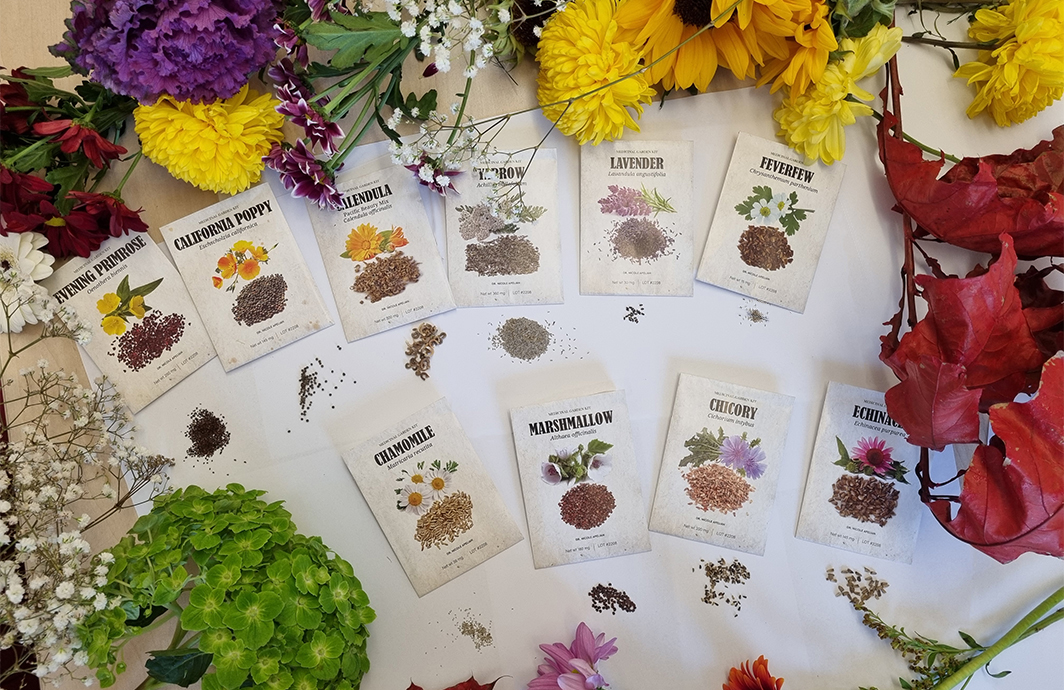
Seed packets are essentially mini instruction manuals. They tell you when, where, and how to plant for best results.
They help you plan your season (indoor starts vs. direct sow). Good packet-reading prevents common problems.
Sowing too early or too late for your climate causes issues. Planting seeds too deep or in wrong light conditions affects germination.
Expecting harvests too soon because “days to maturity” was misunderstood is frustrating. This is especially relevant for medicinal herbs.
Some herbs need long growing seasons to produce usable flowers/roots. Others are best harvested at specific growth stages (e.g., before flowering).
Understanding packets helps with budgeting (how many seeds you actually need). Succession planting (multiple small sowings vs. one big one) becomes easier.
Seed storage and viability planning (which seeds to rebuy each year) gets clearer. Starter kits like the Medicinal Garden Kit often include basic growing directions on each packet or in an included guide, which can be a helpful reference for beginners.
For a closer look at what’s included, read our full Medicinal Garden Kit review.
- Seed packets are mini instruction manuals for planting.
- Good packet-reading prevents timing and depth mistakes.
- Medicinal herbs often need specific harvest stages.
- Packet info helps with budgeting and succession planting.
- Starter kits often include helpful growing directions.
Key Information on Medicinal Herb Seed Packets Explained

Common elements on herb seed packets include common name and botanical name (e.g., “Calendula – Calendula officinalis”). Variety/cultivar (specific type within the species) is also listed.
Days to germination (how long until seedlings emerge) helps with planning. Days to maturity/harvest (from sowing or transplant to usable harvest) sets expectations.
Sowing depth (how deep to plant seeds) affects germination. Spacing (between plants and rows) impacts plant health.
Light requirements (full sun, partial shade, etc.) determine placement. Temperature range for germination and growth matters for timing.
Direct sow vs. start indoors recommendations guide your method. Seed count/weight (approximate number of seeds or grams) helps with budgeting.
Botanical name ensures you’re growing the right species for medicinal use. Days to germination/maturity help with season planning and expectations.
Sowing depth and spacing affect germination rates and plant health. Light/temperature needs determine where and when you can grow successfully.
Tiny seeds (like chamomile) often need shallow sowing and light to germinate. Larger seeds (like calendula) can be sown a bit deeper.
Some herbs labeled “start indoors” may still do well with early direct sow in mild climates. Packet info can vary by brand.
Some give very detailed instructions; others are minimal. Reputable companies often provide more specific guidance for medicinal herbs.
The Medicinal Garden Kit includes packets or a guide with growing instructions tailored to its 10 herbs, which can serve as a practical reference while you learn to read other packets too.
- Common and botanical names ensure correct species.
- Days to germination/maturity help with planning.
- Sowing depth and spacing affect germination and health.
- Light/temperature needs determine placement and timing.
- Packet info varies by brand; reputable companies provide more detail.
Understanding Seed Viability, Dates, and Storage Clues

Seed viability = how long seeds remain able to germinate under proper storage. Different herbs have different typical viability ranges (e.g., 1–2 years vs. 3–5+ years).
Date-related labels you might see: “Packed for” year or harvest year. “Sell by” or “use by” dates (not always present, but common).
Lot numbers or batch codes (used by seed companies for tracking) may appear. Fresher seeds generally germinate better, especially for short-viability herbs.
Old seeds aren’t automatically useless, but germination rates may drop. “Store in a cool, dry place” is common storage advice.
Some packets suggest refrigeration for certain species. Airtight containers, low humidity, and stable temperatures extend viability.
Write the year opened on the packet or in a seed log. Keep packets in a dedicated box or binder, organized by type or season.
Do a simple germination test if you’re unsure about old seeds. Many common medicinal herbs (calendula, chamomile, lemon balm) have decent viability if stored well, but it still varies by species.
Good storage practices help you get the most out of kits like the Medicinal Garden Kit across multiple seasons.
- Viability = how long seeds can germinate under proper storage.
- Look for “packed for,” “sell by,” or lot numbers on packets.
- Fresher seeds generally germinate better.
- Store in cool, dry place; airtight containers help.
- Do germination tests for old seeds if unsure.
Sowing Instructions: Depth, Spacing, and Direct vs. Indoor Start

The “how to plant” section of seed packets includes sowing depth (often given as a range, e.g., ¼–½ inch). Spacing between seeds, between plants, and between rows is also specified.
Direct sow vs. start indoors recommendations guide your method. Adapt instructions to your situation.
Container growers may need to adjust spacing and depth. Short-season climates may need more indoor starting.
Mild climates can often direct sow earlier or later than packets suggest. Fine seeds (chamomile, some mints) often need surface sowing or very shallow coverage.
Larger seeds (calendula, echinacea) can handle deeper sowing. Some herbs labeled “start indoors” can be direct sown in warm regions with long seasons.
Packets may say “thin to X inches”—this is crucial for healthy plants. Transplant timing (after last frost, at X weeks old) helps avoid shock.
Common mistakes include sowing too deep “just to be safe” (can prevent germination). Ignoring spacing leads to crowded, weak plants.
Starting indoors too early results in leggy, stressed seedlings. Following the sowing instructions included with the Medicinal Garden Kit can help beginners avoid these common errors while they build confidence.
-
- Sowing depth and spacing are critical for germination and health.
Direct sow vs. indoor start depends on climate and herb type.
- Fine seeds need shallow sowing; larger seeds can go deeper.
- Thinning and transplant timing matter for strong plants.
- Follow kit instructions to avoid common sowing mistakes.
Light, Temperature, and Climate Notes on Herb Seed Packets

Light requirement labels include “full sun,” “partial shade,” “full shade” (with typical hour ranges). Some packets note if seeds need light to germinate.
Temperature-related info includes optimal germination temperature ranges. Minimum and maximum growing temperatures are often listed.
Frost tolerance notes (hardy, half-hardy, tender) help with planning. Match this to your climate.
Use your USDA hardiness zone or local climate data. Adjust sowing times based on your first/last frost dates.
Consider microclimates in your garden (south-facing walls, shaded corners). Sun-loving herbs (calendula, echinacea) vs. partial-shade tolerant herbs (lemon balm, some mints) have different needs.
Cool-season vs. warm-season herbs affects planting windows. Packet info is often generalized for broad regions.
Local conditions (altitude, rainfall, humidity) may require adjustments. Track what worked in your garden each year.
Adjust future plantings based on your own observations, not just packet instructions. The growing guide included with the Medicinal Garden Kit can help you interpret general light/temperature info in the context of your specific climate and garden setup.
- Light labels include full sun, partial shade, full shade.
- Temperature ranges and frost tolerance guide timing.
- Use USDA zone and frost dates for planning.
- Consider microclimates in your garden.
- Track your own observations for best results.
Special Labels: Organic, Non-GMO, Heirloom, Hybrid, and Treated Seeds

Common seed labels you’ll see on packets: Organic (produced under certified organic standards). Non-GMO (not genetically engineered, but not necessarily organic).
Heirloom (open-pollinated varieties with a long history). Hybrid (F1) (cross between two parent lines for specific traits).
Treated/untreated (whether seeds have chemical or biological treatments). These labels matter for home medicinal herb growers.
Organic/non-GMO may matter for personal values or certified gardens. Heirlooms are often good for seed saving and stable traits.
Hybrids can offer uniformity, vigor, or disease resistance. Treated seeds may have coatings to protect against disease/pests.
Hybrid ≠ GMO. Organic ≠ automatically higher potency. Non-GMO ≠ organic.
Labels may appear as logos (e.g., organic certification, non-GMO verification) or text descriptions (“open-pollinated,” “F1 hybrid,” etc.). Many common medicinal herbs are available as open-pollinated or heirloom-type varieties.
Some modern hybrids exist for improved flower production or growth habits. Kits like the Medicinal Garden Kit often highlight their seed type (e.g., non-GMO) so you know what you’re planting.
- Organic, non-GMO, heirloom, hybrid, and treated are common labels.
- Each label tells you something different about the seeds.
- Hybrid ≠ GMO; organic ≠ higher potency.
- Labels may appear as logos or text descriptions.
- Kits often highlight seed type for clarity.
Using Packet Info to Plan Your Medicinal Herb Garden Calendar

Turn packet data into a planting plan. Use “days to maturity” plus your frost dates to schedule starts.
Plan succession sowings for continuous harvest (e.g., every 3–4 weeks). Group herbs by sowing time and light/temperature needs.
Simple workflow: list all herbs you want to grow. Note their days to maturity and start method (indoor vs. direct).
Mark key dates on a calendar (last frost, first frost, target harvest windows). Adjust for your climate and available space.
Container vs. garden bed planning: containers may need more frequent watering and slightly different spacing. Garden beds allow for larger plants and more extensive root systems.
Keep a simple garden journal or spreadsheet. Note actual germination times, harvest dates, and any issues.
The included guide with the Medicinal Garden Kit can serve as a starting template for your calendar, especially if you’re new to planning with seed packet info.
See whether the collection suits your garden goals in this detailed Medicinal Garden Kit review.
- Use days to maturity plus frost dates for scheduling.
- Plan succession sowings for continuous harvest.
- Group herbs by sowing time and needs.
- Keep a garden journal to track results.
- Kit guides can serve as calendar templates.
Common Mistakes When Reading Medicinal Herb Seed Packets

Frequent beginner mistakes include ignoring “days to maturity” and planting too late for the season. Sowing all seeds at the same depth regardless of size causes problems.
Starting everything indoors “just in case,” even when direct sow is recommended, is wasteful. Overlooking spacing instructions leads to crowded plants.
Assuming packet info is perfect for every climate without adjustment causes issues. Consequences include poor germination, weak seedlings, or no harvest before frost.
Wasted seeds, time, and frustration result. Simple fixes: read the entire packet before planting, not just the picture and name.
Cross-check multiple sources if info seems vague or conflicting. Keep notes each year to refine your approach.
Even experienced gardeners misread packets sometimes. It’s normal to learn through trial and error.
Good packet info plus your own observations = best results over time. Clear, beginner-friendly instructions (like those included with the Medicinal Garden Kit) can reduce confusion while you build your seed-reading skills.
- Ignoring days to maturity leads to late planting.
- Sowing all seeds at same depth causes germination issues.
- Overlooking spacing results in crowded plants.
- Read entire packets and cross-check sources.
- Keep notes each year to refine your approach.
Conclusion
Learning how to read medicinal herb seed packets is a core skill for any home herbal gardener.
Seed packets provide crucial info on timing, depth, spacing, light, temperature, and viability. Understanding these details helps you plan starts, avoid common mistakes, and get better harvests.
Labels like organic, non-GMO, heirloom, and hybrid each tell you something different about the seeds. Your own notes and local experience are just as important as the printed instructions.
You don’t need to memorize everything at once. Pick a few herbs, read their packets carefully, and learn as you grow. Each season will get easier.
Readers who want a simple, curated starting point can explore the Medicinal Garden Kit and read the detailed Medicinal Garden Kit review to see if it fits their garden and herbal goals.
Sources and Further Reading
- Medicinal Garden Kit – Product page with seed varieties and guide details.
- Medicinal Garden Kit Review – In-depth review of the kit’s contents and features.
- Seed – Wikipedia – General information on seed biology and viability.
- USDA – Official information on agriculture and gardening standards.
- University of Minnesota Extension – Growing Herbs – Practical growing tips for home herb gardens.