
Affiliate Disclosure: This article may contain affiliate links. If you purchase through a link, I may earn a commission at no additional cost to you. This content is for general education and preparedness only and is not a substitute for local water guidance or official emergency information.
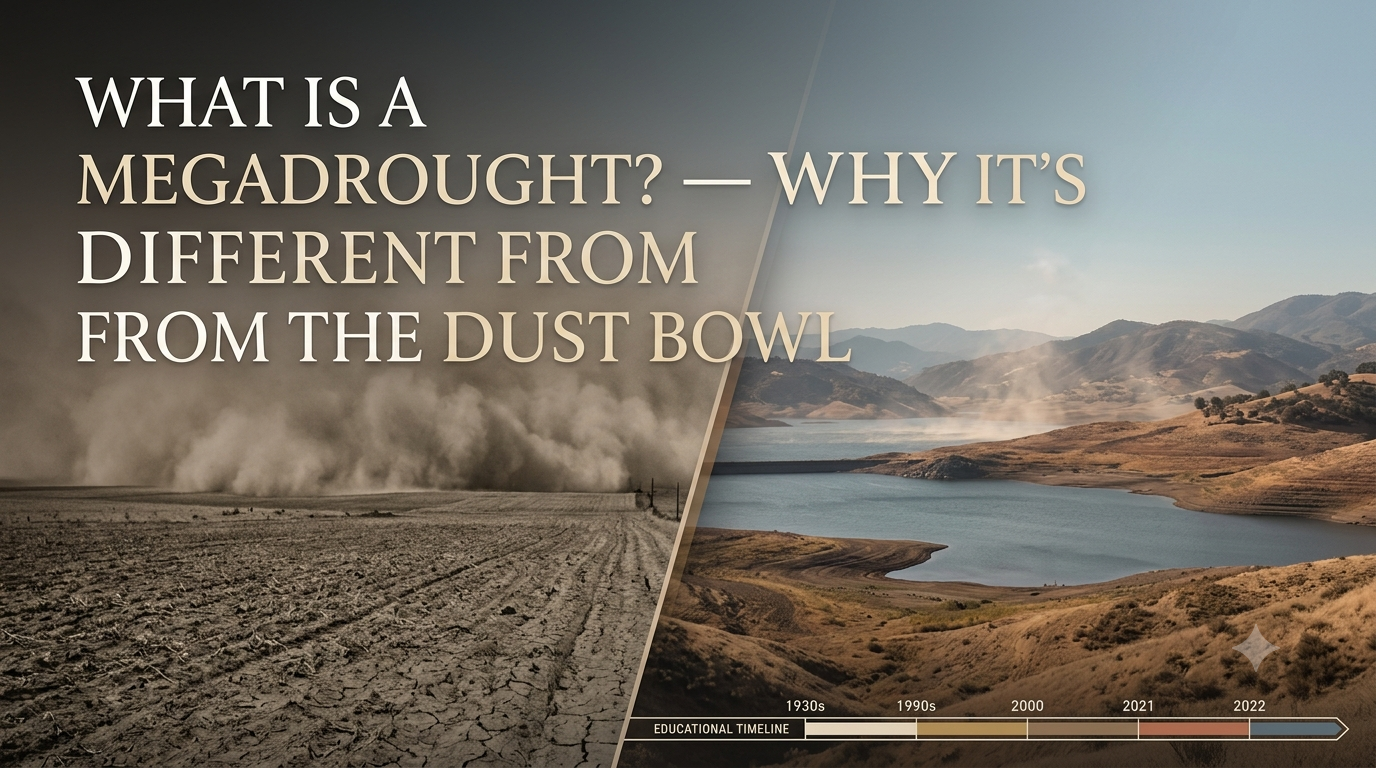
So, what is a megadrought? In plain terms, it is a drought that goes on for two decades or longer. The National Oceanic and Atmospheric Administration defines a megadrought as a significant drought lasting twenty years or more.
That timeline is what separates a megadrought from the dry summers most of us remember. A bad year or two is a drought. A dry stretch that spans entire generations is something else.
Scientists have studied tree rings going back over a thousand years to compare dry periods. That research showed the megadrought gripping southwestern North America since 2000 became the driest 22-year period in the region in at least 1,200 years.
Here is the part that surprised me when I started reading about it: the famous Dust Bowl of the 1930s, as terrible as it was, was not actually a megadrought by the modern definition. It lasted roughly a decade, not two.
This guide explains what makes a megadrought different, how it compares to the Dust Bowl, and why it matters for anyone who depends on wells, reservoirs, or a steady water supply.
What Is a Megadrought? The Simple Definition
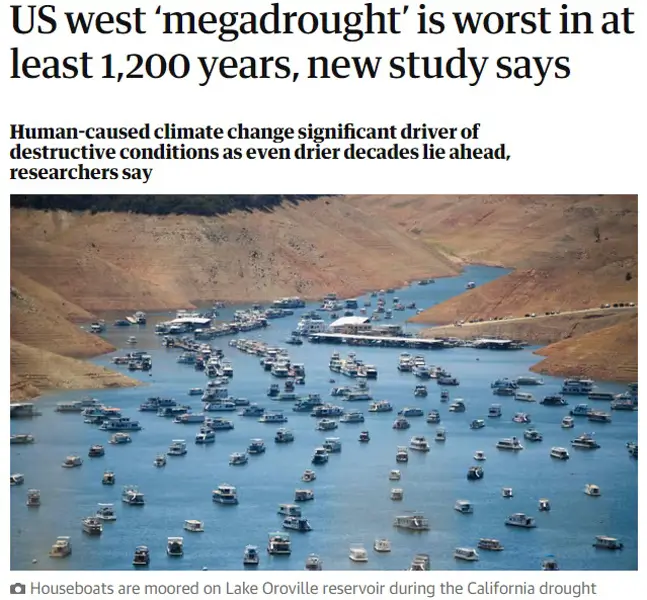
A megadrought is an extremely long and severe drought, usually defined as lasting two decades or more. Some researchers describe it as a drought that stands out for its severity, duration, or size when compared with other droughts of the last two thousand years.
Here is a detail that trips people up. A megadrought can include wet years. The overall period is defined by long-term dryness, not by every single year being a disaster.
The National Integrated Drought Information System explains that scientists have not settled on one exact rule for when a drought becomes a megadrought. But the working definition involves persistence and severity across many years.
Think of it like a bank account. One expensive month is annoying. Twenty years where the withdrawals keep beating the deposits is a structural problem.
- A megadrought usually lasts 20 years or longer.
- Severity, duration, and geographic size all matter.
- Individual wet years can happen inside a megadrought.
- Scientists compare them against centuries of climate records.
- The current Southwest megadrought began around 2000.
That last point is the one that matters for water planning. This is not a temporary dip. It is a long grind that reservoirs, aquifers, and forests all feel year after year.
NOAA researcher Toby Ault has noted that megadroughts have been linked to stress or collapse of past civilizations, including societies in the American Southwest. That sounds dramatic, but it shows how serious decades of aridity can be.
How Scientists Measure Droughts Over Centuries
Modern drought monitoring uses precipitation data, soil moisture, stream flow, and satellite measurements. But to compare today against a thousand years ago, scientists need older records.
That is where tree rings come in. Trees grow more in wet years and less in dry ones, so old trees and preserved wood can act like a natural diary of soil moisture going back centuries.
Using that approach, researchers reconstructed soil moisture for southwestern North America going back to around the year 800. A NASA-supported study found the 2000–2018 period was already the second-driest 19-year stretch since 800 CE, behind only a megadrought in the late 1500s.
Then the UCLA-led study published in 2022 found the full 22-year period since 2000 is the driest in at least 1,200 years. Dry years kept stacking up, and the ranking got worse.
- Tree rings record wet and dry years across centuries.
- Scientists combine tree-ring data with hydrological modeling.
- The modern record only goes back about a century.
- Paleoclimate data lets researchers rank today against the past 1,200 years.
- These comparisons are how “driest in 1,200 years” claims are made.
I used to wonder how anyone could seriously compare today’s weather with the year 900. The answer is patient science: old wood, careful measurement, and lots of cross-checking.
It is not perfect, and researchers are careful about uncertainty. But multiple independent studies using similar methods have landed on the same overall conclusion about the current megadrought’s severity.
What Made the Dust Bowl So Devastating in the 1930s
The Dust Bowl of the 1930s is the drought most Americans actually know by name. It hit the Great Plains during the Great Depression, and it combined dry weather with some genuinely bad luck in farming practices.
Across huge areas of the Plains, native grassland had been plowed under for wheat. When the rains failed, there were no deep roots left to hold the soil.
The result was dust storms, sometimes called “black blizzards,” that buried farms and roads. A scholarly review of the Dust Bowl era describes severe multi-year droughts, massive soil erosion, farm abandonments, and distress migration on a scale not previously seen.
One 1934 snapshot is hard to forget: nearly 80 percent of the country was experiencing moderate to extreme drought that year, the worst single-year footprint of the last century.
- The Dust Bowl drought centered on the Great Plains in the 1930s.
- Poor farming practices magnified the natural drought.
- Exposed topsoil fed enormous dust storms.
- Hundreds of thousands of people were displaced.
- Estimates of its length range from about 7 to 12 years, depending on the study.
That last bullet is the key to this whole comparison. Depending on how researchers count, the Dust Bowl drought ran roughly seven to twelve years. Terrible? Absolutely. Two decades? No.
The Dust Bowl was also concentrated in the Plains, while the current megadrought is centered on the Southwest, hitting the Colorado River basin that supplies tens of millions of people.
Megadrought vs. Dust Bowl: The Key Differences

So why do scientists keep saying the current drought is different from the Dust Bowl? It comes down to duration, location, and cause.
Duration: The Dust Bowl lasted roughly a decade. The Southwest megadrought began around 2000 and is still going, making it far longer than anything in the instrumental record.
Location: The Dust Bowl hit the Great Plains farm belt. The megadrought is centered on southwestern North America, stressing the Colorado River, Lake Mead, and Lake Powell.
Cause: The Dust Bowl was driven largely by natural ocean temperature patterns, made worse by land misuse. The current megadrought has natural variability underneath it too, but researchers found human-caused warming accounts for a large share of its severity.
A NASA-published study estimated that anthropogenic warming accounted for about 47 percent of the 2000–2018 drought severity, pushing what would have been a moderate drought toward megadrought territory.
- Dust Bowl: Roughly 7–12 years, centered on the Plains.
- Megadrought: More than two decades and ongoing, centered on the Southwest.
- Dust Bowl: Natural variability plus poor land management.
- Megadrought: Natural variability amplified by warming temperatures.
- Dust Bowl: Famous for dust storms and farm collapse.
- Megadrought: Famous for shrinking reservoirs and declining groundwater.
Warmer air also pulls more moisture out of soil and plants, a process scientists call evaporative demand. So even in years with normal rain, higher temperatures can leave the landscape drier than it used to be.
As drought researchers put it, climate change helped turn what would have been a modest drought into one of the worst dry periods of the last two thousand years.
How the Megadrought Affects Water Supplies Today

Two decades of dryness does not just brown the lawns. It works its way into every layer of the water system.
Reservoirs like Lake Mead and Lake Powell have fallen to historic lows, forcing repeated cutbacks for Arizona, California, and Nevada. Snowpack in the mountains, which acts as a natural water bank for the whole region, arrives thinner and melts earlier.
Groundwater faces its own pressure. When surface water gets cut, farms and towns pump more from underground, and slow-to-recharge aquifers keep falling.
Wildfire risk climbs too, because dry forests and soils mean fires burn hotter and spread faster. None of this is dramatic day to day. It accumulates.
- Major reservoirs have dropped to record-low levels.
- Colorado River users have faced repeated allocation cuts.
- Thinner snowpack and earlier melt reduce summer water supply.
- Heavier groundwater pumping strains aquifers.
- Dry vegetation raises wildfire risk.
- Private wells in some areas struggle as water tables decline.
If your household depends on a private well, this is the part that gets personal. Groundwater declines show up as longer pump run times, weaker pressure, and wells that recover slowly after heavy use.
I would not panic over any single dry month. But a two-decade trend is not a single dry month, and pretending otherwise is how families get surprised.
Will the Megadrought Ever End?
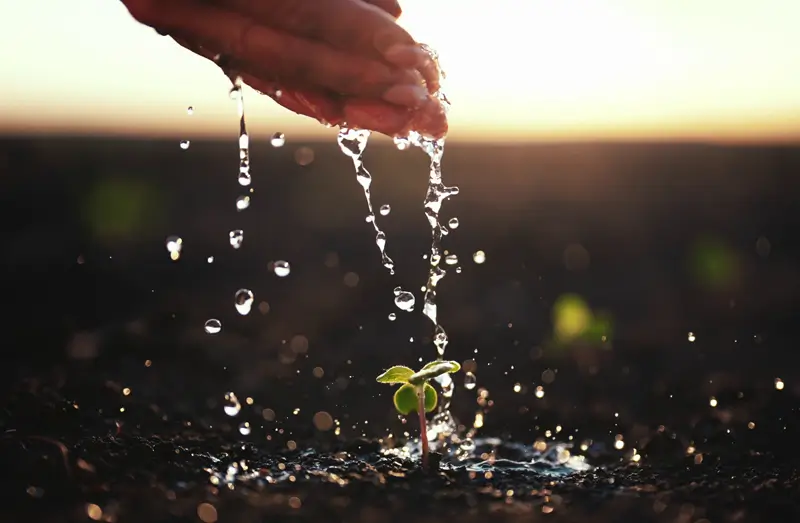
Honest answer: nobody knows. Some wet years have brought real relief to parts of the Southwest, and reservoirs recovered somewhat after strong precipitation years.
But a wet winter or two does not erase two decades of deficit. Researchers have pointed out that megadroughts can include years of decent rain while still staying megadroughts overall.
The deeper issue is that warmer temperatures keep increasing evaporative demand. Even average precipitation can leave soils, forests, and reservoirs short when the air keeps pulling moisture out of everything.
- A few wet years can help but may not end a megadrought.
- Long-term deficits in soil moisture and reservoirs take years to refill.
- Warming temperatures increase evaporation regardless of rainfall.
- Scientists measure trends, not guarantees, when projecting the future.
- Water planning has shifted toward assuming less, not more.
That last point is why states keep negotiating cuts even after decent winters. Water managers have largely stopped betting the future on the megadrought politely ending.
For a household, the lesson is similar. Hope for rain, but store water like the dry years will continue, because so far they have.
How to Prepare Your Household Water Supply

You cannot fix a regional megadrought from your kitchen. You can, however, make your own household harder to surprise.
Start with storage. The CDC recommends at least one gallon of water per person per day for a minimum of three days, with a two-week supply as a better goal.
Then add layers: a good filter, a way to treat water, knowledge of your local restrictions, and a backup source that fits your climate.
- Store one gallon per person per day, minimum three days.
- Work toward a two-week household supply.
- Keep a quality water filter and treatment method on hand.
- Monitor private wells for pressure changes and slow recovery.
- Follow local drought rules instead of guessing.
- Research supplemental sources suited to your humidity and property.
Some families also research atmospheric water generators, which pull moisture from the air through condensation. Their real-world output depends heavily on local humidity, temperature, power use, and maintenance.
Joseph’s Well is marketed as a DIY guide for building one of these systems, with build videos, blueprints, a materials list, and off-grid power instructions. Its advertised output and cost figures are vendor claims and will vary by climate and build quality.
You can read the Joseph’s Well review to see what the guide actually includes, then decide whether a water-from-air project fits your preparedness plan.
Where Atmospheric Water Fits Into a Megadrought Plan

Here is the honest framing: an atmospheric water generator is not a megadrought cure. It is a possible supplemental source for drinking water in the right conditions.
Condensation-based systems work best in warm, humid air. That means results in the dry Southwest may be lower than in humid regions, and any system needs electricity, clean components, filtration, and water testing before you rely on it.
The EPA’s technical brief on atmospheric water generation notes that collected water requires appropriate treatment and monitoring before being used for drinking.
- Check local humidity and dew point before investing.
- Plan for electricity or a properly sized solar setup.
- Use food-safe materials and covered storage.
- Filter, disinfect, and test before regular drinking use.
- Keep stored emergency water even if you build a generator.
Used realistically, a DIY water-from-air system is one more layer on top of stored water, filtration, and conservation. Layers beat single solutions in a drought that has already outlasted most of a generation.
If you want to compare this route for your own property, you can view the Joseph’s Well system details and weigh it against your local conditions.
Conclusion: A Different Kind of Dry
So what is a megadrought? A severe drought lasting two decades or longer, one that stands out even against a thousand years of climate history. The Dust Bowl was a decade of terrible dryness made worse by farming mistakes. The current megadrought is longer, centered on the Southwest, and amplified by a warmer climate.
The practical takeaway is simple. This is not a short-term dry spell that one wet winter will erase, so water planning has to assume long-term pressure on reservoirs, rivers, and wells.
Store water. Filter it. Watch your well. Follow local guidance. And if you add a supplemental system, choose one that matches your real climate, not the best-case numbers on a sales page.
You cannot change the weather. You can decide how surprised your family gets by it.
Sources and Further Reading
- Drought.gov: Climate-Driven Megadrought Research Spotlight
- Drought.gov: Megadroughts in the Common Era and the Anthropocene
- NASA Earth Science: Anthropogenic Warming and the Emerging Southwestern Megadrought
- National Center for Biotechnology Information: What We Learned From the Dust Bowl
- Kansas Geological Survey: Droughts and Climatic Trends Over 1,000 Years
- Centers for Disease Control and Prevention: Emergency Water Supply
- U.S. Environmental Protection Agency: Atmospheric Water Generation Technical Brief
- Joseph’s Well Review