

Starting your first medicinal herb garden shouldn’t feel like passing a botany exam!
The good news? A handful of beginner-friendly herbs can turn even a small sunny patch into a productive little apothecary.
Many new gardeners want to grow their own herbs for tea and simple remedies but feel unsure which seeds are actually easy to start with.
In this article, you’ll discover the best organic non-GMO medicinal herb seeds for beginners, including what those labels actually mean, top easy-to-grow picks, and simple tips for getting started.
This article focuses on gardening basics, not medical advice or treatment recommendations.
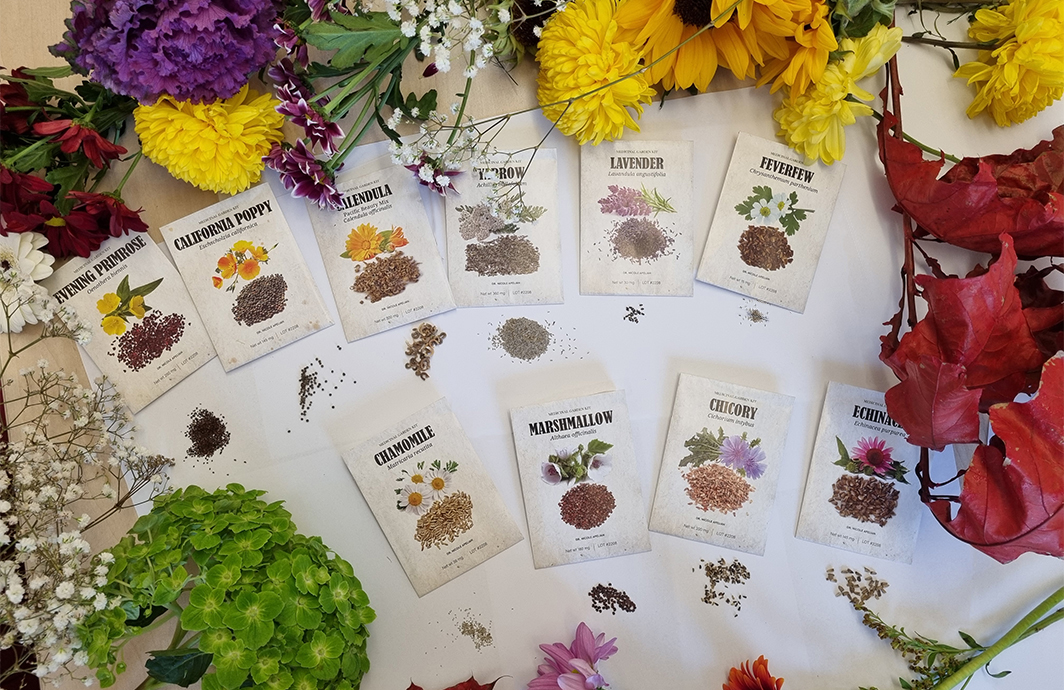
Beginners who want a curated starting point may explore the Medicinal Garden Kit, which includes non-GMO seeds for 10 medicinal herbs.
What “Organic” and “Non-GMO” Actually Mean for Beginners
Organic seeds are produced under certified organic farming standards. No synthetic pesticides/fertilizers, specific soil and handling rules. In the U.S., follows USDA National Organic Program rules.
Non-GMO seeds are not created using modern genetic engineering techniques. Still bred using traditional methods (selection, hybridization).
These are two different things. Organic = farming practices and certification. Non-GMO = breeding method, not necessarily certified organic.
Common beginner confusion: Non-GMO doesn’t mean organic; organic doesn’t mean higher potency. Most common medicinal herbs aren’t typically sold as GMOs anyway.
These labels matter for new gardeners because of peace of mind about growing practices and breeding methods. Alignment with personal values around clean, traditional gardening.
The Medicinal Garden Kit describes its seeds as non-GMO, which may appeal to beginners who want traditionally bred varieties with clear labeling.
For a closer look at what’s included, read our full Medicinal Garden Kit review.
- Organic seeds follow certified organic farming standards.
- Non-GMO seeds avoid modern genetic engineering.
- Organic and non-GMO are different labels with different meanings.
- Most medicinal herbs aren’t typically sold as GMOs.
- Choose labels that match your personal values.
Why Beginners Should Start with Easy Medicinal Herbs

Starting small and simple builds confidence before tackling harder-to-grow herbs. Reduces frustration and wasted seeds.
What makes an herb “beginner-friendly”? Reliable germination rates. Tolerant of minor care mistakes (slight over/under watering).
Fast-growing with visible progress to keep motivation high. Multiple uses (tea, topical, ornamental) for added reward.
Common beginner mistakes to avoid: Starting too many varieties at once. Choosing herbs that need long stratification or complex care right away.
Ignoring basic sunlight and soil requirements. A mix of easy annuals and low-maintenance perennials is ideal for a first garden.
Kits like the Medicinal Garden Kit include a range of herbs, some easier than others, so beginners can start with the simplest ones first.
- Start small to build confidence and reduce frustration.
- Choose herbs with reliable germination and simple care.
- Fast-growing herbs keep motivation high.
- Avoid starting too many varieties at once.
- Mix easy annuals and low-maintenance perennials.
Top Organic and Non-GMO Medicinal Herb Seeds for Beginners

Here are the best beginner-friendly organic/non-GMO medicinal herb seeds. Calendula – fast-growing annual; bright flowers; easy direct sow; great for infused oils.
Chamomile (German) – annual; gentle flowers for tea; needs light to germinate but otherwise easy. Lemon balm – vigorous perennial; citrus-scented leaves; very forgiving of beginner mistakes.
Yarrow – tough, adaptable perennial; drought-tolerant once established. Lavender – aromatic perennial; needs well-draining soil but otherwise low-maintenance.
Feverfew – daisy-like perennial; reseeds easily; simple care requirements. California poppy – easy annual; self-seeds readily; minimal care needed.
Chicory – hardy perennial; tolerant of various soil conditions. Each herb offers different benefits: growth habit (annual/perennial), basic care level (low-maintenance), and common home use (tea, oil, ornamental).
Some herbs require more patience or specific conditions (e.g., echinacea needs stratification, marshmallow needs consistent moisture). Several of these beginner-friendly herbs—calendula, chamomile, lemon balm, yarrow, lavender, and feverfew—are included in the Medicinal Garden Kit’s 10-herb collection.
- Calendula: fast-growing annual with bright flowers.
- Chamomile: gentle annual flowers for tea.
- Lemon balm: vigorous perennial with citrus scent.
- Yarrow: tough, drought-tolerant perennial.
- Lavender: aromatic perennial needing good drainage.
How to Choose Quality Organic Non-GMO Seeds

Look for clear organic certification (USDA Organic logo or equivalent) if that’s a priority. Clear non-GMO declarations from the seed company.
Botanical names alongside common names for accuracy. Packed-for date or lot number for freshness.
Choose established seed companies with transparent growing practices. Look for companies that provide detailed growing instructions.
Red flags: Vague labeling like “natural” or “chemical-free” without certification. No botanical names or growing information provided.
Extremely low prices that may indicate old or low-viability seed. Beginners may not need hundreds of seeds per herb; a reasonable starter quantity is fine.
Kits can offer better value than buying many individual packets. The Medicinal Garden Kit provides 4,818 non-GMO seeds across 10 herb varieties, which gives beginners plenty of seed to experiment with over multiple seasons.
- Look for clear organic certification and non-GMO declarations.
- Check for botanical names and packed-for dates.
- Choose established companies with transparent practices.
- Avoid vague labeling and extremely low prices.
- Kits often offer better value than individual packets.
Simple Tips for Planting Your First Medicinal Herb Seeds

Read the seed packet fully before planting (depth, spacing, light needs). Start with a few herbs rather than the whole collection at once.
Use quality potting mix for containers; amend garden soil if needed. Keep soil consistently moist until germination.
Avoid overwatering established plants; most medicinal herbs prefer well-draining soil. Most medicinal herbs need full sun (6+ hours) for best growth.
A few, like lemon balm, tolerate partial shade. Deadhead flowers to encourage more blooms.
Watch for pests and use gentle, garden-appropriate methods. Keep a simple garden journal to track what works and what doesn’t.
The guide included with the Medicinal Garden Kit is promoted as covering basic planting and care instructions for its 10 herbs, which can help beginners avoid early mistakes.
See whether the collection suits your garden goals in this detailed Medicinal Garden Kit review.
- Read seed packets fully before planting.
- Start with a few herbs instead of the whole collection.
- Use quality potting mix and well-draining soil.
- Most herbs need full sun; a few tolerate partial shade.
- Keep a simple garden journal to track results.
Common Mistakes Beginners Make with Organic Non-GMO Herb Seeds

Frequent beginner mistakes: Assuming organic/non-GMO automatically means higher quality or potency. Planting all seeds at once instead of starting small.
Ignoring sunlight and soil drainage requirements. Over- or under-watering due to lack of research on specific herb needs.
Not researching herb safety before using homegrown herbs internally. Simple fixes: Research each herb individually before planting.
Start with 2–3 easy herbs in year one. Consult reputable sources for herb safety and proper identification.
Mistakes are part of learning. Even experienced gardeners lose plants sometimes.
Good notes and observation improve results each season. Clear, beginner-friendly kits and guides can help reduce confusion during the learning process.
- Don’t assume organic/non-GMO means higher quality automatically.
- Start with 2–3 easy herbs instead of planting everything.
- Research sunlight and soil needs for each herb.
- Avoid over- or under-watering by checking specific needs.
- Research herb safety before internal use.
Conclusion
Finding the best organic non-GMO medicinal herb seeds doesn’t have to be complicated for beginners.
Organic and non-GMO are different labels describing farming practices and breeding methods. Easy beginner herbs include calendula, chamomile, lemon balm, yarrow, lavender, and feverfew.
Choosing quality seeds means checking certifications, botanical names, and freshness. Simple planting practices and patience go a long way toward success.
You don’t need a green thumb to start. Pick a few easy herbs, follow the basics, and let your garden teach you the rest.
Readers who want a simple, curated starting point can explore the Medicinal Garden Kit and read the detailed Medicinal Garden Kit review to see if it fits their beginner garden goals.
Sources and Further Reading
- Medicinal Garden Kit – Product page with seed varieties and guide details. [medicinalseedkit](https://medicinalseedkit.com/kit/)
- Medicinal Garden Kit Review – In-depth review of the kit’s contents and features.
- USDA Organic Standards – Official information on U.S. organic certification and standards.
- Non-GMO Project – Information on non-GMO verification and labeling.
- University of Minnesota Extension: Growing Herbs – Practical tips for starting and maintaining a home herb garden.