
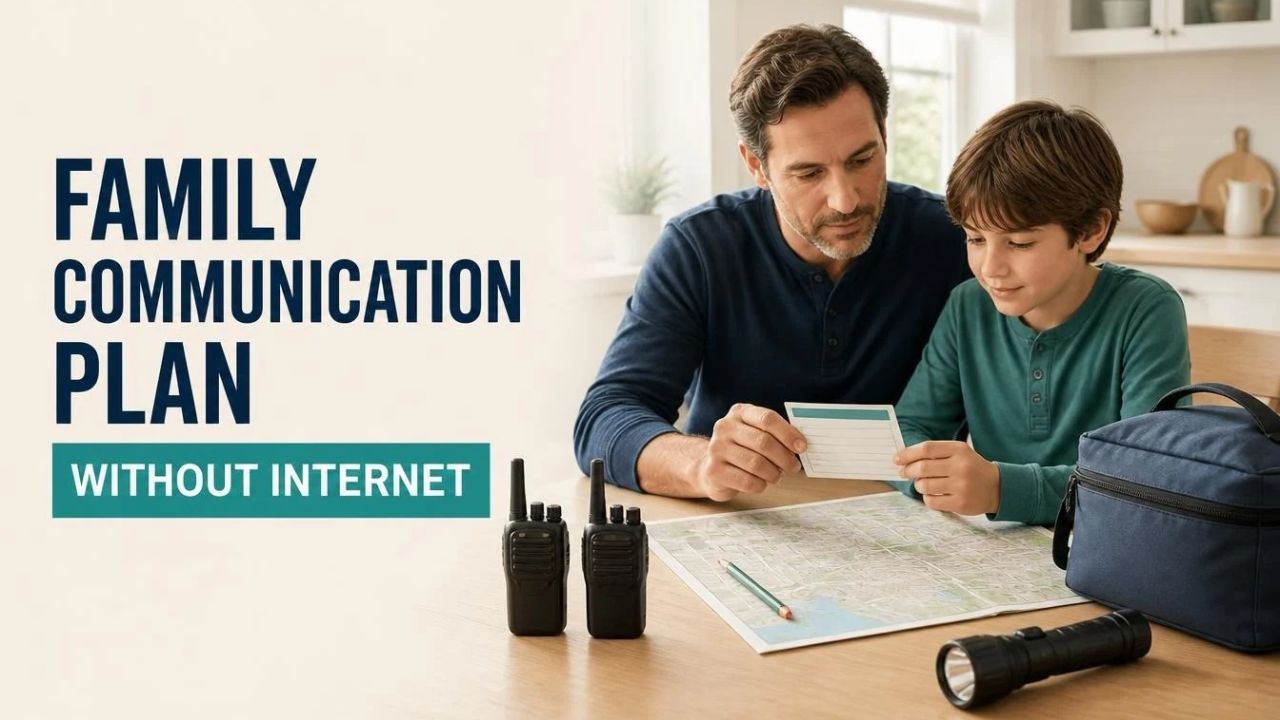
Start with printed contacts, safe meeting places, and a few backup methods. Then practice! The goal isn’t constant contact; it’s making sure everyone knows the next safe step.
Affiliate disclosure: This article contains affiliate links. If you purchase through them, we may earn a commission at no additional cost to you.
1. Print Emergency Contacts and Choose an Out-of-Town Contact

Here’s where I’d start: write down the numbers you normally let your phone remember. A contact list saved on one device shouldn’t be the only copy your family has.
FEMA’s family communication guide recommends paper contact information, copies carried by household members, and another copy displayed at home.
I’d make a wallet card for each person, plus a larger sheet for the emergency kit. Keep the wording plain enough that a child or unfamiliar caregiver can understand it.
- Household members’ names and phone numbers.
- One agreed out-of-town contact and a backup contact.
- School, childcare, workplace, and relevant caregiver numbers.
- Meeting-place names and full street addresses.
- The date the card was last updated.
FEMA recommends choosing someone outside your community who can help family members reconnect. During some disasters, a long-distance call may be easier to complete than a local one—but that is a possibility, not a guarantee.
Ask the person first, and explain the job. I’d want them to record who checked in, where each person is, and what they plan to do next.
For example, a practice update could read: “Alex safe at school. Staying with staff. Next check-in at 4 p.m.” Use fictional details during drills rather than sending a message that could be mistaken for a real emergency.
For broader preparedness reading, David’s Shield’s educational material may interest readers who prefer a Christian-oriented presentation. Its seller describes educational information and DIY plans; you don’t need to purchase it to complete this communication plan.
2. Choose Safe Meeting Places and a No-Contact Backup Plan

“Meet somewhere near home” is too vague for my liking. Which side of the street, which entrance, and what happens if that area is closed?
FEMA recommends several meeting-place options, including locations in your neighborhood, outside your neighborhood, and outside your town or city.
Write down the exact addresses and the conditions for using each location. Pick places your household recognizes, and check access rather than assuming a building will always be open.
- Neighborhood option: an agreed location for an emergency that requires leaving home.
- Out-of-neighborhood option: a suitable place to reunite if returning home is unsafe.
- Out-of-town option: a prearranged destination for a wider evacuation.
- Backup instruction: what to do if the planned location cannot be reached safely.
FEMA also advises considering accessibility and animal-friendly locations. Include the person who needs step-free access, the relative who doesn’t drive, and the family member responsible for the pet carrier.
I’d add a small paper map with the meeting places marked. Discuss possible routes ahead of time, while making clear that a marked route isn’t permission to cross a hazard.
Children need instructions that match their school or childcare procedures. FEMA’s guide recommends understanding those emergency plans, so confirm authorized pickup arrangements instead of telling children to leave independently.
Here’s a useful hypothetical: one adult cannot reach the neighborhood meeting point because officials have closed the road. The plan should allow that person to remain in a safe place and report their location when possible—not push through the closure to keep an appointment.
Your meeting places are options, not orders to travel regardless of conditions. Follow official evacuation or shelter instructions, and avoid turning a missed check-in into a second emergency.
3. Use Text Messages When Available—and Plan for No Service

For planning purposes, I’d separate two situations: the family’s internet messaging is unavailable, or the phones cannot communicate at all. Those situations need different fallbacks.
Don’t assume losing an app means every phone function is lost, and don’t assume a working phone means a message will get through. Make the plan useful even when all attempted contact fails.
FEMA recommends trying text messages because they use less bandwidth than voice calls and may get through when calls cannot. “May” matters here: texting still needs an available service path.
I’d agree on a short message format before anyone needs it. Skip the long explanation and send the details that help others make decisions.
- Name: who is sending the update.
- Condition: safe, injured, or needing a particular kind of help.
- Location: a recognizable place or full address.
- Next step: staying put or moving somewhere, if safe.
- Time: when the message was written and when another check-in is planned.
My suggested template is: “Name: __. Status: __. Location: __. Next step: __. Written at: __.” That last detail helps identify an update that arrives late.
Agree on reasonable check-in windows for your household. Treat them as a planning aid, not a reason to delay urgent assistance or ignore official instructions.
Put the fallback on paper: “If we cannot make contact, follow our safe-location and reunification instructions.” Then specify those instructions for each person rather than expecting everyone to improvise.
FEMA advises keeping necessary calls brief to reduce network congestion. I’d also explain that a missed reply alone doesn’t prove someone is injured; it means you follow the agreed backup plan.
4. Add Two-Way Radios and a Way to Receive Official Updates

I’d give receiving information and talking to family members separate places on the checklist. A broadcast receiver and a two-way handheld radio have different jobs.
For short-distance family contact in the United States, FCC-compliant Family Radio Service radios are one option. FRS is licensed by rule, so an individual license is not required when you follow the applicable rules.
That advice is U.S.-specific. Before buying or using radios elsewhere, check the local regulator’s permitted equipment, frequencies, and licensing requirements.
The FCC describes FRS as a short-distance service, with usable range depending on conditions. I wouldn’t build a cross-town reunion plan around a range number printed on a box.
- Agree on a primary channel and a backup channel.
- Record the settings needed for your particular radios.
- Practice listening before transmitting and keeping messages short.
- Test contact from realistic, safe locations.
- Keep compatible power supplies and the operating instructions available.
The FCC warns that FRS and similar personal radios cannot contact 911 directly. They are a family backup tool, not a guaranteed link to emergency services.
For incoming updates, identify local broadcast stations and official information channels in advance. Include a suitable radio in your kit, consistent with Ready.gov’s emergency supply guidance.
If you’re also researching “is a microwave a faraday cage,” keep that separate from the communication plan. This article does not verify microwave shielding or promise protection for stored electronics.
Read the David’s Shield review alongside the seller’s information before purchasing optional learning material. A guide does not replace range testing, lawful radio operation, or a written fallback.
5. Practice Your Offline Family Communication Plan

A plan can look clear on paper and still leave someone asking, “Wait, which meeting place?” I’d rather uncover that confusion during a calm conversation.
Ready.gov recommends practicing your household plan. Start with a tabletop exercise rather than staging a realistic emergency or sending anyone into unsafe conditions.
Try this fictional setup: one adult is at work, a child is at school, and the family’s usual messaging app is unavailable. Ask each person to explain their next step using the printed plan.
- Can everyone locate their emergency contact card?
- Does each person know the out-of-town contact?
- Can they explain which meeting place applies?
- Do they know what to do if travel is unsafe?
- Can they operate the radio, if one is included?
- Are school pickup and caregiver arrangements clear?
My suggested exercise is a 15-minute discussion followed by a short equipment check. That is a practical starting point, not an official required drill length.
Include communication needs that are easy to overlook. FEMA’s planning guide specifically calls for alternatives when someone cannot text, as well as accessible meeting locations.
For trips, I’d make a temporary card with the accommodation address, a suitable local meeting point, and the same out-of-town contact. Review it together instead of assuming the home plan automatically fits an unfamiliar place.
Update the main plan when phone numbers, schools, caregivers, or regular destinations change. FEMA’s family planning worksheet also recommends reviewing the information each year.
If broader low-tech learning interests you, explore David’s Shield as an optional educational resource. Check the current contents, delivery format, checkout terms, and any additional implementation costs before deciding.
I wouldn’t make a purchase the finish line. The useful result is a household that can explain what to do when the next message never arrives.
Conclusion: Make the Next Step Clear Before You Need It
Clarity is the heart of a family emergency communication plan without internet. Print the contacts, choose safe meeting places, and explain what happens when nobody can get through.
Add communication tools only after you understand their limits, then practice together. Start today with one contact card and one conversation—you can build from there.
For optional further reading, compare the David’s Shield review with the seller’s current information. Keep official emergency guidance and your household’s actual needs at the center of the plan.