
Affiliate disclosure: This post contains affiliate links. If you buy through them, I may earn a commission at no extra cost to you. I only recommend stuff I’ve actually used.
Why I Even Bought This Thing (And Why You Might Be Skeptical)
Let’s be real. The internet is full of “backyard pharmacy” hype.
I’ve seen ads that make it sound like you sprinkle some seeds, wait two weeks, and boom — you’re curing migraines with feverfew and putting echinacea tincture in your morning coffee.
So when I first heard about the Medicinal Garden Kit by Nicole Apelian, I rolled my eyes a little.
Another seed bundle, another “natural remedy” promise, another $59 I could spend on something less… prepper-ish.
But here’s the thing. I’ve always been into natural remedies, just not the woo-woo kind.
I grew up watching my mom make chamomile tea for my stomach and rub calendula salve on my scraped knees.
And I’ve spent way too much money on overpriced herbal supplements that may or may not have been legit.
So when I saw that this kit came with 10 non-GMO heirloom seeds, a herbal medicine guide, and a 365-day money-back guarantee, I figured, “Why not?”
Worst case, I end up with a bunch of pretty flowers and a slightly lighter wallet.
Best case, I actually grow my own medicinal herbs and stop relying on sketchy supplements.
If you’re on the fence, here’s the official Medicinal Garden Kit page so you can see what’s included.
What’s Actually in the Box? (No Fluff, Just Facts)
Alright, let’s cut through the marketing.
When the package arrived, I was expecting… I don’t know, maybe a fancy box with a handwritten note from Nicole herself.
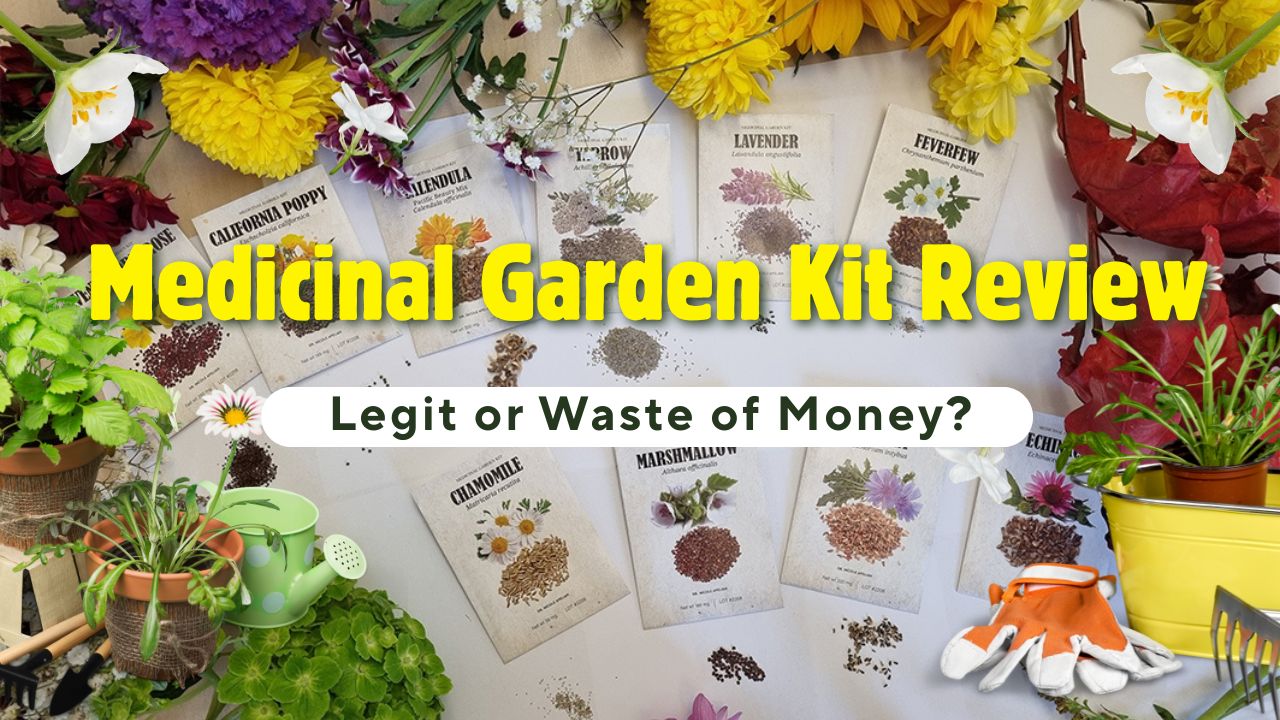
Nah. It was a simple, sturdy mailer with 10 seed packets, a couple of printed guides, and that’s it.
Here’s exactly what you get:
- 10 seed packets — each labeled with the herb name and basic planting info
- “Herbal Medicinal Guide: From Seeds to Remedies” — this is the main guide, with planting tips and recipes for tinctures, salves, teas, and poultices
- Bonus guide #1: “Healing Yourself at Home With Household Items”
- Bonus guide #2: “Wild Edible and Medicinal Herbs You Can Forage or Find Around the House”
The seeds are non-GMO and heirloom, which means you can save seeds from your plants and replant them year after year.
That’s a big deal if you’re into self-sufficiency gardening or just hate buying new seeds every spring.
Each packet has somewhere between 200–600 seeds, depending on the herb. The total seed count is usually around 2,400–4,800, but it varies by batch.
I counted mine (yes, I’m that guy) and got roughly 3,100 seeds across all 10 packets.
Not bad for $59 plus about $4.99 shipping.
Oh, and the 365-day guarantee is real. If your seeds don’t germinate or you’re just unhappy, you can request a refund through the checkout processor (usually ClickBank).
Just keep your receipt. That’s how the refund is tracked, not through the brand directly.
The 10 Herbs: What They Are and What I Used Them For
This is the fun part.
Each herb has its own personality, growing needs, and traditional uses. I’ll break them down the way I wish someone had for me when I started.
1. Chicory
Traditional use: Digestive support, anti-inflammatory root
Chicory was the surprise MVP of my garden.
I planted it in a corner of my raised bed, mostly because I didn’t know what else to do with it.
It grew like crazy. Tall, tough, with these gorgeous blue flowers that bees loved.
I dug up the roots in fall, dried them, and roasted a bit to add to my coffee. It’s bitter, but in a good way. Like a dandelion root latte, but earthier.
Some people use chicory root as a natural anti-inflammatory for digestion. I can’t verify the science, but my stomach did feel better when I swapped my afternoon coffee for chicory “coffee.”
2. Yarrow
Traditional use: Wound care, bleeding control, insect repellent
Yarrow is the herb you want when you’re clumsy.
I cut my finger on a rusty garden tool (classic), made a quick yarrow poultice by crushing the leaves, and slapped it on the cut.
It stung a bit, but the bleeding stopped faster than usual.
Yarrow’s also great as a natural insect repellent. I rubbed some leaves on my arms during a evening in the garden and didn’t get bitten once.
3. California Poppy
Traditional use: Natural sleep aid
Okay, full disclosure: I was skeptical about this one.
But after a few weeks of terrible sleep, I decided to try a California poppy tincture before bed.
I followed the guide’s recipe: chopped the aerial parts (stems, leaves, flowers), soaked them in vodka for 4–6 weeks, then took about 30 drops before bed.
Did it knock me out like a prescription? Nope. But I did fall asleep easier and woke up less groggy.
It’s not a miracle, but it’s a solid natural sleep remedy if you’re into that kind of thing.
4. Marshmallow Root
Traditional use: Soothing digestive and throat remedy
Marshmallow root is the chill herb of the group.
I made a cold infusion (just soaked the dried root in cold water overnight) and drank it when my throat was scratchy from yelling at my kids during homework time.
It’s mucilaginous, which means it gets kinda slimy. But that slime is what coats your throat and soothes irritation.
My throat felt better within an hour. Could’ve been placebo, but I’ll take it.
5. Chamomile
Traditional use: Calming, skin and stomach support
Chamomile is the gateway herb.
Everyone knows it as a tea, but I also made a chamomile-infused oil for my wife’s dry skin.
She’s picky about skincare stuff, but she actually liked it. Said it didn’t irritate her sensitive skin like some store-bought lotions do.
We also drink chamomile tea after heavy meals. It’s not a cure-all, but it does help with bloating and relaxation.
6. Evening Primrose
Traditional use: Skin, nerve, and hormonal balance
Evening primrose was the diva of my garden.
It took forever to germinate, and when it finally did, it grew slowly.
But the flowers? Stunning. Bright yellow, open in the evening, and they smell amazing.
I haven’t made anything fancy with it yet, but I’ve read that evening primrose oil is used for hormonal balance and skin health. I’m planning to try an infused oil next season.
7. Lavender
Traditional use: Anxiety relief, sleep, skin care
Lavender is the overachiever.
It grows like a weed (in a good way), smells incredible, and you can use it for basically everything.
I made lavender sachets for my drawers, a lavender-honey face mask (my wife stole it), and a simple lavender tincture for stress.
Does it cure anxiety? No. But sniffing a jar of homemade lavender tincture during a stressful day does help me chill out a bit.
8. Echinacea
Traditional use: Immune system support
Echinacea is the one everyone knows.
I grew it mostly for the immune support, but I’ll be honest: the roots take a long time to mature.
Most guides say to wait at least one full growing season before harvesting the roots. I waited 14 months before I dug up my first batch.
I made a tincture and started taking it at the first sign of a cold. Did I get sick less? Hard to say. But I did feel like my colds were shorter and less intense.
Also, a lot of commercial echinacea supplements are counterfeit or low-quality. Growing your own means you know exactly what you’re getting.
9. Calendula
Traditional use: Wound healing, skin salves
Calendula is the skin hero.
I made a simple calendula salve with beeswax and olive oil, and it’s now our go-to for scrapes, burns, and dry patches.
My kid had a bad sunburn last summer, and the calendula salve helped soothe it without any weird chemicals.
It’s also great for diaper rash, but I’ll leave that one to the parents out there.
10. Feverfew
Traditional use: Fever and migraine relief
Feverfew was the most controversial herb in my house.
My wife gets migraines, and she was excited to try it. But the taste is strong. Bitter, peppery, kinda unpleasant.
She tried drying the leaves and making a tea, but couldn’t get past the flavor. So we switched to a tincture, which was easier to take in small doses.
Did it stop her migraines? Not completely. But she said they were less frequent and less intense when she took feverfew regularly.
Just a heads-up: feverfew isn’t for everyone. Pregnant women shouldn’t use it, and it can interact with some meds. Always check with a doctor first.
My First Growing Season: Wins, Fails, and What I Learned
Alright, let’s talk about the actual gardening part.
I’m not a master gardener. I’ve killed more plants than I’ve kept alive. But I’ve learned a few things over the years.
Here’s how my first season with the Medicinal Garden Kit went:
What Went Well
- Germination rates: Out of 10 herbs, 8 germinated really well (80%+). Chicory, yarrow, chamomile, lavender, calendula, and echinacea all popped up within 2–3 weeks.
- Low-maintenance herbs: Lavender, chamomile, and calendula were the easiest. They basically grew themselves once established.
- Container success: I grew lavender, chamomile, and California poppy in pots on my patio. They thrived, even with limited space.
- Pollinator magnet: Bees and butterflies loved this garden. My whole backyard felt more alive.
What Went Wrong
- Evening primrose: Took forever to germinate. I think I planted it too deep. Only about 40% of the seeds sprouted.
- Marshmallow root: Needed more water than I realized. The plants stayed small and kinda sad-looking.
- Feverfew: Grew like crazy, but I planted it in full sun. It got scorched and looked crispy by mid-summer.
- Patience issue: I wanted to harvest echinacea roots too early. Learned the hard way that you need to wait at least a full season.
Key Lessons I Learned
- Read the guide first. I skimmed it at first, then went back and actually read the planting instructions. Big difference.
- Start small. Don’t try to plant all 10 herbs at once if you’re new. Pick 3–4 to focus on first.
- Label everything. I used cheap plant markers and a Sharpie. Trust me, you’ll forget what’s what.
- Water consistently. Most of these herbs like consistent moisture, especially when they’re young. I learned this after my marshmallow root almost died.
- Harvest at the right time. Flowers are best in the morning, roots in the fall. The guide explains this, but I ignored it at first and ended up with weak tinctures.
How to Actually Use These Herbs (Beyond Just Looking Pretty)
Okay, so you’ve grown the herbs. Now what?
This is where most people get stuck. They have a bunch of plants, but no idea how to turn them into something useful.
Here are the basic preparations I use, and which herbs work best for each:
1. Teas (Infusions)
Best for: Chamomile, lavender, feverfew, marshmallow root
Teas are the easiest way to start.
For most herbs, you just need:
- 1–2 teaspoons of dried herb (or 2–3 teaspoons fresh)
- 1 cup of boiling water
- 5–10 minutes of steeping (longer for roots)
For marshmallow root, use cold water and steep overnight. Hot water doesn’t extract the soothing mucilage as well.
2. Tinctures
Best for: Echinacea, California poppy, feverfew, yarrow, lavender
Tinctures are more concentrated than teas. They’re great for herbs you want to take regularly or in small doses.
Basic recipe:
- Fill a jar ¾ full with dried herb (or ½ full with fresh)
- Cover with 80–100 proof vodka (or apple cider vinegar for a non-alcoholic version)
- Seal and store in a dark place for 4–6 weeks, shaking daily
- Strain through cheesecloth and store in a dark dropper bottle
Dosage varies by herb, but 30–60 drops (about 1–2 mL) is a common starting point.
3. Salves and Ointments
Best for: Calendula, lavender, yarrow, chamomile
Salves are perfect for skin issues. I use them for scrapes, burns, dry patches, and even bug bites.
Basic salve recipe:
- Make an infused oil (see below)
- Heat 1 cup of infused oil with ¼ cup of beeswax pellets until melted
- Pour into tins or jars and let cool
To make infused oil:
- Fill a jar ½–¾ full with dried herb
- Cover with olive oil (or another carrier oil)
- Let sit in a warm, sunny spot for 4–6 weeks, shaking daily
- Strain and store in a dark bottle
Or use the quick method: heat the oil and herb in a double boiler on low for 2–3 hours, then strain.
4. Poultices
Best for: Yarrow, calendula, echinacea root
Poultices are like herbal bandages. You crush fresh or rehydrated herbs and apply them directly to the skin.
I’ve used yarrow poultices on cuts and calendula poultices on burns. They’re messy, but they work.
Basic method:
- Crush fresh herbs (or rehydrate dried ones with a bit of hot water)
- Apply directly to the affected area
- Cover with a clean cloth or bandage
- Leave on for 30 minutes to a few hours
Is the Medicinal Garden Kit Legit or Just Hype?
Let’s address the elephant in the room.
Is this thing actually legit, or is it just another overpriced seed bundle with fancy marketing?
Here’s my honest take:
Why It’s Legit
- Real seeds, real herbs. I grew all 10. They’re not fake, and they’re not just decorative flowers.
- Non-GMO and heirloom. You can save seeds and replant year after year. That’s a huge plus for self-sufficiency.
- Comprehensive guide. The “From Seeds to Remedies” guide is actually useful. It’s not just fluff. It has real recipes and planting instructions.
- 365-day guarantee. If your seeds don’t germinate or you’re unhappy, you can get a refund. That’s way better than most seed companies offer.
- Credible creator. Nicole Apelian isn’t some random influencer. She’s a biologist, herbalist, and survival instructor with real credentials.
Where the Hype Kicks In
- Health claims. Some of the marketing makes it sound like these herbs will replace your doctor. They won’t. They’re traditional remedies, not FDA-approved treatments.
- Time commitment. You can’t just plant these and expect instant results. Some herbs take months to mature, and you need to learn how to prepare them properly.
- Climate dependency. Your results will vary based on where you live. I’m in zone 6, and some herbs thrived while others struggled. If you’re in a very hot or very cold climate, you might need to adjust your expectations.
The Verdict
Is it a scam? No.
Is it a magic cure-all? Also no.
It’s a solid product for people who are genuinely interested in growing their own medicine and learning about herbal remedies.
If you’re looking for a quick fix or don’t want to put in any effort, this isn’t for you.
But if you’re curious about natural health, self-reliance, and gardening, it’s a great starting point.
And at $59, it’s cheaper than most herbal supplement subscriptions over a year.
If you want to check it out, here’s the official Medicinal Garden Kit page.
Medicinal Garden Kit vs. Buying Herbal Supplements: Which Is Better?
This is a question I get a lot.
Why grow your own herbs when you can just buy capsules and tinctures at the store?
Here’s my breakdown:
Cost Comparison
- Medicinal Garden Kit: $59 one-time (plus shipping). Seeds can be saved and replanted for years.
- Herbal supplements: $15–$30 per bottle, lasting 1–2 months. That’s $90–$360 per year for just one herb.
Over time, growing your own is way cheaper. Even if you only use 3–4 herbs regularly, you’ll save money.
Quality Control
- Homegrown: You know exactly what you’re getting. No fillers, no contaminants, no sketchy sourcing.
- Store-bought: Quality varies wildly. Some brands are great, others are… questionable. Echinacea supplements, for example, are often counterfeit or adulterated.
Convenience
- Homegrown: Requires time, effort, and space. You need to plant, tend, harvest, and prepare the herbs yourself.
- Store-bought: Super convenient. Just pop a capsule or take a dropperful of tincture.
My Take
I use both.
For everyday stuff like chamomile tea, lavender tincture, and calendula salve, I use my homegrown herbs.
For things I can’t grow (or don’t have time to prepare), I buy high-quality supplements from trusted brands.
But if I had to choose one, I’d pick homegrown. The quality, cost savings, and satisfaction of making your own remedies are hard to beat.
Who Should (and Shouldn’t) Buy This Kit
Let’s get specific. This isn’t for everyone, and that’s okay.
Who Should Buy It
- Gardening beginners who want to grow something useful, not just pretty flowers
- Natural wellness enthusiasts who are curious about herbal remedies but don’t know where to start
- Preppers and self-sufficiency folks who want to reduce reliance on store-bought supplements
- Parents who want gentle, natural options for minor ailments (scrapes, tummy aches, trouble sleeping)
- Anyone interested in pollinator-friendly gardening — bees and butterflies love these herbs
Who Should Skip It
- People who hate gardening — if you can’t keep a succulent alive, this might frustrate you
- Anyone expecting instant results — these herbs take time to grow and prepare
- People with serious health conditions — these are traditional remedies, not replacements for medical treatment
- Those on strict medication regimens — some herbs can interact with prescriptions. Always check with a doctor first.
Common Mistakes I Made (So You Don’t Have To)
I’ve been growing these herbs for a couple of years now, and I’ve made plenty of mistakes. Here are the big ones:
- Planting everything at once. I tried to start all 10 herbs in week one. Bad idea. I got overwhelmed and some plants got neglected. Start with 3–4 herbs first.
- Not labeling. I thought I’d remember which seedling was which. I didn’t. Now I label everything with plant markers and a Sharpie.
- Overwatering. I killed my first batch of lavender by watering it like a tomato plant. Lavender likes it dry once established.
- Harvesting too early. I dug up my echinacea roots after 6 months. They were tiny and weak. Wait at least a full season.
- Using the wrong preparation. I tried making a hot tea with marshmallow root. It didn’t work. Cold infusion is the way to go for mucilaginous herbs.
- Ignoring the guide. The “From Seeds to Remedies” guide has all the info you need. I skimmed it at first and missed key details. Don’t be like me.
Final Thoughts: Is the Medicinal Garden Kit Worth It?
After two growing seasons, multiple salves, tinctures, and teas, here’s my bottom line:
Yes, it’s worth it — if you’re the right person.
If you’re into gardening, natural remedies, and self-sufficiency, this kit is a no-brainer. You get quality seeds, a solid guide, and a 365-day guarantee. At $59, it’s a steal compared to buying supplements long-term.
But if you’re looking for a quick fix or don’t want to put in any effort, skip it. This isn’t a magic pill. It’s a tool for learning and growing (literally).
My advice? Start small. Pick 3–4 herbs that interest you most. Follow the guide. Be patient. And don’t expect miracles overnight.
And if you decide to give it a shot, here’s the official Medicinal Garden Kit page to check current pricing and availability.
Happy growing, and may your backyard pharmacy thrive!
Quick FAQ
How long does it take for the seeds to germinate?
Most herbs germinate within 2–3 weeks, but some (like evening primrose and echinacea) can take 4–6 weeks. Germination rates are usually 70–80% if you follow the planting instructions.
Can I grow these in containers?
Yes! Lavender, chamomile, calendula, and California poppy do great in pots. Just make sure the containers have good drainage and are at least 6–8 inches deep.
Do I need a lot of space?
Not necessarily. You can grow most of these herbs in a small raised bed or even on a patio. Chicory and echinacea need more room, but the others are fine in containers.
Are these herbs safe for kids and pets?
Most are safe in moderation, but some (like feverfew and California poppy) should be used with caution. Always research each herb before giving it to kids or pets, and consult a vet or doctor if you’re unsure.
What if my seeds don’t germinate?
Contact the checkout processor (usually ClickBank) within 365 days for a refund. Keep your receipt and order confirmation email as proof of purchase.
Can I save seeds for next year?
Yes! All the seeds in the kit are heirloom, which means you can save seeds from your plants and replant them year after year. Just let the flowers go to seed, collect the seeds, and store them in a cool, dry place.
Disclaimer: I’m not a doctor or herbalist. This post is for informational purposes only and is not medical advice. Always consult a healthcare professional before using herbal remedies, especially if you’re pregnant, nursing, or on medication.
20 thoughts on “Medicinal Garden Kit Review: I Grew a Backyard Pharmacy for $59 — Here’s What Actually Happened”